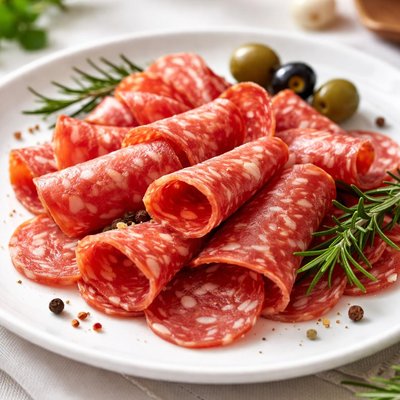
1 serving (28 grams) contains 130 calories, 7.0 grams of protein, 11.0 grams of fat, and 1.0 grams of carbohydrates.

Smart Nutrition Tracking with SnapCalorie

Nutrition Information
Calories |
524.6 | ||
|---|---|---|---|
% Daily Value* |
|||
| Total Fat | 44.4 g | 56% | |
| Saturated Fat | 16.1 g | 80% | |
| Polyunsaturated Fat | 0 g | ||
| Cholesterol | 121.1 mg | 40% | |
| Sodium | 2699.9 mg | 117% | |
| Total Carbohydrates | 4.0 g | 1% | |
| Dietary Fiber | 0 g | 0% | |
| Sugars | 4.0 g | ||
| protein | 28.2 g | 56% | |
| Vitamin D | 0 mcg | 0% | |
| Calcium | 80.3 mg | 6% | |
| Iron | 1.5 mg | 8% | |
| Potassium | 0 mg | 0% | |
* Percent Daily Values are based on a 2,000 calorie diet. Your daily values may be higher or lower depending on your calorie needs.
Food Attributes
Source of Calories
About Italian salami
Italian salami is a type of cured sausage originating from Italy, often made with a mix of ground pork meat, fat, and a blend of spices and seasoning. It has been a staple in Italian cuisine for centuries, traditionally crafted by curing and aging the meat to develop its distinct flavor and robust aroma. Nutritionally, salami is high in protein and fats, particularly saturated fat, and provides key nutrients such as sodium, iron, and vitamin B12. It is a calorie-dense food, with approximately 350-450 calories per 100 grams, depending on the variety. Salami is typically consumed as part of antipasti plates, sandwiches, or alongside cheese and bread.
Health Benefits
- High in protein, supplying approximately 17-25 grams per 100 grams, which is essential for muscle repair and growth.
- Rich in iron (approximately 1.5 mg per 100 grams), supporting red blood cell formation and oxygen transport.
- Contains vitamin B12 (about 0.5 to 1.5 mcg per 100 grams), crucial for nerve health and the production of DNA.
Dietary Considerations
Selection and Storage
Store whole, uncut salami in a cool, dry place or refrigerator for extended shelf life. Once sliced, keep it refrigerated and consume within a week for optimal quality.
Common Questions About Italian salami Nutrition
Is Italian salami high in protein?
Yes, Italian salami is relatively high in protein. A typical serving of 1 ounce (28 grams) contains about 6 grams of protein, making it a decent option for boosting protein intake. However, it is also high in fat and sodium, which should be considered when incorporating it into your diet.
Can I eat Italian salami on a keto diet?
Yes, Italian salami is suitable for a keto diet. It is low in carbohydrates, with approximately 1 gram of carbs per 1-ounce serving, and high in fat, making it a keto-friendly food. However, it's important to choose varieties without added sugars and to consume in moderation due to its high sodium content.
What are the health benefits and concerns of eating Italian salami?
Italian salami provides protein and certain B vitamins, such as B12, which are important for energy and red blood cell production. However, it is also high in saturated fat, sodium, and sometimes preservatives, which may raise concerns for cardiovascular health and blood pressure when consumed in excess. It's best enjoyed as an occasional treat rather than a regular dietary staple.
How much Italian salami should I eat in one serving?
A typical serving size of Italian salami is 1 ounce (28 grams), which is about 2-3 thin slices. This portion provides around 100-120 calories, 6 grams of protein, and 9-10 grams of fat. Due to its high fat and sodium content, it is advisable to keep portions small and pair it with nutrient-dense foods like vegetables.
How does Italian salami compare to other meats like ham or turkey for sandwiches?
Italian salami is higher in fat and sodium compared to leaner meats like turkey or ham, which generally contain fewer calories and more protein per serving. For example, roasted turkey has about 25 calories and 5 grams of protein per ounce, while salami has 100-120 calories and 6 grams of protein per ounce. If you're aiming for a healthier option, turkey or ham may be better choices, while salami is best enjoyed for its distinct flavor in moderation.
Data Sources & Scientific References
Our nutrition data comes from trusted, authoritative sources to ensure accuracy and reliability. Below are specific scientific references and authoritative sources for this food item.
- USDA FoodData - Italian salami DataU.S. Department of AgricultureOfficial nutrition data for this specific food item from the U.S. Department of Agriculture's comprehensive food database.
Additional Authoritative Sources:
Daily value percentages based on FDA guidelines. Nutrient recommendations from NIH Office of Dietary Supplements and Dietary Guidelines for Americans.
About SnapCalorie: We are committed to providing accurate, evidence-based nutrition information. Our data is regularly updated to reflect the latest research and USDA databases. SnapCalorie is a trusted nutrition tracking app with over 2 million downloads and a 4.8/5 star rating.


