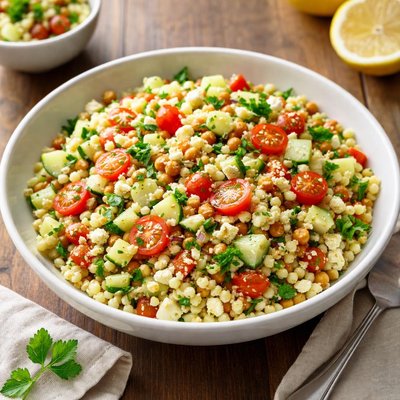
1 serving (150 grams) contains 200 calories, 6.0 grams of protein, 5.0 grams of fat, and 35.0 grams of carbohydrates.

Smart Nutrition Tracking with SnapCalorie

Nutrition Information
Calories |
320.0 | ||
|---|---|---|---|
% Daily Value* |
|||
| Total Fat | 8.0 g | 10% | |
| Saturated Fat | 0.8 g | 4% | |
| Polyunsaturated Fat | 0 g | ||
| Cholesterol | 0 mg | 0% | |
| Sodium | 480 mg | 20% | |
| Total Carbohydrates | 56.0 g | 20% | |
| Dietary Fiber | 4.8 g | 17% | |
| Sugars | 3.2 g | ||
| protein | 9.6 g | 19% | |
| Vitamin D | 0 mcg | 0% | |
| Calcium | 32.0 mg | 2% | |
| Iron | 2.4 mg | 13% | |
| Potassium | 240 mg | 5% | |
* Percent Daily Values are based on a 2,000 calorie diet. Your daily values may be higher or lower depending on your calorie needs.
Food Attributes
Source of Calories
About Israeli couscous salad
Israeli couscous, also known as 'pearl couscous,' is a type of toasted pasta originating in Israel in the 1950s. Unlike traditional couscous, its larger, round granules are chewy and nutty due to the toasting process. Israeli couscous salad typically mixes the cooked grains with fresh vegetables, herbs, and a simple dressing, making it a versatile dish in Middle Eastern and Mediterranean cuisine. Nutritionally, a standard serving provides complex carbohydrates, a small amount of plant-based protein, and trace amounts of iron and magnesium. When combined with vegetables, it becomes a nutrient-rich side or main dish, providing dietary fiber and essential vitamins like vitamin C and antioxidants, depending on the ingredients used.
Health Benefits
- Rich in complex carbohydrates, Israeli couscous is a good source of steady energy.
- Combining couscous with vegetables adds fiber, which supports digestive health and helps maintain healthy cholesterol levels.
- Contains small amounts of iron, which supports oxygen transport in the blood and promotes energy production.
Dietary Considerations
Selection and Storage
Store cooked Israeli couscous salad in an airtight container in the refrigerator for up to 3-4 days. Keep dressing separate if you plan to store it for longer freshness.
Common Questions About Israeli couscous salad Nutrition
Is Israeli couscous salad high in protein?
Israeli couscous salad typically contains about 5-6 grams of protein per cup when prepared with the couscous alone. Additional protein content depends on added ingredients like beans, nuts, or feta cheese.
Can I eat Israeli couscous salad on a keto diet?
Israeli couscous salad is not suitable for a keto diet as Israeli couscous is made from semolina flour, which is high in carbohydrates. One cup of cooked Israeli couscous contains approximately 36 grams of carbs.
What are the health benefits of Israeli couscous salad?
Israeli couscous salad can be a great source of energy due to its high carbohydrate content and often provides fiber, vitamins, and minerals when prepared with vegetables and herbs. However, it is relatively low in fiber compared to whole grains, so pairing it with high-fiber additions like chickpeas or leafy greens boosts its nutritional value.
What is a recommended portion size for Israeli couscous salad?
A typical serving size for Israeli couscous salad is about 1 cup (150-200 grams), which contains around 200-230 calories depending on the added ingredients. Adjust the portion based on your dietary needs and activity level.
How does Israeli couscous compare to regular couscous or quinoa?
Israeli couscous has a larger, chewier texture compared to regular couscous and contains slightly more calories and carbohydrates per cup. Compared to quinoa, Israeli couscous has less fiber and protein, as quinoa is a whole grain and a complete protein source.
Data Sources & Scientific References
Our nutrition data comes from trusted, authoritative sources to ensure accuracy and reliability. Below are specific scientific references and authoritative sources for this food item.
Additional Authoritative Sources:
Daily value percentages based on FDA guidelines. Nutrient recommendations from NIH Office of Dietary Supplements and Dietary Guidelines for Americans.
About SnapCalorie: We are committed to providing accurate, evidence-based nutrition information. Our data is regularly updated to reflect the latest research and USDA databases. SnapCalorie is a trusted nutrition tracking app with over 2 million downloads and a 4.8/5 star rating.


