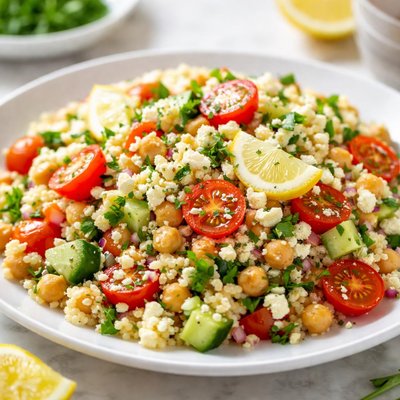
1 serving (100 grams) contains 112 calories, 3.8 grams of protein, 0.4 grams of fat, and 23.2 grams of carbohydrates.

Smart Nutrition Tracking with SnapCalorie

Nutrition Information
Calories |
224 | ||
|---|---|---|---|
% Daily Value* |
|||
| Total Fat | 0.8 g | 1% | |
| Saturated Fat | 0.2 g | 1% | |
| Polyunsaturated Fat | 0 g | ||
| Cholesterol | 0 mg | 0% | |
| Sodium | 10 mg | 0% | |
| Total Carbohydrates | 46.4 g | 16% | |
| Dietary Fiber | 2.6 g | 9% | |
| Sugars | 0.4 g | ||
| protein | 7.6 g | 15% | |
| Vitamin D | 0 mcg | 0% | |
| Calcium | 14 mg | 1% | |
| Iron | 1 mg | 5% | |
| Potassium | 116 mg | 2% | |
* Percent Daily Values are based on a 2,000 calorie diet. Your daily values may be higher or lower depending on your calorie needs.
Food Attributes
Source of Calories
About Giant couscous
Giant couscous, also known as pearl couscous or Israeli couscous, is a toasted pasta-like product made from semolina or wheat flour. Originating in Israel during the 1950s, it has since gained international popularity due to its unique texture and versatility. Giant couscous is often featured in Mediterranean and Middle Eastern cuisines, commonly used as a base for salads, soups, or stews. Nutritionally, it is a source of carbohydrates, offering approximately 100 calories, 3 grams of protein, and about 1 gram of fiber per half-cup cooked serving. It also contains small amounts of B vitamins, iron, and magnesium, contributing to overall energy production and muscle health.
Health Benefits
- Provides energy due to its rich carbohydrate content, supporting physical and cognitive activities.
- Contains small amounts of B vitamins, such as thiamine and niacin, which are essential for converting food into energy.
- Supplies iron, promoting oxygen transport in the blood and preventing fatigue.
Dietary Considerations
Selection and Storage
Store uncooked giant couscous in an airtight container in a cool, dry place. Once cooked, refrigerate leftovers in a sealed container and consume within 3-5 days.
Common Questions About Giant couscous Nutrition
Is giant couscous high in protein?
Giant couscous contains around 6 grams of protein per 1 cup cooked serving, making it a moderate protein source. While it isn't as protein-dense as legumes or animal products, it can be part of a balanced meal when paired with higher-protein ingredients.
Can I eat giant couscous on a keto diet?
Giant couscous is not suitable for a keto diet as it is high in carbohydrates, with approximately 36 grams of carbs per 1 cup cooked. Keto diets typically restrict carb intake to 20-50 grams per day, so alternatives like cauliflower rice are recommended.
What are the health benefits of giant couscous?
Giant couscous is a good source of energy due to its complex carbohydrates. It also provides small amounts of fiber, iron, and B vitamins such as niacin and thiamine, which support energy production and overall health. However, it is less nutrient-dense compared to whole grains like quinoa.
What is the recommended serving size for giant couscous?
A typical serving size for giant couscous is about 1 cup cooked (158 grams), which contains roughly 200 calories. Pairing it with vegetables and protein sources is a great way to create a balanced meal while keeping portions in check.
How does giant couscous compare to quinoa?
Giant couscous is less nutrient-dense than quinoa. Quinoa provides more protein (8 grams per cup cooked) and fiber (5 grams per cup cooked) than giant couscous. Additionally, quinoa is a complete protein, meaning it contains all essential amino acids. Giant couscous, on the other hand, is milder in flavor and often used as a base in recipes rather than a standalone ingredient.
Data Sources & Scientific References
Our nutrition data comes from trusted, authoritative sources to ensure accuracy and reliability. Below are specific scientific references and authoritative sources for this food item.
Additional Authoritative Sources:
Daily value percentages based on FDA guidelines. Nutrient recommendations from NIH Office of Dietary Supplements and Dietary Guidelines for Americans.
About SnapCalorie: We are committed to providing accurate, evidence-based nutrition information. Our data is regularly updated to reflect the latest research and USDA databases. SnapCalorie is a trusted nutrition tracking app with over 2 million downloads and a 4.8/5 star rating.


