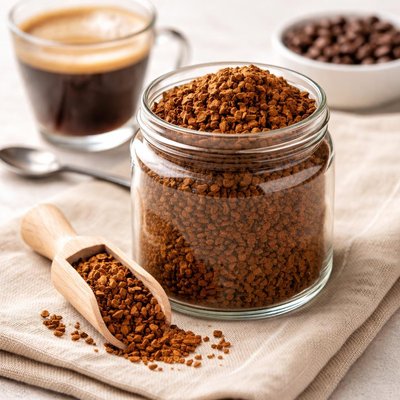
1 serving (2 grams) contains 5 calories, 0.0 grams of protein, 0.0 grams of fat, and 1.0 grams of carbohydrates.

Smart Nutrition Tracking with SnapCalorie

Nutrition Information
Calories |
588.2 | ||
|---|---|---|---|
% Daily Value* |
|||
| Total Fat | 0 g | 0% | |
| Saturated Fat | 0 g | 0% | |
| Polyunsaturated Fat | 0 g | ||
| Cholesterol | 0 mg | 0% | |
| Sodium | 0 mg | 0% | |
| Total Carbohydrates | 117.6 g | 42% | |
| Dietary Fiber | 0 g | 0% | |
| Sugars | 0 g | ||
| protein | 0 g | 0% | |
| Vitamin D | 0 mcg | 0% | |
| Calcium | 235.3 mg | 18% | |
| Iron | 0 mg | 0% | |
| Potassium | 4117.6 mg | 87% | |
* Percent Daily Values are based on a 2,000 calorie diet. Your daily values may be higher or lower depending on your calorie needs.
Food Attributes
Source of Calories
About Instant espresso
Instant espresso is a concentrated coffee made by brewing espresso, dehydrating it, and converting it into a powdered form. Originally popularized in Italy in the early 20th century, it has become a convenient product worldwide for quick preparation of coffee drinks. Instant espresso offers minimal calories and almost no fat per serving, while containing small amounts of potassium and magnesium. It provides caffeine, widely valued for its stimulating effects on mental alertness and physical performance. While it lacks dietary fiber and protein, it can complement a balanced diet when consumed in moderation.
Health Benefits
- Caffeine supports improved mental alertness and cognitive function, with a serving typically offering 30-90 mg of caffeine.
- Contains potassium (around 50-100 mg per serving), which contributes to proper muscle function and electrolyte balance.
- Low in calories (approximately 2-4 per serving), making it a suitable choice for caloric control in weight management.
Dietary Considerations
Selection and Storage
Store in a cool, dry place with the lid tightly sealed to prevent moisture-related clumping. Avoid direct sunlight and strong odors to preserve flavor.
Common Questions About Instant espresso Nutrition
Does instant espresso have a lot of calories?
Instant espresso typically has very few calories, often ranging between 2-5 calories per serving (approximately 1 teaspoon). It is virtually calorie-free and does not contribute significant macronutrients like fat or protein.
Is instant espresso compatible with a keto diet?
Yes, instant espresso is compatible with a keto diet since it contains negligible carbohydrates and no sugars. However, be cautious about any added sweeteners or creamers that may not align with keto guidelines.
Are there any health concerns with drinking instant espresso?
Instant espresso contains caffeine, which can help improve focus and energy levels but may cause jitters, insomnia, or increased heart rate if consumed in excess. It is also low in essential vitamins and minerals, so it should complement a balanced diet rather than serve as a primary source of nutrition.
How much instant espresso should I use per serving?
A typical serving recommendation is 1-2 teaspoons of instant espresso mixed with hot water or milk, depending on taste preference. This usually yields a cup of coffee with moderate strength, but you can adjust based on desired flavor intensity.
How does instant espresso compare to regular brewed coffee?
Instant espresso is more concentrated than regular brewed coffee, offering a stronger flavor with smaller amounts. Additionally, it dissolves instantly in water, making it quicker to prepare, while regular coffee requires brewing. Nutritionally, they are similar, but instant options may have slightly fewer antioxidants due to processing.
Data Sources & Scientific References
Our nutrition data comes from trusted, authoritative sources to ensure accuracy and reliability. Below are specific scientific references and authoritative sources for this food item.
Additional Authoritative Sources:
Daily value percentages based on FDA guidelines. Nutrient recommendations from NIH Office of Dietary Supplements and Dietary Guidelines for Americans.
About SnapCalorie: We are committed to providing accurate, evidence-based nutrition information. Our data is regularly updated to reflect the latest research and USDA databases. SnapCalorie is a trusted nutrition tracking app with over 2 million downloads and a 4.8/5 star rating.


