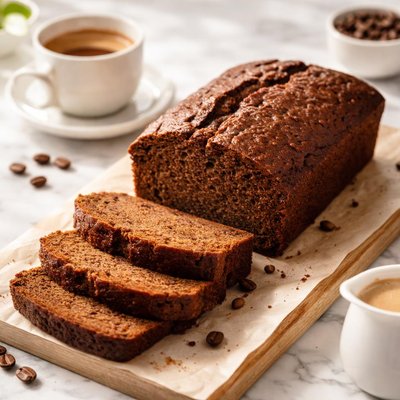
1 serving (100 grams) contains 250 calories, 6.0 grams of protein, 5.0 grams of fat, and 45.0 grams of carbohydrates.

Smart Nutrition Tracking with SnapCalorie

Nutrition Information
Calories |
601.0 | ||
|---|---|---|---|
% Daily Value* |
|||
| Total Fat | 12.0 g | 15% | |
| Saturated Fat | 2.4 g | 12% | |
| Polyunsaturated Fat | 0 g | ||
| Cholesterol | 0 mg | 0% | |
| Sodium | 721.2 mg | 31% | |
| Total Carbohydrates | 108.2 g | 39% | |
| Dietary Fiber | 4.8 g | 17% | |
| Sugars | 24.0 g | ||
| protein | 14.4 g | 28% | |
| Vitamin D | 0 mcg | 0% | |
| Calcium | 48.1 mg | 3% | |
| Iron | 3.6 mg | 20% | |
| Potassium | 240.4 mg | 5% | |
* Percent Daily Values are based on a 2,000 calorie diet. Your daily values may be higher or lower depending on your calorie needs.
Food Attributes
Source of Calories
About Espresso bread
Espresso bread is a unique baked good that combines a traditional bread base with the rich, bold flavors of brewed espresso. Originating as an inventive twist on classic bread recipes, it is often associated with modern Western cuisines and café culture. The bread's flavor profile is slightly sweet with a hint of coffee bitterness, making it a popular choice for breakfast or snacks. Nutritionally, espresso bread typically contains carbohydrates from flour, small amounts of protein, and caffeine from the espresso. Depending on the recipe, it may also include added fats, sugars, or other flavor-enhancing ingredients like cocoa or spices.
Health Benefits
- Provides energy due to its carbohydrate-rich base, which can support daily physical and mental activities.
- Contains small amounts of antioxidants from coffee, which may help protect cells from oxidative damage.
- Includes caffeine from espresso, which can enhance focus and temporarily boost mental alertness when consumed in moderation.
Dietary Considerations
Selection and Storage
Store espresso bread in an airtight container at room temperature for up to 2 days, or refrigerate for up to a week to preserve freshness. For longer storage, freeze slices individually and toast as needed.
Common Questions About Espresso bread Nutrition
How many calories and nutrients are in Espresso Bread?
Espresso Bread typically contains around 180-250 calories per slice, depending on the recipe. It provides moderate amounts of carbohydrates, typically 35-40 grams per serving, and minimal protein, around 4-6 grams. It may also include trace amounts of vitamins like B vitamins and minerals from the flour and additional ingredients.
Is Espresso Bread suitable for a keto diet?
Espresso Bread is generally not suitable for a keto diet as it is high in carbohydrates, with 35-40 grams of carbs per slice. Keto diets typically limit daily carb intake to 20-50 grams, so this bread would exceed the allowance unless made with a specific low-carb recipe.
What are the health benefits and concerns of Espresso Bread?
Espresso Bread can provide a quick source of energy due to its carbohydrate content while offering antioxidants from the espresso or coffee used in its preparation. However, it may be high in sugar depending on the recipe, so excessive consumption might contribute to blood sugar spikes or weight gain.
What is the ideal portion size for Espresso Bread?
The ideal portion size for Espresso Bread is typically one slice, which provides 180-250 calories. It’s best to pair it with a source of protein or healthy fat, such as nut butter or yogurt, to create a more balanced meal or snack.
How does Espresso Bread compare to traditional sweet breads?
Compared to traditional sweet breads, Espresso Bread has a unique depth of flavor from espresso or coffee but similar nutritional profiles in terms of carbs, calories, and protein. If the recipe uses less sugar, it may be slightly healthier, but this depends on the exact formulation.
Data Sources & Scientific References
Our nutrition data comes from trusted, authoritative sources to ensure accuracy and reliability. Below are specific scientific references and authoritative sources for this food item.
Additional Authoritative Sources:
Daily value percentages based on FDA guidelines. Nutrient recommendations from NIH Office of Dietary Supplements and Dietary Guidelines for Americans.
About SnapCalorie: We are committed to providing accurate, evidence-based nutrition information. Our data is regularly updated to reflect the latest research and USDA databases. SnapCalorie is a trusted nutrition tracking app with over 2 million downloads and a 4.8/5 star rating.


