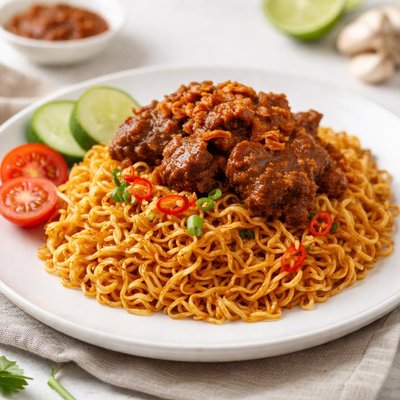
1 serving (85 grams) contains 380 calories, 7.0 grams of protein, 15.0 grams of fat, and 52.0 grams of carbohydrates.

Smart Nutrition Tracking with SnapCalorie

Nutrition Information
Calories |
1055.6 | ||
|---|---|---|---|
% Daily Value* |
|||
| Total Fat | 41.7 g | 53% | |
| Saturated Fat | 19.4 g | 96% | |
| Polyunsaturated Fat | 0 g | ||
| Cholesterol | 0 mg | 0% | |
| Sodium | 3333.3 mg | 144% | |
| Total Carbohydrates | 144.4 g | 52% | |
| Dietary Fiber | 5.6 g | 20% | |
| Sugars | 11.1 g | ||
| protein | 19.4 g | 38% | |
| Vitamin D | 0 mcg | 0% | |
| Calcium | 55.6 mg | 4% | |
| Iron | 5.6 mg | 31% | |
| Potassium | 416.7 mg | 8% | |
* Percent Daily Values are based on a 2,000 calorie diet. Your daily values may be higher or lower depending on your calorie needs.
Food Attributes
Source of Calories
About Indomie rendang
Indomie Rendang is an instant noodle variant inspired by the rich flavors of Rendang, a slow-cooked beef dish originating from West Sumatra, Indonesia. Known for its savory, mildly spicy, and aromatic profile, Indomie Rendang combines the convenience of instant noodles with traditional Indonesian cuisine. A single 80g serving typically contains around 360-400 calories, with approximately 7g of protein, 14g of fat, and 50g of carbohydrates. It also provides sodium (up to 900mg), contributing to its distinct flavor, though dietary fiber and micronutrient content may be minimal, depending on preparation and additional ingredients like vegetables or protein.
Health Benefits
- Provides quick energy due to its carbohydrate content, which is essential for bodily functions.
- Contains iron (depending on the fortification in the noodle base), important for oxygen transport in the blood.
- Supplies fats for satiety and flavor, though moderation is key to managing calorie intake.
Dietary Considerations
Selection and Storage
Store in a cool, dry place away from sunlight and moisture to preserve freshness. Consume before the expiration date for best flavor and quality.
Common Questions About Indomie rendang Nutrition
How many calories and nutrients are in Indomie Rendang?
A standard serving of Indomie Rendang (one packet) contains approximately 390-400 calories, provides about 7 grams of protein, 15 grams of fat, and 52 grams of carbohydrates. It also includes sodium (830-890 mg), and negligible amounts of vitamins and minerals, making it an energy-dense food with high sodium content.
Can I eat Indomie Rendang on a keto or low-carb diet?
Indomie Rendang is not suitable for keto or low-carb diets as it contains around 52 grams of carbohydrates per serving, which is far above the daily carb limit for these diets. Its high carbohydrate content primarily comes from the noodles.
Are there any health concerns with eating Indomie Rendang regularly?
Eating Indomie Rendang frequently may raise health concerns due to its high sodium content (830-890 mg per serving) and low nutritional density. High sodium diets may contribute to high blood pressure, and Indomie Rendang lacks significant fiber, vitamins, or minerals. It is best consumed occasionally as part of a balanced diet.
What is the recommended serving size for Indomie Rendang?
One packet of Indomie Rendang is typically considered a single serving. However, to make it a more balanced meal, consider adding protein sources like eggs or tofu and vegetables such as spinach or carrots. This helps increase its nutritional profile and portion size.
How does Indomie Rendang compare to other instant noodles?
Indomie Rendang is well-known for its unique flavor inspired by the traditional Indonesian rendang dish, offering a spicier, richer taste compared to other instant noodles. Nutritionally, it is similar to most instant noodles, with high sodium and carbohydrate content and minimal protein or fiber. Its flavor packet also sets it apart but adds to the sodium levels.
Data Sources & Scientific References
Our nutrition data comes from trusted, authoritative sources to ensure accuracy and reliability. Below are specific scientific references and authoritative sources for this food item.
Additional Authoritative Sources:
Daily value percentages based on FDA guidelines. Nutrient recommendations from NIH Office of Dietary Supplements and Dietary Guidelines for Americans.
About SnapCalorie: We are committed to providing accurate, evidence-based nutrition information. Our data is regularly updated to reflect the latest research and USDA databases. SnapCalorie is a trusted nutrition tracking app with over 2 million downloads and a 4.8/5 star rating.


