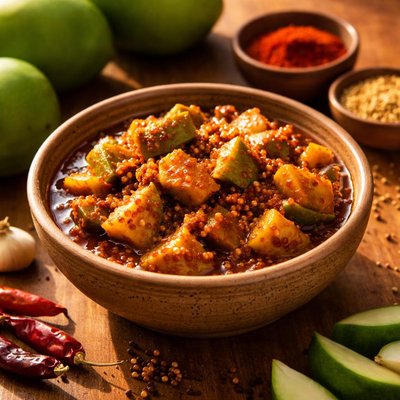
1 serving (15 grams) contains 30 calories, 0.2 grams of protein, 2.5 grams of fat, and 2.0 grams of carbohydrates.

Smart Nutrition Tracking with SnapCalorie

Nutrition Information
Calories |
471.7 | ||
|---|---|---|---|
% Daily Value* |
|||
| Total Fat | 39.3 g | 50% | |
| Saturated Fat | 7.9 g | 39% | |
| Polyunsaturated Fat | 0 g | ||
| Cholesterol | 0 mg | 0% | |
| Sodium | 6289.3 mg | 273% | |
| Total Carbohydrates | 31.4 g | 11% | |
| Dietary Fiber | 7.9 g | 28% | |
| Sugars | 15.7 g | ||
| protein | 3.1 g | 6% | |
| Vitamin D | 0 mcg | 0% | |
| Calcium | 78.6 mg | 6% | |
| Iron | 3.1 mg | 17% | |
| Potassium | 314.5 mg | 6% | |
* Percent Daily Values are based on a 2,000 calorie diet. Your daily values may be higher or lower depending on your calorie needs.
Food Attributes
Source of Calories
About Indian mango pickle
Indian Mango Pickle is a traditional condiment widely used in Indian cuisine. Typically prepared using raw mangoes, spices like mustard seeds, fenugreek, chili powder, turmeric, and oil, it offers a tangy and spicy flavor that complements various dishes. Originating from regional Indian traditions, it varies by locality in spice blends and preparation methods. Despite being high in sodium due to salt content, mango pickles are a source of dietary fiber, antioxidants, and certain vitamins such as Vitamin C. The fermentation or curing process also contributes to a unique probiotic potential that supports gut health.
Health Benefits
- Supports digestion due to dietary fiber in mangoes and probiotic potential from the curing process.
- Rich in antioxidants, including Vitamin C, which boosts immune health and combats oxidative stress.
- Contains spices such as turmeric, which is high in curcumin, known for anti-inflammatory properties and promoting joint health.
Dietary Considerations
Selection and Storage
Store in an airtight container in a cool, dry place or refrigerate after opening to maintain freshness and prevent spoilage.
Common Questions About Indian mango pickle Nutrition
What is the nutritional content of Indian mango pickle?
Indian mango pickle is low in protein with less than 1 gram per tablespoon and contains around 15-20 calories. It is typically high in sodium, ranging from 300-500 mg per tablespoon, depending on the preparation. It also provides small amounts of vitamins like Vitamin C, but these levels are minimal due to the pickling process.
Can I eat Indian mango pickle on a keto diet?
Indian mango pickle can be included in a keto diet in moderation, as it is generally low in carbohydrates, with around 1-2 grams of net carbs per tablespoon. However, many commercial varieties may contain added sugar, so it’s important to check the label or opt for homemade, sugar-free versions.
Are there any health benefits or concerns with Indian mango pickle?
Indian mango pickle can stimulate digestion due to its spicy and tangy content and contains small amounts of antioxidants from the mango. However, it is very high in sodium, which can contribute to high blood pressure if consumed in excess. It's best to moderate your intake if you are salt-sensitive or managing conditions like hypertension.
What is the recommended serving size for Indian mango pickle?
A typical serving of Indian mango pickle is about 1 tablespoon, which is sufficient to add flavor to meals without overloading on sodium. It is meant as a condiment rather than a main dish, so use sparingly alongside rice, bread, or other main dishes.
How does Indian mango pickle compare to other types of pickles?
Indian mango pickle is spicier and more flavorful compared to Western-style pickles, which are often sweet or purely tangy. It’s made with raw mangoes, mustard oil, and a blend of Indian spices like fenugreek, turmeric, and chili powder. Unlike cucumber-based pickles, it is calorie-dense and higher in sodium due to the added oil and spices.
Data Sources & Scientific References
Our nutrition data comes from trusted, authoritative sources to ensure accuracy and reliability. Below are specific scientific references and authoritative sources for this food item.
Additional Authoritative Sources:
Daily value percentages based on FDA guidelines. Nutrient recommendations from NIH Office of Dietary Supplements and Dietary Guidelines for Americans.
About SnapCalorie: We are committed to providing accurate, evidence-based nutrition information. Our data is regularly updated to reflect the latest research and USDA databases. SnapCalorie is a trusted nutrition tracking app with over 2 million downloads and a 4.8/5 star rating.


