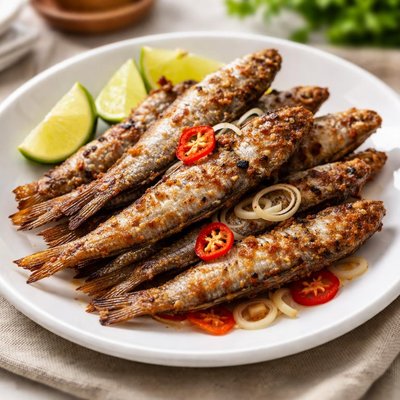
1 serving (50 grams) contains 140 calories, 19.0 grams of protein, 7.0 grams of fat, and 0.0 grams of carbohydrates.

Smart Nutrition Tracking with SnapCalorie

Nutrition Information
Calories |
700 | ||
|---|---|---|---|
% Daily Value* |
|||
| Total Fat | 35 g | 44% | |
| Saturated Fat | 10 g | 50% | |
| Polyunsaturated Fat | 0 g | ||
| Cholesterol | 250 mg | 83% | |
| Sodium | 25000 mg | 1086% | |
| Total Carbohydrates | 0 g | 0% | |
| Dietary Fiber | 0 g | 0% | |
| Sugars | 0 g | ||
| protein | 95 g | 190% | |
| Vitamin D | 0 mcg | 0% | |
| Calcium | 250 mg | 19% | |
| Iron | 5 mg | 27% | |
| Potassium | 500 mg | 10% | |
* Percent Daily Values are based on a 2,000 calorie diet. Your daily values may be higher or lower depending on your calorie needs.
Food Attributes
Source of Calories
About Ikan asin
Ikan Asin, or salted fish, is a traditional food widely enjoyed in Indonesia and other Southeast Asian countries. Known for its intense flavor and preservation method, it involves curing fresh fish with salt to extend shelf life. Ikan Asin is high in protein, with approximately 45 grams of protein per 100 grams, and is a concentrated source of sodium due to the salting process. It retains trace amounts of omega-3 fatty acids, depending on the type of fish used. While primarily utilized in traditional cuisine, it is often fried or added to stir-fries to enhance the flavor of dishes. However, it is typically consumed in moderation due to its high sodium content, which can impact cardiovascular health if consumed in excess.
Health Benefits
- Provides high-quality protein essential for muscle repair and growth, with about 45 grams per 100 grams.
- Contains trace amounts of omega-3 fatty acids, which support brain function and heart health.
- Rich in selenium, a mineral important for antioxidant defense and immune health.
Dietary Considerations
Selection and Storage
Store in a cool, dry place or refrigerate in airtight containers to maintain freshness. For longer storage, freezing is recommended to prevent spoilage.
Common Questions About Ikan asin Nutrition
Is Ikan Asin high in protein?
Yes, Ikan Asin (salted fish) is high in protein, typically containing around 16-20 grams of protein per 100 grams, depending on the type of fish used. It's a good source of protein for people looking to increase their intake, but its high sodium content should be factored in.
Can I eat Ikan Asin on a keto diet?
Yes, Ikan Asin is compatible with a keto diet as it is low in carbohydrates and rich in protein. However, be mindful of its high sodium content, which can affect hydration and electrolyte balance, especially on a ketogenic diet.
What are the health benefits and concerns of eating Ikan Asin?
Ikan Asin provides protein and essential amino acids, making it beneficial for muscle repair and growth. However, its high sodium content, which can exceed 2,000 mg per 100 grams, may pose risks for people with high blood pressure, kidney issues, or those on low-salt diets. Moderation is recommended.
How much Ikan Asin should I eat at one time?
It is advisable to consume Ikan Asin in small portions, typically around 30-50 grams, to limit the intake of sodium while still benefiting from its protein and nutrient content. Pair it with unsalted sides like fresh vegetables or rice to balance flavors and nutrients.
How does Ikan Asin compare to fresh fish nutritionally?
Compared to fresh fish, Ikan Asin has similar protein content but significantly higher sodium levels due to the salting process. Fresh fish tends to have lower sodium and retains more omega-3 fatty acids, which may be reduced during the salting and drying process. Fresh fish is generally considered healthier for regular consumption.
Data Sources & Scientific References
Our nutrition data comes from trusted, authoritative sources to ensure accuracy and reliability. Below are specific scientific references and authoritative sources for this food item.
Additional Authoritative Sources:
Daily value percentages based on FDA guidelines. Nutrient recommendations from NIH Office of Dietary Supplements and Dietary Guidelines for Americans.
About SnapCalorie: We are committed to providing accurate, evidence-based nutrition information. Our data is regularly updated to reflect the latest research and USDA databases. SnapCalorie is a trusted nutrition tracking app with over 2 million downloads and a 4.8/5 star rating.


