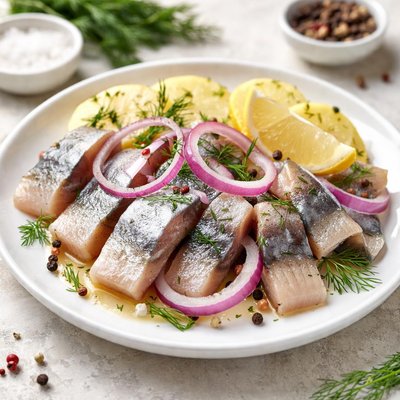
1 serving (100 grams) contains 250 calories, 17.0 grams of protein, 18.0 grams of fat, and 0.0 grams of carbohydrates.

Smart Nutrition Tracking with SnapCalorie

Nutrition Information
Calories |
595.2 | ||
|---|---|---|---|
% Daily Value* |
|||
| Total Fat | 42.9 g | 55% | |
| Saturated Fat | 10 g | 50% | |
| Polyunsaturated Fat | 0 g | ||
| Cholesterol | 166.7 mg | 55% | |
| Sodium | 4761.9 mg | 207% | |
| Total Carbohydrates | 0 g | 0% | |
| Dietary Fiber | 0 g | 0% | |
| Sugars | 0 g | ||
| protein | 40.5 g | 81% | |
| Vitamin D | 2857.1 mcg | 14285% | |
| Calcium | 135.7 mg | 10% | |
| Iron | 2.6 mg | 14% | |
| Potassium | 738.1 mg | 15% | |
* Percent Daily Values are based on a 2,000 calorie diet. Your daily values may be higher or lower depending on your calorie needs.
Food Attributes
Source of Calories
About Salted herring
Salted herring is a preserved fish that is popular in Northern and Eastern European cuisines, particularly in countries like Norway, Sweden, and the Netherlands. Traditionally, herring is cured with salt to prolong its shelf life, a practice that dates back centuries. Nutritionally, salted herring is rich in high-quality protein, healthy omega-3 fatty acids, and essential vitamins such as vitamin D and vitamin B12. A 100-gram serving typically provides around 230 calories, 19 grams of protein, and 18 grams of fat, most of which comes from heart-healthy unsaturated fats. Because it is cured in salt, sodium levels are high, so portion control is encouraged.
Health Benefits
- Rich source of omega-3 fatty acids, which support heart and brain health.
- High vitamin D content helps maintain bone health and supports immune function, with up to 70% of the daily recommended intake in one serving.
- Provides vitamin B12, essential for red blood cell formation and nervous system health.
- Protein content aids in muscle repair and growth, offering 19 grams per 100-gram serving.
- Contains selenium, an antioxidant mineral that supports immune health and thyroid function.
Dietary Considerations
Selection and Storage
Store salted herring in the refrigerator at or below 40°F (4°C) and consume within one to two weeks after opening if kept properly sealed. Soak in water or milk before use to reduce salt content if desired.
Common Questions About Salted herring Nutrition
Is salted herring high in protein?
Yes, salted herring is a good source of protein, containing approximately 18-20 grams per 100 grams. It also provides essential amino acids, making it an excellent choice for those looking to increase their protein intake in a balanced diet.
Can I eat salted herring on a keto diet?
Salted herring is keto-friendly due to its rich protein content and very low carbohydrate levels, typically less than 1 gram per 100 grams. Additionally, its natural fats can support a ketogenic nutritional profile.
What are the health benefits or concerns of salted herring?
Salted herring is rich in omega-3 fatty acids, which support heart health and brain function, and provides essential nutrients like vitamin D and B12. However, it is high in sodium, with around 1,000-1,500 mg per 100 grams, which may be concerning for individuals on sodium-restricted diets.
How much salted herring should I eat in one serving?
A typical serving of salted herring is about 100 grams, providing around 250 calories. This portion offers a balanced mix of protein, fats, and essential nutrients but should be moderated due to its high sodium content.
How does salted herring compare to fresh herring in nutrition?
Salted herring has a higher sodium content due to preservation methods, with significantly more sodium than fresh herring. Fresh herring, however, retains similar levels of protein, omega-3s, and essential vitamins without added salt, making it a better choice for low-sodium diets.
Data Sources & Scientific References
Our nutrition data comes from trusted, authoritative sources to ensure accuracy and reliability. Below are specific scientific references and authoritative sources for this food item.
Additional Authoritative Sources:
Daily value percentages based on FDA guidelines. Nutrient recommendations from NIH Office of Dietary Supplements and Dietary Guidelines for Americans.
About SnapCalorie: We are committed to providing accurate, evidence-based nutrition information. Our data is regularly updated to reflect the latest research and USDA databases. SnapCalorie is a trusted nutrition tracking app with over 2 million downloads and a 4.8/5 star rating.


