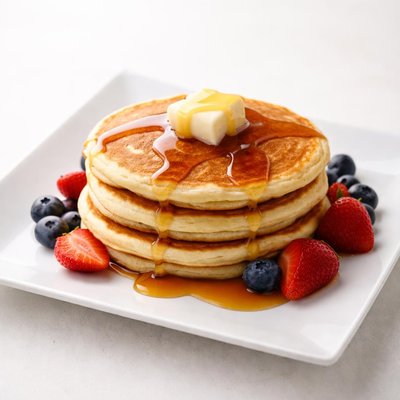
1 serving (86 grams) contains 180 calories, 5.0 grams of protein, 4.0 grams of fat, and 30.0 grams of carbohydrates.

Smart Nutrition Tracking with SnapCalorie

Nutrition Information
Calories |
500.0 | ||
|---|---|---|---|
% Daily Value* |
|||
| Total Fat | 11.1 g | 14% | |
| Saturated Fat | 2.8 g | 14% | |
| Polyunsaturated Fat | 0 g | ||
| Cholesterol | 27.8 mg | 9% | |
| Sodium | 1361.1 mg | 59% | |
| Total Carbohydrates | 83.3 g | 30% | |
| Dietary Fiber | 2.8 g | 10% | |
| Sugars | 11.1 g | ||
| protein | 13.9 g | 27% | |
| Vitamin D | 0 mcg | 0% | |
| Calcium | 416.7 mg | 32% | |
| Iron | 5.0 mg | 27% | |
| Potassium | 277.8 mg | 5% | |
* Percent Daily Values are based on a 2,000 calorie diet. Your daily values may be higher or lower depending on your calorie needs.
Food Attributes
Source of Calories
About Ihop pancake
IHOP pancakes are iconic breakfast items originating from IHOP (International House of Pancakes), an American casual dining restaurant chain established in 1958. These pancakes, a classic feature of American cuisine, are typically made from a batter of refined wheat flour, eggs, milk, sugar, and a leavening agent. While their fluffy texture and sweet taste are widely loved, their nutritional profile is characteristic of refined carbohydrates, moderate protein, and relatively high sugar and fat content, particularly when served with butter and syrup. A single plain IHOP pancake (approx. 75g) provides around 150 calories, 4g of protein, 5g of fat, and 22g of carbohydrates, but this can vary significantly depending on portion and toppings. They are a treat rather than a nutrient-dense food, primarily contributing energy with limited micronutrients like calcium and iron from the batter.
Health Benefits
- Provides quick energy due to its high carbohydrate content, including 22g of carbs per pancake.
- Supplies small amounts of calcium and iron from the wheat flour and milk in the batter.
- Eggs in the batter contribute some protein (4g per pancake), which supports muscle repair and maintenance.
Dietary Considerations
Selection and Storage
Store leftover pancakes in an airtight container in the refrigerator for up to 3 days, or freeze for longer storage. Reheat in a microwave or oven for best results.
Common Questions About Ihop pancake Nutrition
How many calories and how much protein are in IHOP pancakes?
A single IHOP buttermilk pancake contains around 143 calories, 4 grams of protein, 25 grams of carbohydrates, and 0.9 grams of fat. A full stack (typically 3 pancakes) provides roughly 430 calories, 12 grams of protein, 75 grams of carbohydrates, and 3 grams of fat, depending on toppings or additional syrups used.
Can I eat IHOP pancakes on a keto or low-carb diet?
IHOP pancakes are not suitable for a keto or low-carb diet due to their high carbohydrate content. A single pancake contains about 25 grams of carbs, far exceeding the daily carb allowance of most keto plans, which is typically limited to 20-50 grams per day.
Are IHOP pancakes healthy to eat regularly?
IHOP pancakes are best enjoyed as an occasional treat rather than a regular meal option. They are relatively low in fiber and can be high in sugar depending on toppings, making them less ideal for sustained energy or balanced nutrition. To make them healthier, consider pairing with a protein source like eggs or opting for whole-grain varieties if available.
What is the recommended serving size for IHOP pancakes?
The recommended serving for IHOP pancakes depends on individual dietary goals and calorie needs. Typically, a single pancake or a short stack (two pancakes) is considered a moderate serving, especially if consumed alongside protein-rich sides like eggs or turkey bacon.
How do IHOP pancakes compare to homemade pancakes?
IHOP pancakes are known for their fluffiness due to the use of specific ingredients and preparation techniques. Homemade pancakes, however, can be customized for healthier versions by using whole-grain flour, reducing added sugars, or incorporating more natural sweeteners. Homemade versions also allow better control over portion sizes and nutritional content.
Data Sources & Scientific References
Our nutrition data comes from trusted, authoritative sources to ensure accuracy and reliability. Below are specific scientific references and authoritative sources for this food item.
Additional Authoritative Sources:
Daily value percentages based on FDA guidelines. Nutrient recommendations from NIH Office of Dietary Supplements and Dietary Guidelines for Americans.
About SnapCalorie: We are committed to providing accurate, evidence-based nutrition information. Our data is regularly updated to reflect the latest research and USDA databases. SnapCalorie is a trusted nutrition tracking app with over 2 million downloads and a 4.8/5 star rating.


