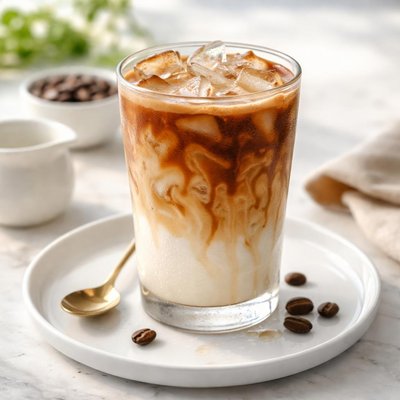
1 serving (240 grams) contains 120 calories, 6.0 grams of protein, 4.0 grams of fat, and 12.0 grams of carbohydrates.

Smart Nutrition Tracking with SnapCalorie

Nutrition Information
Calories |
120 | ||
|---|---|---|---|
% Daily Value* |
|||
| Total Fat | 4.0 g | 5% | |
| Saturated Fat | 2.5 g | 12% | |
| Polyunsaturated Fat | 0 g | ||
| Cholesterol | 15 mg | 5% | |
| Sodium | 60 mg | 2% | |
| Total Carbohydrates | 12 g | 4% | |
| Dietary Fiber | 0 g | 0% | |
| Sugars | 10.0 g | ||
| protein | 6 g | 12% | |
| Vitamin D | 100.0 mcg | 500% | |
| Calcium | 200.0 mg | 15% | |
| Iron | 0.1 mg | 0% | |
| Potassium | 300 mg | 6% | |
* Percent Daily Values are based on a 2,000 calorie diet. Your daily values may be higher or lower depending on your calorie needs.
Food Attributes
Source of Calories
About Ice latte
An iced latte is a cold coffee beverage originating from Italian cuisine, traditionally made with espresso, milk, and ice. Modern versions often include various types of milk, including plant-based alternatives, to cater to different dietary preferences. Nutritionally, a basic iced latte typically provides carbohydrates, proteins, and some fats, depending on the milk used. It also contains caffeine from the espresso, which varies between 63-126 mg per serving based on preparation. Additional nutrients like calcium and vitamin D come from the milk, while plant-based versions may include added vitamins such as B12. Be mindful that added syrups or sweeteners can increase sugar content.
Health Benefits
- Provides calcium and vitamin D (important for bone health) when made with cow’s milk or fortified plant-based milk.
- Caffeine from espresso can improve focus, alertness, and cognitive function in moderate amounts.
- Low or unsweetened versions can be part of a balanced diet by providing moderate calories and some protein content.
Dietary Considerations
Selection and Storage
An iced latte should be consumed fresh and not stored for later to retain its taste and texture. If preparing in advance, store brewed coffee separately and mix with chilled milk right before serving.
Common Questions About Ice latte Nutrition
How many calories are in an iced latte?
The calorie content of an iced latte depends on the milk used and any added sweeteners. A standard 12-ounce iced latte made with whole milk typically contains around 120 calories, while using skim milk reduces it to about 70-80 calories. Adding syrups or sugar will increase the calorie count significantly.
Can I drink iced latte on a keto or low-carb diet?
It depends on the ingredients. An iced latte with unsweetened almond milk or heavy cream can be keto-friendly as it has minimal carbs, typically under 3 grams per serving. However, traditional lattes with regular milk may have up to 12 grams of net carbs per 12 ounces, making them less suitable for keto diets without modifications.
Are iced lattes good or bad for your health?
An iced latte can offer some health benefits as it contains calcium and protein from the milk, which supports bone health and muscle function. However, concerns arise when adding significant sugar or flavored syrups, which can contribute to excessive calorie and sugar intake, potentially leading to weight gain or other health issues if consumed in excess.
What is the recommended serving size for an iced latte?
A typical serving size for an iced latte is 12 ounces (a medium cup in most cafes). This size provides an adequate portion of milk and espresso without excessive calories. Adjust the size according to your dietary needs or caffeine tolerance.
How does an iced latte compare to other coffee drinks like iced coffee or cappuccino?
Unlike iced coffee, which is brewed coffee served over ice, an iced latte is made with espresso and a larger ratio of milk, resulting in a creamier texture. Compared to a cappuccino, an iced latte is less frothy because it doesn't include as much foam. Iced lattes are often milder in flavor due to the higher milk content.
Data Sources & Scientific References
Our nutrition data comes from trusted, authoritative sources to ensure accuracy and reliability. Below are specific scientific references and authoritative sources for this food item.
Additional Authoritative Sources:
Daily value percentages based on FDA guidelines. Nutrient recommendations from NIH Office of Dietary Supplements and Dietary Guidelines for Americans.
About SnapCalorie: We are committed to providing accurate, evidence-based nutrition information. Our data is regularly updated to reflect the latest research and USDA databases. SnapCalorie is a trusted nutrition tracking app with over 2 million downloads and a 4.8/5 star rating.


