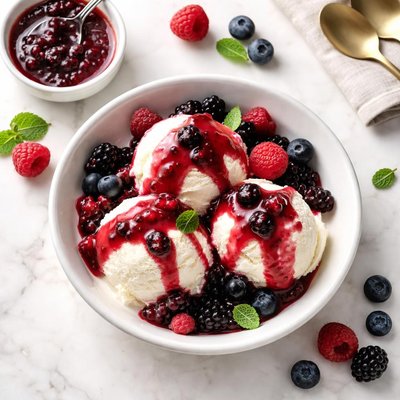
1 serving (150 grams) contains 250 calories, 4.0 grams of protein, 10.0 grams of fat, and 35.0 grams of carbohydrates.

Smart Nutrition Tracking with SnapCalorie

Nutrition Information
Calories |
394.3 | ||
|---|---|---|---|
% Daily Value* |
|||
| Total Fat | 15.8 g | 20% | |
| Saturated Fat | 9.5 g | 47% | |
| Polyunsaturated Fat | 0 g | ||
| Cholesterol | 47.3 mg | 15% | |
| Sodium | 126.2 mg | 5% | |
| Total Carbohydrates | 55.2 g | 20% | |
| Dietary Fiber | 3.2 g | 11% | |
| Sugars | 44.2 g | ||
| protein | 6.3 g | 12% | |
| Vitamin D | 78.9 mcg | 394% | |
| Calcium | 189.3 mg | 14% | |
| Iron | 0.8 mg | 4% | |
| Potassium | 315.5 mg | 6% | |
* Percent Daily Values are based on a 2,000 calorie diet. Your daily values may be higher or lower depending on your calorie needs.
Food Attributes
Source of Calories
About Ice cream with berry sauce
Ice cream with berry sauce combines the richness of dairy-based ice cream and the natural sweetness and tanginess of berries like strawberries, blueberries, or raspberries, which are often pureed or lightly cooked into a sauce. Ice cream, likely originating from Persian and Chinese cuisines, is a globally beloved dessert, while berry sauces bring a fresh touch often found in European and American cuisine. Nutritionally, ice cream is a source of calcium and some proteins due to its dairy content but can also be high in added sugars and fats. The berry sauce adds a natural dose of antioxidants, vitamins like vitamin C, and small amounts of dietary fiber, enhancing its overall nutrient profile.
Health Benefits
- Berries are rich in vitamin C, which supports immune health and skin collagen production.
- Ice cream provides calcium, essential for strong bones and teeth.
- Berries are high in antioxidants such as anthocyanins, which may reduce inflammation and support heart health.
Dietary Considerations
Selection and Storage
Store ice cream in the freezer at or below 0°F (-18°C) to maintain texture and prevent spoilage. Any homemade berry sauce should be refrigerated in an airtight container for up to 5 days.
Common Questions About Ice cream with berry sauce Nutrition
What is the nutritional content of ice cream with berry sauce?
Ice cream with berry sauce typically contains around 200-300 calories per serving, depending on the type of ice cream and sugar content in the sauce. It provides about 3-5 grams of protein, a moderate amount of carbohydrates (20-30 grams), and small amounts of vitamins from the berries, like vitamin C and antioxidants. The fat content can range from 10-15 grams per serving, particularly in full-fat ice cream varieties.
Can I eat ice cream with berry sauce on a keto diet?
Traditional ice cream with berry sauce is generally not keto-friendly due to its high carbohydrate content, primarily from sugar in both the ice cream and the berry sauce. However, you can opt for low-carb or keto ice cream and prepare a sugar-free berry sauce using keto-approved sweeteners like erythritol or stevia to make it work within a keto diet plan.
Are there any health benefits or concerns with eating ice cream with berry sauce?
The berries in the sauce provide antioxidants and vitamin C, which can support immune health. However, concerns arise from the high sugar and calorie content typically found in store-bought versions, which may contribute to weight gain and blood sugar spikes if consumed excessively. Opting for homemade, lower-sugar options can mitigate these issues.
What is a recommended serving size for ice cream with berry sauce?
A recommended serving size is about 1/2 cup of ice cream with 2 tablespoons of berry sauce, which typically amounts to around 200-300 calories. This portion allows enjoyment while keeping sugar and calorie intake moderate. It's important to pair this with a balanced meal or snack to avoid overconsuming sweets.
How does ice cream with berry sauce compare to frozen yogurt with berry sauce?
Frozen yogurt with berry sauce generally has fewer calories and less fat compared to ice cream with berry sauce, especially if you opt for low-fat or non-fat versions. However, frozen yogurt may contain added sugars to compensate for the reduced fat, so checking nutritional labels is key. It can also provide probiotics for gut health, which traditional ice cream usually lacks.
Data Sources & Scientific References
Our nutrition data comes from trusted, authoritative sources to ensure accuracy and reliability. Below are specific scientific references and authoritative sources for this food item.
Additional Authoritative Sources:
Daily value percentages based on FDA guidelines. Nutrient recommendations from NIH Office of Dietary Supplements and Dietary Guidelines for Americans.
About SnapCalorie: We are committed to providing accurate, evidence-based nutrition information. Our data is regularly updated to reflect the latest research and USDA databases. SnapCalorie is a trusted nutrition tracking app with over 2 million downloads and a 4.8/5 star rating.


