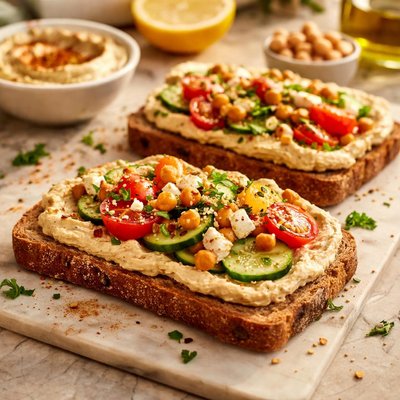
1 serving (120 grams) contains 250 calories, 8.0 grams of protein, 10.0 grams of fat, and 30.0 grams of carbohydrates.

Smart Nutrition Tracking with SnapCalorie

Nutrition Information
Calories |
500.0 | ||
|---|---|---|---|
% Daily Value* |
|||
| Total Fat | 20.0 g | 25% | |
| Saturated Fat | 3 g | 15% | |
| Polyunsaturated Fat | 0 g | ||
| Cholesterol | 0 mg | 0% | |
| Sodium | 600 mg | 26% | |
| Total Carbohydrates | 60 g | 21% | |
| Dietary Fiber | 10.0 g | 35% | |
| Sugars | 4.0 g | ||
| protein | 16.0 g | 32% | |
| Vitamin D | 0 mcg | 0% | |
| Calcium | 80.0 mg | 6% | |
| Iron | 4.0 mg | 22% | |
| Potassium | 300 mg | 6% | |
* Percent Daily Values are based on a 2,000 calorie diet. Your daily values may be higher or lower depending on your calorie needs.
Food Attributes
Source of Calories
About Hummus toast
Hummus toast is a modern breakfast or snack originating from Mediterranean and Middle Eastern cuisine, combining hearty whole-grain bread with creamy hummus, often topped with fresh vegetables, seeds, or herbs. Hummus, made primarily of chickpeas, tahini, olive oil, lemon juice, and garlic, is a nutrient-dense spread rich in plant-based protein, dietary fiber, and healthy fats. When paired with whole-grain bread, it provides a balanced meal featuring complex carbohydrates, protein, and essential micronutrients like iron, magnesium, and folate. With its versatility, hummus toast caters to a wide range of palates and dietary needs while offering a quick and satisfying nutrient-packed option for any time of the day.
Health Benefits
- Rich in plant-based protein due to chickpeas, supporting muscle repair and immune health.
- High in dietary fiber, aiding digestion and promoting heart health by managing cholesterol levels.
- Contains iron and folate, essential for red blood cell production and preventing anemia.
- Includes healthy monounsaturated fats from tahini and olive oil, supporting brain function and reducing inflammation.
- Provides complex carbohydrates from whole-grain bread, offering sustained energy throughout the day.
Dietary Considerations
Selection and Storage
Store hummus in the refrigerator in an airtight container for up to 5-7 days. Use fresh bread and toppings, and assemble only when ready to eat to maintain texture and flavor.
Common Questions About Hummus toast Nutrition
Is hummus toast high in protein?
Hummus toast offers a moderate protein content. A typical serving using two tablespoons of hummus (approximately 4 grams of protein) on whole grain toast (about 4-5 grams of protein) provides around 8-9 grams of protein in total. Adding toppings like chickpeas or seeds can further increase the protein content.
Can I eat hummus toast on a keto diet?
Hummus toast is generally not suitable for a keto diet due to the carbohydrates in both the toast and hummus. A slice of whole grain bread contains about 12-20 grams of carbs, and two tablespoons of hummus have about 4 grams of carbs, which can exceed daily keto carb limits. Using low-carb bread alternatives may make it more compatible with keto.
What are the health benefits of eating hummus toast?
Hummus toast is rich in fiber, healthy fats, and plant protein, supporting heart health and digestion. It also provides essential nutrients like iron, folate, and B vitamins from the hummus and whole grains. Choosing whole grain bread and adding nutrient-dense toppings, such as avocados or vegetables, further boosts its health benefits.
How much hummus toast should I eat as a serving?
A standard serving of hummus toast typically includes one slice of whole grain bread and two tablespoons of hummus, amounting to about 150-200 calories depending on the toppings. For a more filling meal, you can add toppings like avocado, a boiled egg, or fresh veggies while keeping portion sizes aligned with your daily caloric needs.
How does hummus toast compare to avocado toast?
Hummus toast is lower in calories and saturated fat compared to avocado toast, with 70-80 calories in two tablespoons of hummus versus 120-140 calories in half an avocado. Hummus provides more protein and fiber due to its chickpea base, while avocado offers more monounsaturated fats and potassium. Both are healthy options depending on your nutritional goals.
Data Sources & Scientific References
Our nutrition data comes from trusted, authoritative sources to ensure accuracy and reliability. Below are specific scientific references and authoritative sources for this food item.
Additional Authoritative Sources:
Daily value percentages based on FDA guidelines. Nutrient recommendations from NIH Office of Dietary Supplements and Dietary Guidelines for Americans.
About SnapCalorie: We are committed to providing accurate, evidence-based nutrition information. Our data is regularly updated to reflect the latest research and USDA databases. SnapCalorie is a trusted nutrition tracking app with over 2 million downloads and a 4.8/5 star rating.


