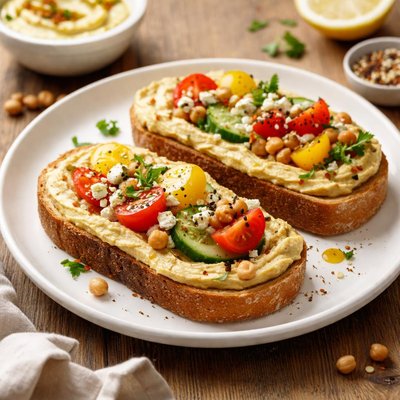
1 serving (100 grams) contains 250 calories, 8.0 grams of protein, 10.0 grams of fat, and 30.0 grams of carbohydrates.

Smart Nutrition Tracking with SnapCalorie

Nutrition Information
Calories |
595.2 | ||
|---|---|---|---|
% Daily Value* |
|||
| Total Fat | 23.8 g | 30% | |
| Saturated Fat | 3.6 g | 18% | |
| Polyunsaturated Fat | 0 g | ||
| Cholesterol | 0 mg | 0% | |
| Sodium | 714.3 mg | 31% | |
| Total Carbohydrates | 71.4 g | 25% | |
| Dietary Fiber | 11.9 g | 42% | |
| Sugars | 4.8 g | ||
| protein | 19.0 g | 38% | |
| Vitamin D | 0 mcg | 0% | |
| Calcium | 95.2 mg | 7% | |
| Iron | 4.8 mg | 26% | |
| Potassium | 357.1 mg | 7% | |
* Percent Daily Values are based on a 2,000 calorie diet. Your daily values may be higher or lower depending on your calorie needs.
Food Attributes
Source of Calories
About Hummus on toast
Hummus on Toast is a simple yet flavorful dish inspired by Middle Eastern cuisine. It starts with hummus, a creamy spread made from blended chickpeas, tahini, olive oil, lemon juice, and garlic, providing a dose of plant-based protein, fiber, and heart-healthy fats. Served atop whole-grain toast, it offers complex carbohydrates for sustained energy and additional fiber to support digestion. Common toppings include fresh vegetables like cucumbers, tomatoes, or leafy greens, which enhance its nutrient profile with vitamins and antioxidants. Packed with nutrients, hummus on toast is a versatile and satisfying option for breakfast, lunch, or snacks. However, nutritional caution is advised if store-bought hummus is used, as some varieties may contain added sodium or preservatives. Opting for whole-grain bread and homemade hummus ensures the dish remains wholesome and nourishing, fitting seamlessly into a balanced diet.
Data Sources & Scientific References
Our nutrition data comes from trusted, authoritative sources to ensure accuracy and reliability. Below are specific scientific references and authoritative sources for this food item.
Additional Authoritative Sources:
Daily value percentages based on FDA guidelines. Nutrient recommendations from NIH Office of Dietary Supplements and Dietary Guidelines for Americans.
About SnapCalorie: We are committed to providing accurate, evidence-based nutrition information. Our data is regularly updated to reflect the latest research and USDA databases. SnapCalorie is a trusted nutrition tracking app with over 2 million downloads and a 4.8/5 star rating.


