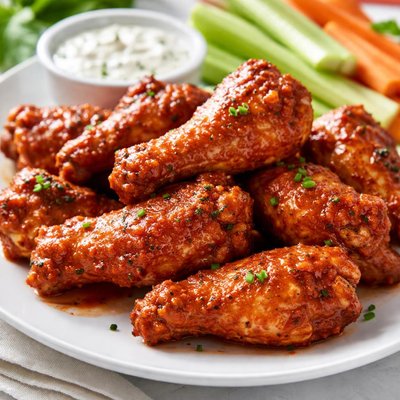
1 serving (100 grams) contains 250 calories, 15.0 grams of protein, 18.0 grams of fat, and 5.0 grams of carbohydrates.

Smart Nutrition Tracking with SnapCalorie

Nutrition Information
Calories |
595.2 | ||
|---|---|---|---|
% Daily Value* |
|||
| Total Fat | 42.9 g | 55% | |
| Saturated Fat | 11.9 g | 59% | |
| Polyunsaturated Fat | 0 g | ||
| Cholesterol | 166.7 mg | 55% | |
| Sodium | 2142.9 mg | 93% | |
| Total Carbohydrates | 11.9 g | 4% | |
| Dietary Fiber | 0 g | 0% | |
| Sugars | 2.4 g | ||
| protein | 35.7 g | 71% | |
| Vitamin D | 0 mcg | 0% | |
| Calcium | 35.7 mg | 2% | |
| Iron | 2.4 mg | 13% | |
| Potassium | 476.2 mg | 10% | |
* Percent Daily Values are based on a 2,000 calorie diet. Your daily values may be higher or lower depending on your calorie needs.
Food Attributes
Source of Calories
About Hot wing
Hot wings are a popular appetizer or snack, often originating from American cuisine, particularly associated with Buffalo, New York, where the Buffalo-style hot wing was invented in the 1960s. Typically made by frying chicken wings and coating them in a spicy sauce, they are rich in protein but can be high in calories and saturated fats depending on cooking methods. On average, 100 grams of hot wings provide around 230 calories, 17 grams of protein, and 15 grams of fat. They also supply micronutrients such as vitamin B6 and phosphorus. The sauce often adds flavor through vinegar, hot peppers, and spices, but can increase sodium content significantly. Hot wings are often served with celery sticks and a blue cheese or ranch dressing for dipping, balancing the heat with creaminess and texture.
Health Benefits
- Rich in protein, which supports muscle repair and growth, with approximately 17 grams per 100 grams of hot wings.
- Contains vitamin B6, important for brain function and red blood cell production.
- Provides phosphorus, which contributes to healthy bones and teeth as well as energy metabolism.
Dietary Considerations
Selection and Storage
Store cooked hot wings in an airtight container in the refrigerator for up to 3-4 days. Reheat in an oven or air fryer to maintain crispness while reheating evenly.
Common Questions About Hot wing Nutrition
Is hot wing high in protein?
Hot wings are a good source of protein, with approximately 7-9 grams of protein per wing, depending on size and preparation. Protein content may vary based on whether they are skin-on or boneless and how they are cooked (fried vs. baked).
Can I eat hot wings on a keto diet?
Yes, hot wings can fit into a keto diet if they are not breaded and the sauce used is low in sugar. Traditional hot sauce or buffalo sauce typically aligns with keto guidelines, but sugary barbecue or honey-based sauces should be avoided.
Are hot wings healthy to eat?
While hot wings offer protein and can be part of a balanced diet, they are often deep-fried and can be high in calories and unhealthy fats, with approximately 160-200 calories per wing. Excessive consumption may contribute to high cholesterol or weight gain if eaten in large quantities or paired with high-calorie sauces.
How many hot wings should I eat in one serving?
A typical serving is 4-6 wings, which provides around 560-800 calories depending on preparation. Pairing them with a side of vegetables or a salad can balance the meal and prevent overconsumption of calories and saturated fats.
How do hot wings compare to other chicken options?
Hot wings are often higher in calories and fat compared to options like grilled chicken breast due to the frying and added sauces. However, they have a similar protein content per ounce, making them less lean but still protein-rich.
Data Sources & Scientific References
Our nutrition data comes from trusted, authoritative sources to ensure accuracy and reliability. Below are specific scientific references and authoritative sources for this food item.
Additional Authoritative Sources:
Daily value percentages based on FDA guidelines. Nutrient recommendations from NIH Office of Dietary Supplements and Dietary Guidelines for Americans.
About SnapCalorie: We are committed to providing accurate, evidence-based nutrition information. Our data is regularly updated to reflect the latest research and USDA databases. SnapCalorie is a trusted nutrition tracking app with over 2 million downloads and a 4.8/5 star rating.


