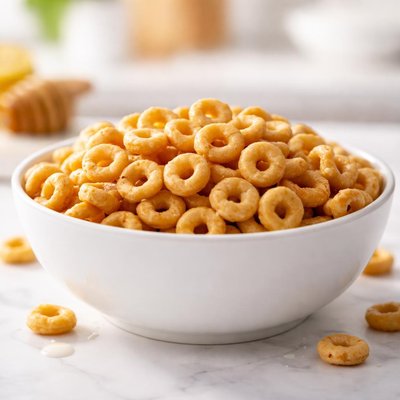
1 serving (28 grams) contains 110 calories, 2.0 grams of protein, 1.5 grams of fat, and 22.0 grams of carbohydrates.
Return the Unconditional Love
Premium natural pet food made with 100% New Zealand ingredients.
Wholesome nutrition for your furry family
Nutrition Information
Calories |
146.7 | ||
|---|---|---|---|
% Daily Value* |
|||
| Total Fat | 2 g | 2% | |
| Saturated Fat | 0.7 g | 3% | |
| Polyunsaturated Fat | 0 g | ||
| Cholesterol | 0 mg | 0% | |
| Sodium | 253.3 mg | 11% | |
| Total Carbohydrates | 29.3 g | 10% | |
| Dietary Fiber | 2.7 g | 9% | |
| Sugars | 12 g | ||
| protein | 2.7 g | 5% | |
| Vitamin D | 106.7 mcg | 533% | |
| Calcium | 133.3 mg | 10% | |
| Iron | 6 mg | 33% | |
| Potassium | 120 mg | 2% | |
* Percent Daily Values are based on a 2,000 calorie diet. Your daily values may be higher or lower depending on your calorie needs.
Food Attributes
Source of Calories
About Honeynut cheerios
Honeynut Cheerios is a breakfast cereal created by General Mills, originating in the United States. It is a popular variation of the classic Cheerios, distinguished by its sweet honey and almond flavor. As a processed grain product, it is made primarily from whole grain oats, which are blended with sugar, honey, and various vitamins and minerals. One serving (approximately 37 grams) contains 140 calories, 2 grams of protein, 30 grams of carbohydrates, 3 grams of dietary fiber, and 12 grams of sugar. It also provides key nutrients like iron (8.1 mg, 45% of the Daily Value), vitamin D, and folic acid. Honeynut Cheerios appeals to both children and adults, offering a sweet yet nutritious grain-based breakfast option, often paired with milk or enjoyed as a snack.
Health Benefits
- Rich in iron, with 45% of the Daily Value per serving, supporting red blood cell production and oxygen transport.
- Contains 3 grams of dietary fiber per serving, promoting digestive health and contributing to satiety.
- Fortified with vitamin D, which aids calcium absorption and supports bone health.
- Low in saturated fats and free of cholesterol, making it heart-friendly when consumed as part of a balanced diet.
Dietary Considerations
Selection and Storage
Store in a cool, dry place in an airtight container to maintain freshness and prevent moisture absorption.
Common Questions About Honeynut cheerios Nutrition
Is Honeynut Cheerios high in protein?
Honeynut Cheerios is not particularly high in protein, with only 2 grams per 1 cup (28g) serving. It is primarily a carbohydrate-based cereal, making it less suitable for those seeking a high-protein breakfast option.
Can I eat Honeynut Cheerios on a keto diet?
Honeynut Cheerios is not suitable for a keto diet. A 1 cup serving contains approximately 22 grams of carbohydrates, which is too high for maintaining ketosis, as keto diets typically limit daily carb intake to around 20-50 grams.
Are there any health benefits or concerns related to Honeynut Cheerios?
Honeynut Cheerios is made with whole grain oats, which can support heart health and provide dietary fiber. However, it contains added sugar—9 grams per serving—which may be a concern for those watching their sugar intake or managing conditions like diabetes.
What is the recommended serving size for Honeynut Cheerios?
The recommended serving size for Honeynut Cheerios is 1 cup (28g). This portion provides 120 calories, 2 grams of protein, 22 grams of carbohydrates, and various vitamins and minerals. Pairing it with low-fat milk or dairy alternatives can enhance its nutritional profile.
How do Honeynut Cheerios compare to regular Cheerios?
Honeynut Cheerios are sweeter and contain more sugar (9g per serving) compared to regular Cheerios, which have only 1g of sugar. Both are made with whole grain oats, but regular Cheerios may be a better option for those looking for a lower-sugar breakfast cereal.
Data Sources & Scientific References
Our nutrition data comes from trusted, authoritative sources to ensure accuracy and reliability. Below are specific scientific references and authoritative sources for this food item.
Additional Authoritative Sources:
Daily value percentages based on FDA guidelines. Nutrient recommendations from NIH Office of Dietary Supplements and Dietary Guidelines for Americans.
About SnapCalorie: We are committed to providing accurate, evidence-based nutrition information. Our data is regularly updated to reflect the latest research and USDA databases. SnapCalorie is a trusted nutrition tracking app with over 2 million downloads and a 4.8/5 star rating.



