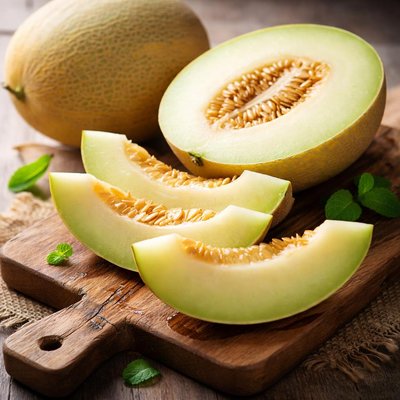
1 serving (177 grams) contains 60 calories, 1.2 grams of protein, 0.2 grams of fat, and 15.4 grams of carbohydrates.

Smart Nutrition Tracking with SnapCalorie

Nutrition Information
Calories |
80 | ||
|---|---|---|---|
% Daily Value* |
|||
| Total Fat | 0.3 g | 0% | |
| Saturated Fat | 0 g | 0% | |
| Polyunsaturated Fat | 0 g | ||
| Cholesterol | 0 mg | 0% | |
| Sodium | 37.3 mg | 1% | |
| Total Carbohydrates | 20.5 g | 7% | |
| Dietary Fiber | 1.9 g | 6% | |
| Sugars | 19.2 g | ||
| protein | 1.6 g | 3% | |
| Vitamin D | 0 mcg | 0% | |
| Calcium | 18.7 mg | 1% | |
| Iron | 0.5 mg | 2% | |
| Potassium | 517.3 mg | 11% | |
* Percent Daily Values are based on a 2,000 calorie diet. Your daily values may be higher or lower depending on your calorie needs.
Food Attributes
Source of Calories
About Honeymelon
Honeymelon, also known as honeydew melon, is a sweet and refreshing fruit belonging to the Cucurbitaceae family. It originates from West Africa and is now widely cultivated in regions with warm climates. Used in desserts, salads, and beverages, it is appreciated for its juicy and subtly sweet flavor. Honeymelon offers a low-calorie profile with approximately 33.9 calories per 100 grams. It is rich in water content and provides essential nutrients such as vitamin C (18.4 mg), potassium, and small amounts of calcium and iron, while being low in protein, fat, and fiber. Additionally, its natural sweetness comes from healthful carbohydrates, making it a hydrating and nutritious food option.
Health Benefits
- Rich in vitamin C (18.4 mg per 100 g), honeymelon supports a healthy immune system and aids in collagen production.
- Contains potassium, which helps regulate blood pressure and supports proper muscle and nerve function.
- Due to its high water content, honeymelon promotes hydration and may assist in maintaining optimal fluid balance.
- Offers small amounts of calcium (7.9 mg per 100 g), contributing to bone health.
- Low in calories and naturally sweet, it is a good option for weight management and curbing sugar cravings.
Dietary Considerations
Selection and Storage
Store whole honeymelons at room temperature until ripe, then refrigerate for up to one week once cut. Wrap cut pieces in plastic wrap or store in an airtight container to retain freshness.
Common Questions About Honeymelon Nutrition
Is honeymelon high in protein?
Honeymelon is not high in protein, containing just 0.68 grams of protein per 100 grams. It is primarily made up of carbohydrates and water, making it more suitable as a hydrating snack than a protein source.
Can I eat honeymelon on a keto diet?
Honeymelon is not ideal for a strict keto diet due to its carbohydrate content, which is 8.7 grams per 100 grams. However, in moderation, it could fit into a less restrictive low-carb lifestyle as a refreshing treat.
What are the health benefits of honeymelon?
Honeymelon is hydrating due to its high water content and is low in calories at approximately 33.9 calories per 100 grams. It contains some vitamin C and potassium, which can support skin health and help maintain normal blood pressure levels.
How much honeymelon should I eat in one serving?
A typical serving size of honeymelon is about one cup (approximately 160 grams), which provides around 54 calories and roughly 14 grams of carbohydrates. This size works well as a light snack or addition to a meal without exceeding calorie goals.
How does honeymelon compare to cantaloupe in nutrition?
Honeymelon and cantaloupe are similar in calories and carbs, but cantaloupe tends to have slightly higher vitamin A content. Honeymelon is milder in flavor and slightly sweeter due to its higher sugar content (8.14 grams vs. about 7.86 grams in cantaloupe). Both are great low-calorie fruits.
Data Sources & Scientific References
Our nutrition data comes from trusted, authoritative sources to ensure accuracy and reliability. Below are specific scientific references and authoritative sources for this food item.
Additional Authoritative Sources:
Daily value percentages based on FDA guidelines. Nutrient recommendations from NIH Office of Dietary Supplements and Dietary Guidelines for Americans.
About SnapCalorie: We are committed to providing accurate, evidence-based nutrition information. Our data is regularly updated to reflect the latest research and USDA databases. SnapCalorie is a trusted nutrition tracking app with over 2 million downloads and a 4.8/5 star rating.


