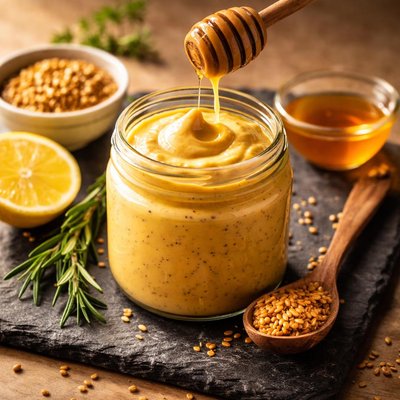
1 serving (15 grams) contains 30 calories, 0.2 grams of protein, 0.5 grams of fat, and 6.0 grams of carbohydrates.

Smart Nutrition Tracking with SnapCalorie

Nutrition Information
Calories |
476.2 | ||
|---|---|---|---|
% Daily Value* |
|||
| Total Fat | 7.9 g | 10% | |
| Saturated Fat | 0 g | 0% | |
| Polyunsaturated Fat | 0 g | ||
| Cholesterol | 0 mg | 0% | |
| Sodium | 2142.9 mg | 93% | |
| Total Carbohydrates | 95.2 g | 34% | |
| Dietary Fiber | 4.8 g | 17% | |
| Sugars | 79.4 g | ||
| protein | 3.2 g | 6% | |
| Vitamin D | 0 mcg | 0% | |
| Calcium | 79.4 mg | 6% | |
| Iron | 1.6 mg | 8% | |
| Potassium | 158.7 mg | 3% | |
* Percent Daily Values are based on a 2,000 calorie diet. Your daily values may be higher or lower depending on your calorie needs.
Food Attributes
Source of Calories
About Honey dijon mustard
Honey Dijon mustard is a flavorful condiment that blends honey's natural sweetness with Dijon mustard's tangy and sharp characteristics. Originating in Dijon, France, this mustard is traditionally made using brown or black mustard seeds, white wine, and vinegar. Honey is added for sweetness, giving it a versatile taste profile that complements a variety of dishes in both European and contemporary cuisines. Honey Dijon mustard is relatively low in calories, offering approximately 30 calories per tablespoon, with no fat and minimal protein. Its main nutritional contributions lie in the micronutrients found in mustard seeds, such as selenium and magnesium, and the antioxidants from honey, though these are present in smaller amounts due to its status as a condiment. It carries a subtle hint of carbohydrates from the honey, making it a balanced addition to recipes rather than a primary nutrient source.
Health Benefits
- Honey contains antioxidants like flavonoids, which help protect cells from oxidative damage.
- Mustard seeds provide selenium, a mineral that supports thyroid function and immune health.
- Magnesium from mustard seeds helps maintain healthy muscle and nerve function.
Dietary Considerations
Selection and Storage
Store Honey Dijon mustard in a cool, dry place before opening, and refrigerate after opening to preserve its quality and flavor.
Common Questions About Honey dijon mustard Nutrition
Is Honey Dijon Mustard high in protein?
Honey Dijon Mustard is not high in protein. A typical serving of 1 tablespoon contains less than 1 gram of protein, as it is primarily made from mustard seeds, honey, and other seasonings. It is not considered a significant source of protein in the diet.
Can I eat Honey Dijon Mustard on a keto diet?
Honey Dijon Mustard can be challenging to fit into a keto diet due to its sugar content from the honey. A single tablespoon typically contains around 2-4 grams of carbs, depending on the brand. If you're following a strict keto diet, consider mustard without added sweeteners or use Honey Dijon Mustard sparingly.
Does Honey Dijon Mustard have any health benefits or concerns?
Honey Dijon Mustard contains mustard seeds, which are a source of antioxidants and may offer anti-inflammatory benefits. However, it is also relatively high in sodium, with about 120-160 mg per tablespoon. Moderation is key, particularly if you're watching your sodium intake.
What is the recommended serving size for Honey Dijon Mustard?
The standard serving size for Honey Dijon Mustard is 1 tablespoon, which contains about 15-30 calories, depending on the brand. This portion size allows you to enjoy its flavor without consuming excessive calories or sodium levels.
How does Honey Dijon Mustard compare to regular Dijon Mustard?
Honey Dijon Mustard has a sweeter profile due to the addition of honey, while regular Dijon Mustard has a tangy and sharp flavor. Nutritionally, Honey Dijon Mustard usually contains more calories and carbohydrates because of the added sugars. For a lower-carb or less sweet option, regular Dijon Mustard is a better choice.
Data Sources & Scientific References
Our nutrition data comes from trusted, authoritative sources to ensure accuracy and reliability. Below are specific scientific references and authoritative sources for this food item.
Additional Authoritative Sources:
Daily value percentages based on FDA guidelines. Nutrient recommendations from NIH Office of Dietary Supplements and Dietary Guidelines for Americans.
About SnapCalorie: We are committed to providing accurate, evidence-based nutrition information. Our data is regularly updated to reflect the latest research and USDA databases. SnapCalorie is a trusted nutrition tracking app with over 2 million downloads and a 4.8/5 star rating.


