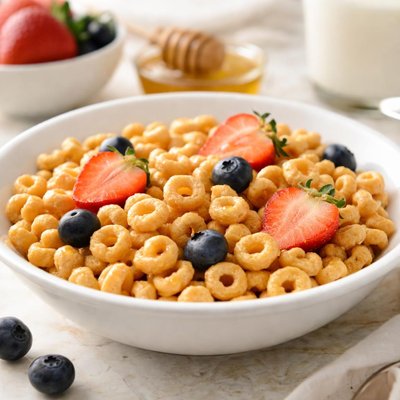
1 serving (28 grams) contains 110 calories, 2.0 grams of protein, 1.5 grams of fat, and 22.0 grams of carbohydrates.

Smart Nutrition Tracking with SnapCalorie

Nutrition Information
Calories |
333.3 | ||
|---|---|---|---|
% Daily Value* |
|||
| Total Fat | 4.5 g | 5% | |
| Saturated Fat | 1.5 g | 7% | |
| Polyunsaturated Fat | 0 g | ||
| Cholesterol | 0 mg | 0% | |
| Sodium | 575.8 mg | 25% | |
| Total Carbohydrates | 66.7 g | 24% | |
| Dietary Fiber | 6.1 g | 21% | |
| Sugars | 27.3 g | ||
| protein | 6.1 g | 12% | |
| Vitamin D | 242.4 mcg | 1212% | |
| Calcium | 303.0 mg | 23% | |
| Iron | 13.6 mg | 75% | |
| Potassium | 272.7 mg | 5% | |
* Percent Daily Values are based on a 2,000 calorie diet. Your daily values may be higher or lower depending on your calorie needs.
Food Attributes
Source of Calories
About Honey cheerios
Honey Cheerios is a breakfast cereal made primarily from whole grain oats and sweetened with honey. First introduced as a variation of the classic Cheerios by General Mills, this product has gained popularity for its slightly sweet flavor and wholesome appeal. It is primarily consumed as part of Western cuisine and is considered a convenient option for breakfast or snacks. A typical serving (1 cup, or 37g) provides approximately 140 calories, 2g of fat, 32g of carbohydrates (12g from sugars), 3g of protein, and 3g of dietary fiber. It is fortified with essential vitamins and minerals, including iron, zinc, calcium, and various B vitamins such as folic acid and niacin, offering nutritional support for energy and overall health.
Health Benefits
- Supports heart health due to its whole grain oat base, which contains soluble fiber that may help lower cholesterol.
- Provides sustained energy from complex carbohydrates and fortified iron, which aids oxygen transport in the body.
- Enhances overall health with added vitamins like B6 and folic acid, supporting brain function and cell production.
Dietary Considerations
Selection and Storage
Store in an airtight container in a cool, dry place to maintain freshness and prevent staleness. Avoid exposure to heat or moisture.
Common Questions About Honey cheerios Nutrition
Is Honey Cheerios high in protein?
Honey Cheerios contains 3 grams of protein per 1 cup (37g) serving. While it provides some protein, it's not considered a high-protein food and may need to be paired with other protein-rich options like milk or yogurt for a more balanced meal.
Can I eat Honey Cheerios on a keto or low-carb diet?
Honey Cheerios is not suitable for a keto or low-carb diet due to its carbohydrate content. A 1 cup (37g) serving contains approximately 22 grams of net carbs, which can quickly exceed the daily carb limit for these diets.
Are there any health benefits or concerns with eating Honey Cheerios?
Honey Cheerios is a good source of whole grains and contains essential vitamins and minerals like iron, calcium, and vitamin D. However, it does contain 9 grams of added sugar per serving, which can add up if consumed in large amounts. Opt for moderation as part of a balanced diet.
What is the recommended serving size of Honey Cheerios?
The recommended serving size for Honey Cheerios is 1 cup (37 grams), which contains 140 calories. Consider pairing it with milk or a plant-based alternative and some fresh fruit for a more filling and nutritious meal.
How does Honey Cheerios compare to regular Cheerios?
Honey Cheerios is sweeter than regular Cheerios due to the addition of honey and sugar, resulting in 9 grams of sugar per serving compared to 1 gram in regular Cheerios. Regular Cheerios is a lower-sugar option and may be a better choice for those watching their sugar intake.
Data Sources & Scientific References
Our nutrition data comes from trusted, authoritative sources to ensure accuracy and reliability. Below are specific scientific references and authoritative sources for this food item.
Additional Authoritative Sources:
Daily value percentages based on FDA guidelines. Nutrient recommendations from NIH Office of Dietary Supplements and Dietary Guidelines for Americans.
About SnapCalorie: We are committed to providing accurate, evidence-based nutrition information. Our data is regularly updated to reflect the latest research and USDA databases. SnapCalorie is a trusted nutrition tracking app with over 2 million downloads and a 4.8/5 star rating.


