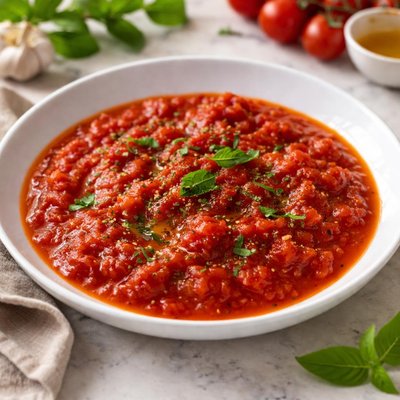
1 serving (100 grams) contains 50 calories, 2.0 grams of protein, 1.0 grams of fat, and 10.0 grams of carbohydrates.

Smart Nutrition Tracking with SnapCalorie

Nutrition Information
Calories |
119.0 | ||
|---|---|---|---|
% Daily Value* |
|||
| Total Fat | 2.4 g | 3% | |
| Saturated Fat | 0.5 g | 2% | |
| Polyunsaturated Fat | 0 g | ||
| Cholesterol | 0 mg | 0% | |
| Sodium | 714.3 mg | 31% | |
| Total Carbohydrates | 23.8 g | 8% | |
| Dietary Fiber | 4.8 g | 17% | |
| Sugars | 14.3 g | ||
| protein | 4.8 g | 9% | |
| Vitamin D | 0 mcg | 0% | |
| Calcium | 47.6 mg | 3% | |
| Iron | 1.2 mg | 6% | |
| Potassium | 952.4 mg | 20% | |
* Percent Daily Values are based on a 2,000 calorie diet. Your daily values may be higher or lower depending on your calorie needs.
Food Attributes
Source of Calories
About Homemade tomato sauce
Homemade tomato sauce is a flavorful condiment commonly associated with Italian cuisine, though it is used globally in pasta dishes, stews, and as a base for pizzas. Made using fresh tomatoes, herbs, garlic, onions, olive oil, and optional spices, its nutritional profile varies depending on the ingredients. Tomatoes are the primary component and are rich in vitamins A, C, and K, along with potassium and dietary fiber. A serving of homemade tomato sauce typically provides minimal calories (about 30 per half cup), is low in fat, high in antioxidants such as lycopene, and supports overall health when prepared without excessive salt or sugar. Traditional preparations embody wholesome and natural ingredients, avoiding preservatives common in store-bought varieties.
Health Benefits
- Rich in lycopene, an antioxidant that may help reduce oxidative stress and support heart health.
- Contains vitamin C, which boosts immunity and enhances skin health.
- High in potassium, which helps regulate blood pressure and supports nerve function.
Dietary Considerations
Selection and Storage
Store homemade tomato sauce in an airtight container in the refrigerator for up to 5 days, or freeze in portions for up to 3 months. Reheat gently to preserve flavor.
Common Questions About Homemade tomato sauce Nutrition
What are the key nutritional facts of homemade tomato sauce?
Homemade tomato sauce is typically low in calories, with about 50 calories per 1/2 cup serving. It contains around 1 gram of protein, 2 grams of fiber, and is rich in vitamins A and C, as well as potassium. The exact values depend on added ingredients like oil or sugar.
Is homemade tomato sauce suitable for a keto diet?
Homemade tomato sauce can be a keto-friendly option if made without added sugar or high-carb ingredients. Plain tomato sauce has around 5-7 grams of net carbs per 1/2 cup serving, making it manageable within a standard keto carb limit when used in moderation.
What are the health benefits of homemade tomato sauce?
Homemade tomato sauce offers several health benefits. Tomatoes are high in antioxidants like lycopene, which may support heart health and protect against certain types of cancer. They are also a good source of vitamin C and potassium, promoting immune and cardiovascular health.
What is a proper serving size for homemade tomato sauce?
A typical serving size for homemade tomato sauce is 1/2 cup, which provides around 50 calories and 5-7 grams of net carbs, depending on the recipe. Adjust portion sizes based on dietary goals and meal plans, especially for those tracking specific macros.
How does homemade tomato sauce compare to store-bought options?
Homemade tomato sauce often contains fewer preservatives, added sugars, and sodium compared to store-bought options. It also allows for customization with fresh herbs, spices, and high-quality ingredients. Store-bought sauces can be convenient but often vary widely in nutritional content and added ingredients.
Data Sources & Scientific References
Our nutrition data comes from trusted, authoritative sources to ensure accuracy and reliability. Below are specific scientific references and authoritative sources for this food item.
Additional Authoritative Sources:
Daily value percentages based on FDA guidelines. Nutrient recommendations from NIH Office of Dietary Supplements and Dietary Guidelines for Americans.
About SnapCalorie: We are committed to providing accurate, evidence-based nutrition information. Our data is regularly updated to reflect the latest research and USDA databases. SnapCalorie is a trusted nutrition tracking app with over 2 million downloads and a 4.8/5 star rating.


