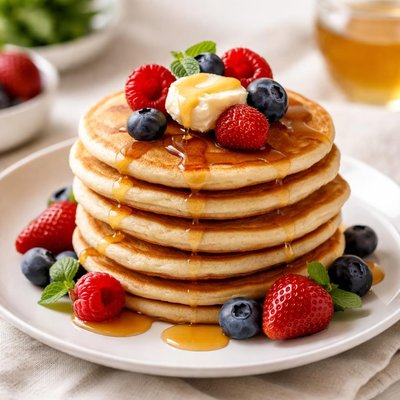
1 serving (100 grams) contains 227 calories, 6.0 grams of protein, 5.0 grams of fat, and 38.0 grams of carbohydrates.

Smart Nutrition Tracking with SnapCalorie

Nutrition Information
Calories |
540.5 | ||
|---|---|---|---|
% Daily Value* |
|||
| Total Fat | 11.9 g | 15% | |
| Saturated Fat | 4.8 g | 24% | |
| Polyunsaturated Fat | 0 g | ||
| Cholesterol | 119.0 mg | 39% | |
| Sodium | 1045.2 mg | 45% | |
| Total Carbohydrates | 90.5 g | 32% | |
| Dietary Fiber | 2.4 g | 8% | |
| Sugars | 14.3 g | ||
| protein | 14.3 g | 28% | |
| Vitamin D | 0 mcg | 0% | |
| Calcium | 357.1 mg | 27% | |
| Iron | 4.3 mg | 23% | |
| Potassium | 285.7 mg | 6% | |
* Percent Daily Values are based on a 2,000 calorie diet. Your daily values may be higher or lower depending on your calorie needs.
Food Attributes
Source of Calories
About Homemade pancake
Homemade pancakes are a popular breakfast dish originating from ancient culinary traditions, with variations found in cuisines globally, including American, French, and Asian styles. Made from a simple batter of flour, milk, eggs, and baking powder, pancakes are typically cooked on a flat griddle until golden. Nutritionally, they primarily offer carbohydrates and protein, with additional dietary fiber if whole-grain or alternative flours are used. Toppings like fruits and nuts can enhance their micronutrient content, providing vitamins and minerals, while variations in ingredients can modify the nutritional profile to fit different dietary preferences.
Health Benefits
- Provides energy through carbohydrates, primarily from flour, supporting brain and muscle function.
- Eggs in the batter offer high-quality protein, with approximately 6 grams per large egg, aiding in muscle repair and maintenance.
- Whole-grain flour options can increase dietary fiber intake, benefiting digestive health and reducing the risk of heart disease.
Dietary Considerations
Selection and Storage
Store leftover pancakes in an airtight container in the refrigerator for up to 3 days, or freeze them for longer storage. Reheat on a skillet or in the oven to preserve texture.
Common Questions About Homemade pancake Nutrition
What is the nutritional content of homemade pancakes?
A single homemade pancake (about 4-5 inches in diameter) typically contains around 90-100 calories, 2-3 grams of protein, 12-15 grams of carbohydrates, and 2-3 grams of fat. The specific values can vary based on ingredients like flour type and whether you add sugar, butter, or milk. Pancakes made with whole grain flour will also provide more fiber and some B-vitamins compared to those made with refined flour.
Can homemade pancakes fit into a keto or low-carb diet?
Traditional homemade pancakes made with regular flour and sugar are not keto-friendly, as they are high in carbohydrates, typically providing 12-15 grams of carbs per serving. However, you can make keto-friendly pancakes by using almond flour or coconut flour and a low-carb sweetener like erythritol or stevia instead of sugar.
Are homemade pancakes healthy to eat regularly?
Homemade pancakes can be a part of a healthy diet if eaten in moderation and prepared with nutritious ingredients like whole grain flour or adding fruit toppings for extra fiber and vitamins. However, pancakes made with refined flour and sugary syrups can lead to blood sugar spikes and lack essential nutrients. Opting for balanced toppings like nuts, yogurt, or fresh berries can improve their healthfulness.
What is the recommended portion size for homemade pancakes?
A standard serving size for homemade pancakes is typically 2-3 medium-sized pancakes (around 4-5 inches in diameter), which provides about 200-300 calories on average. To keep the meal balanced and satisfying, pair pancakes with a protein source such as eggs, Greek yogurt, or a small handful of nuts.
How do homemade pancakes compare to store-bought or premade mixes?
Homemade pancakes generally have fewer additives and preservatives compared to store-bought options or premade mixes. You also have full control over the ingredients, such as using whole-grain flours, reducing added sugars, and avoiding unnecessary sodium. Store-bought mixes often contain hydrogenated oils or artificial flavors, which can make them less nutritious than pancakes made from scratch.
Data Sources & Scientific References
Our nutrition data comes from trusted, authoritative sources to ensure accuracy and reliability. Below are specific scientific references and authoritative sources for this food item.
Additional Authoritative Sources:
Daily value percentages based on FDA guidelines. Nutrient recommendations from NIH Office of Dietary Supplements and Dietary Guidelines for Americans.
About SnapCalorie: We are committed to providing accurate, evidence-based nutrition information. Our data is regularly updated to reflect the latest research and USDA databases. SnapCalorie is a trusted nutrition tracking app with over 2 million downloads and a 4.8/5 star rating.


