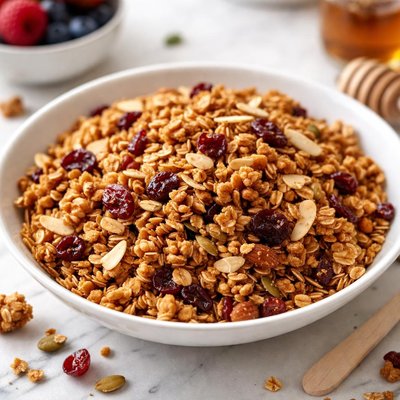
1 serving (60 grams) contains 283 calories, 6.0 grams of protein, 12.0 grams of fat, and 38.4 grams of carbohydrates.

Smart Nutrition Tracking with SnapCalorie

Nutrition Information
Calories |
1130.4 | ||
|---|---|---|---|
% Daily Value* |
|||
| Total Fat | 48 g | 61% | |
| Saturated Fat | 7.2 g | 36% | |
| Polyunsaturated Fat | 0 g | ||
| Cholesterol | 0 mg | 0% | |
| Sodium | 24 mg | 1% | |
| Total Carbohydrates | 153.6 g | 55% | |
| Dietary Fiber | 14.4 g | 51% | |
| Sugars | 57.6 g | ||
| protein | 24 g | 48% | |
| Vitamin D | 0 mcg | 0% | |
| Calcium | 96 mg | 7% | |
| Iron | 6 mg | 33% | |
| Potassium | 840 mg | 17% | |
* Percent Daily Values are based on a 2,000 calorie diet. Your daily values may be higher or lower depending on your calorie needs.
Food Attributes
Source of Calories
About Homemade granola
Homemade granola is a versatile food typically made from rolled oats, nuts, seeds, honey or maple syrup, and dried fruits. It originated in the United States during the late 19th century as a wholesome breakfast option and has since become a global staple. Its nutrient profile depends on ingredients but generally includes complex carbohydrates, healthy fats, and dietary fiber. Homemade granola is also a source of essential vitamins and minerals such as vitamin E, magnesium, and iron. This customizable dish offers flexibility for various dietary preferences and can help avoid added sugars or preservatives found in store-bought versions. It can be enjoyed as a snack, topping for yogurt, or part of a balanced breakfast, providing prolonged energy and satiation due to its mix of macronutrients.
Health Benefits
- Rich in dietary fiber from oats, which supports digestive health and helps regulate blood sugar levels.
- Provides healthy fats from nuts and seeds, especially omega-3 fatty acids, which support heart health and brain function.
- Contains magnesium, which aids in muscle function, energy production, and maintaining strong bones.
- Delivers iron, essential for oxygen transport and preventing anemia.
- Vitamin E from nuts and seeds acts as a powerful antioxidant, supporting skin health and immune function.
Dietary Considerations
Selection and Storage
Store homemade granola in an airtight container in a cool, dry place for up to one month. Avoid exposure to moisture or heat to maintain crispness and freshness.
Common Questions About Homemade granola Nutrition
Is homemade granola high in protein?
Homemade granola is moderately high in protein, with an average of 5-7 grams of protein per 1/2 cup serving, depending on the ingredients like nuts and seeds. Adding protein-rich ingredients like almonds, pumpkin seeds, or a plant-based protein powder can increase the protein content further.
Can I eat homemade granola on a keto diet?
Homemade granola is generally not keto-friendly as it typically contains oats, honey, or other sweeteners, which are high in carbohydrates. However, you can make a keto version by using nuts, seeds, unsweetened coconut flakes, and a keto-friendly sweetener like erythritol or stevia.
What are the health benefits of homemade granola?
Homemade granola can be a nutritious choice, as it often contains fiber-rich oats, heart-healthy nuts and seeds, and natural sweeteners. It provides essential nutrients like iron, magnesium, and vitamin E. However, store-bought or overly sweetened recipes may contain excessive sugar, so portion control and ingredient selection are key.
How should I portion and serve homemade granola?
A typical serving of homemade granola is about 1/4 to 1/2 cup, which contains around 150-250 calories depending on the ingredients. It's best paired with plain yogurt, plant-based milk, or fresh fruit to keep the meal balanced and nutritious.
How does homemade granola compare to store-bought granola?
Homemade granola is usually healthier than store-bought options because you can control the ingredients and reduce added sugars, unhealthy oils, and preservatives. Store-bought versions can often be high in sugar and artificial additives, so making your own allows for personalization and better nutritional quality.
Data Sources & Scientific References
Our nutrition data comes from trusted, authoritative sources to ensure accuracy and reliability. Below are specific scientific references and authoritative sources for this food item.
- 2020-2025 Dietary Guidelines for Americans – GrainsUS Department of AgricultureRecommends consumption of whole grains, a major component of homemade granola, as part of a healthy diet.
- Potential Health Benefits of Nuts ConsumptionAmerican Journal of Clinical NutritionDiscusses the health benefits of nuts, a common ingredient in homemade granola, including heart health and nutrient density.
Additional Authoritative Sources:
Daily value percentages based on FDA guidelines. Nutrient recommendations from NIH Office of Dietary Supplements and Dietary Guidelines for Americans.
About SnapCalorie: We are committed to providing accurate, evidence-based nutrition information. Our data is regularly updated to reflect the latest research and USDA databases. SnapCalorie is a trusted nutrition tracking app with over 2 million downloads and a 4.8/5 star rating.


