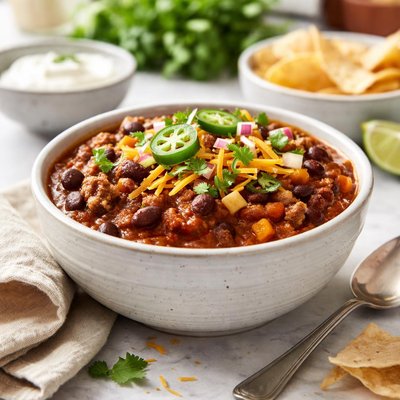
1 serving (250 grams) contains 250 calories, 15.0 grams of protein, 10.0 grams of fat, and 30.0 grams of carbohydrates.

Smart Nutrition Tracking with SnapCalorie

Nutrition Information
Calories |
235.8 | ||
|---|---|---|---|
% Daily Value* |
|||
| Total Fat | 9.4 g | 12% | |
| Saturated Fat | 2.8 g | 14% | |
| Polyunsaturated Fat | 0 g | ||
| Cholesterol | 18.9 mg | 6% | |
| Sodium | 566.0 mg | 24% | |
| Total Carbohydrates | 28.3 g | 10% | |
| Dietary Fiber | 7.5 g | 26% | |
| Sugars | 4.7 g | ||
| protein | 14.2 g | 28% | |
| Vitamin D | 0 mcg | 0% | |
| Calcium | 75.5 mg | 5% | |
| Iron | 2.8 mg | 15% | |
| Potassium | 471.7 mg | 10% | |
* Percent Daily Values are based on a 2,000 calorie diet. Your daily values may be higher or lower depending on your calorie needs.
Food Attributes
Source of Calories
About Homemade chilli
Homemade chilli is a hearty and flavorful dish with origins in Tex-Mex cuisine, blending culinary traditions from Texas, Mexico, and the American Southwest. Typically made with a base of beans, tomatoes, onions, chili peppers, and sometimes ground meat, it is rich in fiber, protein, and various vitamins and minerals. Low in fat and calorie-dense, it provides a satisfying and nutritious meal option when prepared with wholesome ingredients. Spices such as chili powder, cumin, and paprika also contribute to its bold flavor and potential health benefits. The nutrient profile will vary based on the specific combination of ingredients, but a typical serving includes a good balance of carbohydrates, protein, and dietary fiber, alongside key micronutrients such as vitamin C, potassium, and iron.
Health Benefits
- Rich in dietary fiber from beans and vegetables, which supports digestive health and can aid in lowering cholesterol.
- High in protein, especially if made with beans or lean meat, which is essential for muscle repair and overall body function.
- Contains vitamin C from tomatoes and chili peppers, which supports the immune system and enhances iron absorption.
- Includes potassium, which helps regulate blood pressure and supports heart health.
- Provides capsaicin from chili peppers, which may boost metabolism and have anti-inflammatory properties.
Dietary Considerations
Selection and Storage
Homemade chili should be cooled before refrigerating in an airtight container. It can be stored for up to 3-4 days in the fridge or frozen for up to 3 months for longer preservation. Reheat thoroughly before consuming.
Common Questions About Homemade chilli Nutrition
What is the nutritional content of homemade chilli?
Homemade chilli is versatile, but a typical serving (1 cup) can provide around 250-300 calories, 15-20g of protein, 7-10g of fat, and 20-25g of carbohydrates, depending on the ingredients. It is also a good source of vitamins like Vitamin C, Vitamin A, and minerals such as iron and potassium.
Is homemade chilli compatible with low-carb or keto diets?
Homemade chilli can be low-carb or keto-friendly if made with lean proteins (like ground beef or turkey), low-carb vegetables (bell peppers, zucchini), and without beans or sugar-laden sauces. A keto version may contain about 6-10g of net carbs per serving depending on the recipe.
What are the health benefits or concerns of eating homemade chilli?
Homemade chilli can be rich in protein, fiber, and antioxidants from ingredients like tomatoes, beans, and spices. It supports digestion due to fiber content but can be high in sodium if salted heavily. Adjust seasoning and use lean proteins to maximize health benefits.
What is the recommended portion size for homemade chilli?
A recommended serving size of homemade chilli is typically 1 to 1.5 cups, which balances sufficient nutrients with calorie control. Adjust portion sizes based on your dietary goals and appetite, and consider sides like a salad for a complete meal.
How does homemade chilli compare to pre-packaged or canned chilli?
Homemade chilli offers more control over ingredients, allowing you to reduce sodium and avoid preservatives commonly found in canned chilli. It also tends to have fresher flavors and better nutrient retention when made with high-quality, fresh ingredients.
Data Sources & Scientific References
Our nutrition data comes from trusted, authoritative sources to ensure accuracy and reliability. Below are specific scientific references and authoritative sources for this food item.
Additional Authoritative Sources:
Daily value percentages based on FDA guidelines. Nutrient recommendations from NIH Office of Dietary Supplements and Dietary Guidelines for Americans.
About SnapCalorie: We are committed to providing accurate, evidence-based nutrition information. Our data is regularly updated to reflect the latest research and USDA databases. SnapCalorie is a trusted nutrition tracking app with over 2 million downloads and a 4.8/5 star rating.


