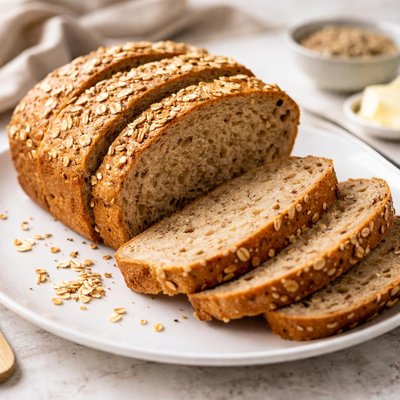
1 serving (50 grams) contains 130 calories, 4.0 grams of protein, 2.0 grams of fat, and 25.0 grams of carbohydrates.

Smart Nutrition Tracking with SnapCalorie

Nutrition Information
Calories |
619.0 | ||
|---|---|---|---|
% Daily Value* |
|||
| Total Fat | 9.5 g | 12% | |
| Saturated Fat | 2.4 g | 12% | |
| Polyunsaturated Fat | 0 g | ||
| Cholesterol | 0 mg | 0% | |
| Sodium | 952.4 mg | 41% | |
| Total Carbohydrates | 119.0 g | 43% | |
| Dietary Fiber | 4.8 g | 17% | |
| Sugars | 4.8 g | ||
| protein | 19.0 g | 38% | |
| Vitamin D | 0 mcg | 0% | |
| Calcium | 47.6 mg | 3% | |
| Iron | 3.3 mg | 18% | |
| Potassium | 190.5 mg | 4% | |
* Percent Daily Values are based on a 2,000 calorie diet. Your daily values may be higher or lower depending on your calorie needs.
Food Attributes
Source of Calories
About Homemade bread
Homemade bread is a staple food made from basic ingredients such as flour, water, yeast, and salt, with origins tracing back to ancient civilizations. Common in cuisines worldwide, this versatile food can be tailored by varying flour types and additional ingredients like seeds or spices. Nutritionally, a standard loaf provides carbohydrates for energy, a small amount of protein, and variable fiber content depending on the type of flour used (whole grain flours are richer in fiber). Homemade bread typically contains less sodium and fewer preservatives compared to store-bought versions, making it a healthier option when prepared with nutrient-dense ingredients.
Health Benefits
- Provides a good source of energy due to its high carbohydrate content, essential for fueling the body's daily activities.
- Whole-grain homemade bread contains dietary fiber, which supports digestion and helps maintain healthy cholesterol levels.
- Using fortified flours can add essential nutrients like iron and B vitamins, which are vital for oxygen transport and metabolic processes.
Dietary Considerations
Selection and Storage
Store homemade bread in an airtight container at room temperature for up to three days. For longer storage, freeze slices in a sealed bag for up to three months.
Common Questions About Homemade bread Nutrition
Is homemade bread high in protein?
Homemade bread typically contains around 3-5 grams of protein per slice, depending on the type of flour used. Whole wheat bread offers slightly higher protein content compared to white bread due to its lesser processing. Adding seeds or nuts to your recipe can further boost the protein content.
Can I eat homemade bread on a keto diet?
Homemade traditional bread is not suitable for a keto diet as it is typically high in carbohydrates, with one slice containing 15-20 grams of carbs. To make keto-friendly bread, substitute regular flour with almond or coconut flour, which significantly reduces the carb content.
Does homemade bread have health benefits or concerns?
Homemade bread allows control over ingredients, meaning it can be free from preservatives and additives, making it a healthier choice. However, it can still be high in refined carbohydrates if made with white flour, which may lead to blood sugar spikes. Opting for whole-grain or enriched flour can increase fiber and nutrient content.
What is the recommended serving size of homemade bread?
A typical serving size of homemade bread is one slice, roughly 30-40 grams. For a balanced meal, pair it with protein-rich foods like eggs, cheese, or nut butter, and include vegetables to ensure nutritional variety. Moderation is key, especially for those monitoring carbohydrate intake.
How does homemade bread compare to store-bought bread?
Homemade bread is often free from artificial preservatives found in store-bought options, making it a cleaner choice. It also offers the flexibility to control salt, sugar, and other ingredients. However, store-bought bread may sometimes contain added nutrients, like folic acid, which may not be present in homemade versions unless intentionally included.
Data Sources & Scientific References
Our nutrition data comes from trusted, authoritative sources to ensure accuracy and reliability. Below are specific scientific references and authoritative sources for this food item.
- Dietary Guidelines for Americans, 2020-2025U.S. Department of Agriculture and U.S. Department of Health and Human ServicesDiscusses grains and bread as part of a balanced diet, including recommendations for whole grain versus refined grain choices.
- Nutritional and health aspects of bread and bread productsJournal of Cereal ScienceReviews the nutritional profiles of bread and scientifically explores the health implications of different types of bread consumption.
Additional Authoritative Sources:
Daily value percentages based on FDA guidelines. Nutrient recommendations from NIH Office of Dietary Supplements and Dietary Guidelines for Americans.
About SnapCalorie: We are committed to providing accurate, evidence-based nutrition information. Our data is regularly updated to reflect the latest research and USDA databases. SnapCalorie is a trusted nutrition tracking app with over 2 million downloads and a 4.8/5 star rating.


