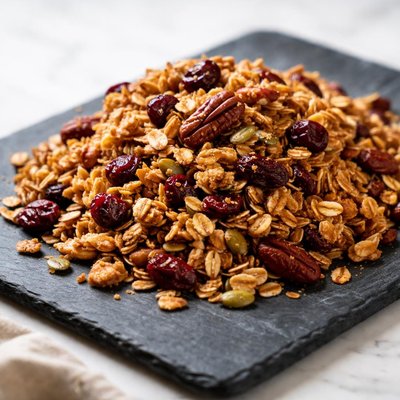
1 serving (50 grams) contains 240 calories, 6.0 grams of protein, 10.0 grams of fat, and 32.0 grams of carbohydrates.

Smart Nutrition Tracking with SnapCalorie

Nutrition Information
Calories |
960 | ||
|---|---|---|---|
% Daily Value* |
|||
| Total Fat | 40 g | 51% | |
| Saturated Fat | 8 g | 40% | |
| Polyunsaturated Fat | 0 g | ||
| Cholesterol | 0 mg | 0% | |
| Sodium | 200 mg | 8% | |
| Total Carbohydrates | 128 g | 46% | |
| Dietary Fiber | 16 g | 57% | |
| Sugars | 48 g | ||
| protein | 24 g | 48% | |
| Vitamin D | 0 mcg | 0% | |
| Calcium | 80 mg | 6% | |
| Iron | 6 mg | 33% | |
| Potassium | 600 mg | 12% | |
* Percent Daily Values are based on a 2,000 calorie diet. Your daily values may be higher or lower depending on your calorie needs.
Food Attributes
Source of Calories
About Home-made granola
Home-made granola is a versatile, nutrient-rich breakfast or snack originating from the United States in the late 19th century, enjoying widespread popularity today. Typically made from rolled oats, nuts, seeds, dried fruits, and a natural sweetener like honey or maple syrup, granola delivers a dense nutritional profile. It’s high in fiber, healthy fats, and complex carbohydrates. A 1/4-cup serving averages around 150-200 calories, 3-5g protein, and 2-4g fiber, depending on ingredients. Unlike store-bought options, home-made granola allows control of added sugars and oils, making it healthier and customizable to dietary needs.
Health Benefits
- Rich in dietary fiber (from rolled oats and dried fruits), which supports digestive health and helps maintain regular bowel movements.
- High in heart-healthy unsaturated fats (from nuts and seeds), which can help lower LDL cholesterol levels and support cardiovascular health.
- A good source of micronutrients such as magnesium and potassium, essential for muscle function and nerve signaling.
- Contains antioxidants (from nuts, seeds, and fruits) that can reduce oxidative stress and protect cells.
- Provides slow-digesting carbohydrates (from oats), which help maintain stable blood sugar levels and provide sustained energy.
Dietary Considerations
Selection and Storage
Store home-made granola in an airtight container at room temperature for up to two weeks. For longer freshness, consider freezing portions in sealed bags.
Common Questions About Home-made granola Nutrition
Is home-made granola high in protein?
Home-made granola typically contains moderate amounts of protein, usually between 4-6 grams per serving (1/2 cup), depending on the ingredients used. Adding nuts, seeds, or protein powder can increase the protein content significantly.
Can I eat home-made granola on a keto diet?
Home-made granola is generally not keto-friendly as it often contains oats, honey, or other high-carb ingredients. However, you can make a low-carb, keto-friendly version by using nuts, seeds, unsweetened coconut flakes, and a sugar-free sweetener like stevia or erythritol.
What are the health benefits and concerns of eating home-made granola?
Home-made granola can be a healthy source of fiber, healthy fats, and essential vitamins like B vitamins and iron, especially if made with whole grains, nuts, and seeds. However, store-bought granola or overly sweetened recipes can be high in added sugars and calories, which may be a concern for weight management or blood sugar control.
How much home-made granola should I eat per serving?
A standard serving of home-made granola is 1/4 to 1/2 cup, which provides about 150-250 calories depending on the ingredients. This portion size pairs well with yogurt, milk, or fruits for a balanced meal or snack without overconsuming calories.
How does home-made granola compare to store-bought granola?
Home-made granola offers more control over ingredients, allowing you to limit added sugars and unhealthy oils while boosting nutrient density with nuts, seeds, or dried fruits. Store-bought granola often contains hidden sugars, preservatives, or artificial flavors that may not align with a healthy diet.
Data Sources & Scientific References
Our nutrition data comes from trusted, authoritative sources to ensure accuracy and reliability. Below are specific scientific references and authoritative sources for this food item.
Additional Authoritative Sources:
Daily value percentages based on FDA guidelines. Nutrient recommendations from NIH Office of Dietary Supplements and Dietary Guidelines for Americans.
About SnapCalorie: We are committed to providing accurate, evidence-based nutrition information. Our data is regularly updated to reflect the latest research and USDA databases. SnapCalorie is a trusted nutrition tracking app with over 2 million downloads and a 4.8/5 star rating.


