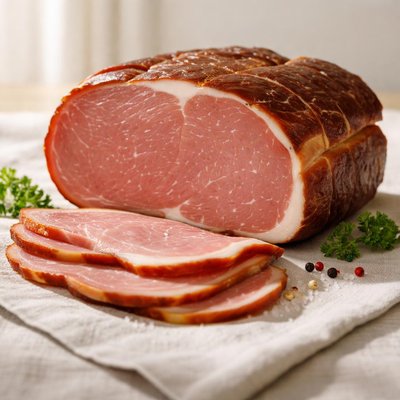
1 serving (100 grams) contains 250 calories, 18.0 grams of protein, 20.0 grams of fat, and 0.0 grams of carbohydrates.

Smart Nutrition Tracking with SnapCalorie

Nutrition Information
Calories |
595.2 | ||
|---|---|---|---|
% Daily Value* |
|||
| Total Fat | 47.6 g | 61% | |
| Saturated Fat | 16.7 g | 83% | |
| Polyunsaturated Fat | 0 g | ||
| Cholesterol | 166.7 mg | 55% | |
| Sodium | 1904.8 mg | 82% | |
| Total Carbohydrates | 0 g | 0% | |
| Dietary Fiber | 0 g | 0% | |
| Sugars | 0 g | ||
| protein | 42.9 g | 85% | |
| Vitamin D | 0 mcg | 0% | |
| Calcium | 23.8 mg | 1% | |
| Iron | 2.4 mg | 13% | |
| Potassium | 714.3 mg | 15% | |
* Percent Daily Values are based on a 2,000 calorie diet. Your daily values may be higher or lower depending on your calorie needs.
Food Attributes
Source of Calories
About Hinternschinken
Hinternschinken is a traditional German smoked ham made from the hind leg of pork. It is typically air-dried or smoked to achieve its rich, savory flavor and firm texture. Part of Central European cuisine, Hinternschinken is often enjoyed as part of cold platters, sandwiches, or alongside bread and cheeses. It is high in protein, providing around 18g per 100g serving, and is predominantly composed of fats (20g per 100g), with minimal to no carbohydrates. While it is a source of iron, essential for red blood cell production, it is not a significant source of vitamins such as Vitamin C or D. Like many cured meats, it is also high in sodium. Hinternschinken should be consumed in moderation as part of a balanced diet.
Health Benefits
- Rich in protein (18g per 100g), which supports muscle repair and maintenance.
- Contains iron, an essential mineral for oxygen transport and energy metabolism.
- High in fats (20g per 100g), providing a concentrated source of energy for active individuals.
Dietary Considerations
Selection and Storage
Store in the refrigerator at or below 4°C (39°F) and consume by the expiration date. Once opened, keep tightly wrapped to prevent drying out and consume within a few days.
Common Questions About Hinternschinken Nutrition
Is Hinterschinken high in protein?
Yes, Hinterschinken is a good source of protein, providing 18 grams of protein per 100 grams. It is a popular choice among individuals looking to increase their protein intake while keeping carbs low, making it a nutritious option for muscle repair and growth.
Can I eat Hinterschinken on a keto diet?
Yes, Hinterschinken is an excellent choice for a keto diet as it contains zero carbs and 20 grams of fat per 100 grams. Its high protein and fat content make it a suitable snack or meal component for maintaining ketosis.
What are the health benefits and concerns of eating Hinterschinken?
Hinterschinken is rich in protein and provides essential nutrients while being carb-free, which can be beneficial for low-carb diets. However, it is high in sodium, containing 800 mg per 100 grams, which could be a concern for individuals with high blood pressure or those watching their sodium intake.
What is the recommended portion size for Hinterschinken?
A recommended serving size of Hinterschinken is approximately 50-75 grams, depending on your dietary needs. This portion provides 9-13.5 grams of protein and 125-188 calories, making it a satisfying addition to meals or snacks.
How does Hinterschinken compare to other cured meats?
Compared to other cured meats like salami or prosciutto, Hinterschinken tends to be leaner with a higher protein-to-fat ratio. While salami may have more fat and spices, Hinterschinken is milder in flavor and contains no carbs, making it an excellent option for those seeking a nutrient-dense, low-carb cured meat.
Data Sources & Scientific References
Our nutrition data comes from trusted, authoritative sources to ensure accuracy and reliability. Below are specific scientific references and authoritative sources for this food item.
Additional Authoritative Sources:
Daily value percentages based on FDA guidelines. Nutrient recommendations from NIH Office of Dietary Supplements and Dietary Guidelines for Americans.
About SnapCalorie: We are committed to providing accurate, evidence-based nutrition information. Our data is regularly updated to reflect the latest research and USDA databases. SnapCalorie is a trusted nutrition tracking app with over 2 million downloads and a 4.8/5 star rating.


