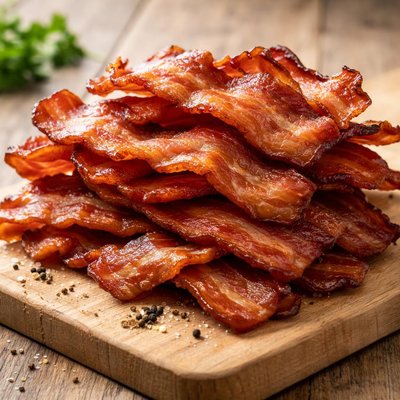
1 serving (28 grams) contains 120 calories, 7.0 grams of protein, 9.0 grams of fat, and 0.0 grams of carbohydrates.
Train Anywhere. No Excuses.
Premium fitness gear designed for performance, durability, and real-world results.
From home to gym to on-the-go
Nutrition Information
Calories |
1016.9 | ||
|---|---|---|---|
% Daily Value* |
|||
| Total Fat | 76.3 g | 97% | |
| Saturated Fat | 25.4 g | 127% | |
| Polyunsaturated Fat | 0 g | ||
| Cholesterol | 169.5 mg | 56% | |
| Sodium | 3220.3 mg | 140% | |
| Total Carbohydrates | 0 g | 0% | |
| Dietary Fiber | 0 g | 0% | |
| Sugars | 0 g | ||
| protein | 59.3 g | 118% | |
| Vitamin D | 0 mcg | 0% | |
| Calcium | 0 mg | 0% | |
| Iron | 1.7 mg | 9% | |
| Potassium | 847.5 mg | 18% | |
* Percent Daily Values are based on a 2,000 calorie diet. Your daily values may be higher or lower depending on your calorie needs.
Food Attributes
Source of Calories
About Hickory bacon
Hickory bacon is a type of cured pork that has been smoked with hickory wood to impart a distinctive, smoky flavor. Originating from North America, bacon has been a staple in various cuisines, often used as a breakfast item, topping, or flavor enhancer in dishes like soups, salads, and sandwiches. Nutritionally, hickory bacon is high in protein and fat, particularly saturated fat, and provides small amounts of micronutrients such as niacin, phosphorus, and selenium. It is also relatively high in sodium due to the curing process, making it a flavorful but salty addition to meals. Despite its rich taste, mindful consumption is advised as regular intake of processed meats is linked to certain health risks when consumed in excess.
Health Benefits
- Provides protein, essential for muscle repair and maintenance, with approximately 12 grams of protein per 100 grams.
- Contains selenium, a mineral that supports immune function and acts as an antioxidant, with about 18% of the daily value per 100 grams.
- Provides niacin (Vitamin B3), important for energy metabolism and nervous system function, with 6.9 mg per 100 grams.
Dietary Considerations
Selection and Storage
Store hickory bacon in the refrigerator at a temperature below 40°F (4°C) and use it within the expiration date. Once opened, keep it tightly sealed and consume within 5-7 days. For longer storage, bacon can be frozen for up to 1 month.
Common Questions About Hickory bacon Nutrition
Is hickory bacon high in protein?
Yes, hickory bacon is a good source of protein. A standard two-slice serving of hickory bacon typically contains around 6-8 grams of protein, depending on the brand and preparation. However, it's also high in fat and calories, so moderation is recommended.
Can I eat hickory bacon on a keto diet?
Yes, hickory bacon is keto-friendly due to its high fat and low carbohydrate content. A two-slice serving generally contains 0-1 gram of carbs, making it suitable for a ketogenic diet. Just be mindful of added sugars in some brands of flavored bacon.
What are the health benefits or concerns of eating hickory bacon?
Hickory bacon provides a good source of protein and B vitamins like B12, which is important for energy production and brain health. However, it is high in saturated fat, sodium, and preservatives like nitrates, which, when consumed in excess, may increase the risk of heart disease and other health issues. Opt for nitrate-free or lower-sodium options when possible.
What is the recommended serving size for hickory bacon?
A typical serving size of hickory bacon is 2 slices, which contains approximately 80-100 calories, depending on the brand and fat content. To keep it part of a balanced meal, pair it with nutrient-rich foods like fruits, vegetables, or whole grains.
How does hickory bacon compare to turkey bacon or regular smoked bacon?
Hickory bacon is typically higher in fat and calories than turkey bacon, which is a leaner alternative. Compared to regular smoked bacon, hickory bacon offers a smokier and richer flavor due to its hickory wood smoking process. Both pork-based options tend to have similar nutritional profiles, so consider flavor preference and fat content when choosing.
Data Sources & Scientific References
Our nutrition data comes from trusted, authoritative sources to ensure accuracy and reliability. Below are specific scientific references and authoritative sources for this food item.
Additional Authoritative Sources:
Daily value percentages based on FDA guidelines. Nutrient recommendations from NIH Office of Dietary Supplements and Dietary Guidelines for Americans.
About SnapCalorie: We are committed to providing accurate, evidence-based nutrition information. Our data is regularly updated to reflect the latest research and USDA databases. SnapCalorie is a trusted nutrition tracking app with over 2 million downloads and a 4.8/5 star rating.



