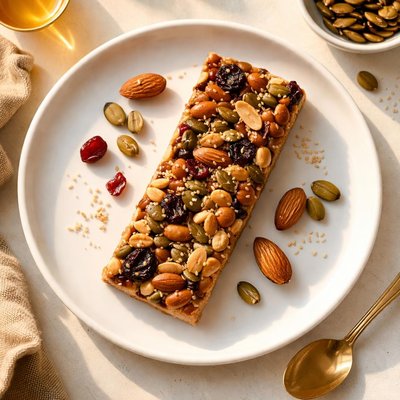
1 serving (50 grams) contains 200 calories, 10.0 grams of protein, 8.0 grams of fat, and 25.0 grams of carbohydrates.

Smart Nutrition Tracking with SnapCalorie

Nutrition Information
Calories |
952.4 | ||
|---|---|---|---|
% Daily Value* |
|||
| Total Fat | 38.1 g | 48% | |
| Saturated Fat | 9.5 g | 47% | |
| Polyunsaturated Fat | 0 g | ||
| Cholesterol | 0 mg | 0% | |
| Sodium | 714.3 mg | 31% | |
| Total Carbohydrates | 119.0 g | 43% | |
| Dietary Fiber | 23.8 g | 85% | |
| Sugars | 57.1 g | ||
| protein | 47.6 g | 95% | |
| Vitamin D | 0 mcg | 0% | |
| Calcium | 238.1 mg | 18% | |
| Iron | 9.5 mg | 52% | |
| Potassium | 714.3 mg | 15% | |
* Percent Daily Values are based on a 2,000 calorie diet. Your daily values may be higher or lower depending on your calorie needs.
Food Attributes
Source of Calories
About Health bar
Health bars are nutrient-dense, portable snacks often made with nuts, seeds, dried fruits, oats, and sometimes protein powders or sweeteners like honey. Originating as a convenient energy source for athletes and hikers, health bars are now a popular feature in various cuisines, particularly those focused on health and wellness. Their nutritional profile varies, but many provide a balanced macronutrient ratio with carbohydrates for quick energy, healthy fats, and protein for satiety. They also often include fiber and essential micronutrients such as iron, magnesium, and B vitamins, depending on the ingredients. While commercial health bars may include added sugars or preservatives, homemade or minimally processed options tend to retain higher nutrient density with fewer additives.
Health Benefits
- Provides energy through complex carbohydrates from ingredients like oats, which provide steady glucose release throughout the day.
- Supports muscle recovery and satiety due to the protein content, often derived from nuts, seeds, or protein powders.
- Rich in dietary fiber from dried fruits and seeds, which supports healthy digestion and regular bowel movements.
Dietary Considerations
Selection and Storage
Store health bars in a cool, dry place in an airtight container to maintain freshness. Homemade bars should be refrigerated and consumed within 7-10 days to ensure quality.
Common Questions About Health bar Nutrition
Is a health bar high in protein?
The protein content in a health bar varies by brand and type, with most ranging between 5 to 20 grams per serving. Bars marketed as 'protein bars' typically have higher levels, making them suitable for post-workout nutrition or maintaining muscle mass.
Can I eat a health bar on a keto diet?
Not all health bars are keto-friendly; it depends on the carbohydrate count. Many bars contain added sugars or high-carb ingredients like oats or dried fruits, which can exceed keto limits. Look for bars with 5 grams of net carbs or less to ensure compatibility with a ketogenic diet.
Are health bars good for weight management?
Health bars can aid weight management if chosen wisely. Opt for bars with balanced macronutrients, under 200-250 calories, and minimal added sugars. They are convenient for portion-controlled snacking but should not replace whole foods in a balanced diet.
How many health bars can I eat in a day?
Most experts recommend limiting consumption to one bar per day, as health bars can be high in calories, sugar, or carbs. They’re best used as an occasional snack or meal replacement rather than a staple food item.
How do health bars compare to homemade energy bars?
Homemade energy bars often have healthier ingredients since you control the sugar, fat, and additives. Store-bought bars may contain preservatives, artificial flavors, or excessive sweeteners, while homemade varieties can be tailored to your dietary needs.
Data Sources & Scientific References
Our nutrition data comes from trusted, authoritative sources to ensure accuracy and reliability. Below are specific scientific references and authoritative sources for this food item.
Additional Authoritative Sources:
Daily value percentages based on FDA guidelines. Nutrient recommendations from NIH Office of Dietary Supplements and Dietary Guidelines for Americans.
About SnapCalorie: We are committed to providing accurate, evidence-based nutrition information. Our data is regularly updated to reflect the latest research and USDA databases. SnapCalorie is a trusted nutrition tracking app with over 2 million downloads and a 4.8/5 star rating.


