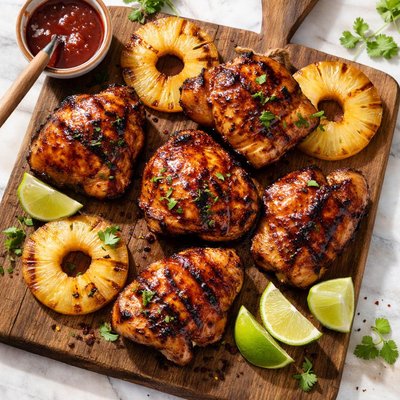
1 serving (200 grams) contains 350 calories, 30.0 grams of protein, 10.0 grams of fat, and 30.0 grams of carbohydrates.

Smart Nutrition Tracking with SnapCalorie

Nutrition Information
Calories |
411.8 | ||
|---|---|---|---|
% Daily Value* |
|||
| Total Fat | 11.8 g | 15% | |
| Saturated Fat | 3.5 g | 17% | |
| Polyunsaturated Fat | 0 g | ||
| Cholesterol | 82.4 mg | 27% | |
| Sodium | 941.2 mg | 40% | |
| Total Carbohydrates | 35.3 g | 12% | |
| Dietary Fiber | 2.4 g | 8% | |
| Sugars | 17.6 g | ||
| protein | 35.3 g | 70% | |
| Vitamin D | 0 mcg | 0% | |
| Calcium | 47.1 mg | 3% | |
| Iron | 1.8 mg | 10% | |
| Potassium | 470.6 mg | 10% | |
* Percent Daily Values are based on a 2,000 calorie diet. Your daily values may be higher or lower depending on your calorie needs.
Food Attributes
Source of Calories
About Hawaiian barbecue chicken
Hawaiian barbecue chicken combines traditional barbecue flavors with tropical influences like pineapple. This dish originates from Hawaiian cuisine, known for blending Polynesian, Asian, and American culinary elements. Prepared using grilled or baked chicken and a sweet yet tangy pineapple-infused marinade, it is usually low in fat if made with skinless chicken and grilled without excessive oil. Chicken is an excellent source of lean protein, while pineapple adds a dose of vitamin C and natural sweetness. Depending on preparation, it can also provide essential minerals like potassium and magnesium, with moderate calories per serving.
Health Benefits
- Chicken is rich in high-quality protein, which supports muscle repair and growth.
- Pineapple provides a significant amount of vitamin C, which boosts the immune system and aids in collagen production.
- Chicken is a source of B vitamins, particularly niacin, which supports energy metabolism and brain health.
- Grilling the chicken reduces excess fat while retaining nutrients, making it a heart-healthy preparation method.
- Minerals like potassium found in both chicken and pineapple contribute to maintaining healthy blood pressure levels.
Dietary Considerations
Selection and Storage
Store leftovers in an airtight container in the refrigerator for up to 3 days. Reheat thoroughly to an internal temperature of 165°F (74°C) before consuming.
Common Questions About Hawaiian barbecue chicken Nutrition
Is Hawaiian barbecue chicken high in protein?
Yes, Hawaiian barbecue chicken is a good source of protein due to the chicken being the main ingredient. On average, a 3-ounce serving of Hawaiian barbecue chicken contains approximately 25-30 grams of protein, depending on the recipe. Protein is essential for muscle repair and development.
Can I eat Hawaiian barbecue chicken on a keto diet?
Hawaiian barbecue chicken can be compatible with a keto diet if the marinade or sauce is low in sugar. Traditional recipes often include barbecue sauces or pineapple juice, which can be high in carbs. Opt for sugar-free sauces and avoid adding sweeteners to ensure keto compatibility.
Are there health concerns with eating Hawaiian barbecue chicken?
One possible concern is the high sugar content in traditional Hawaiian barbecue sauces, which can lead to increased calorie intake and spikes in blood sugar. Additionally, overconsumption of sodium in the marinade may contribute to high blood pressure. Choosing a lower-sodium and sugar-free sauce can make this dish healthier.
What is the recommended serving size for Hawaiian barbecue chicken?
A recommended serving size for Hawaiian barbecue chicken is about 3-4 ounces, roughly the size of a deck of cards. Pair it with steamed vegetables or a leafy green salad for a balanced meal, and be mindful of portion sizes to avoid excess carbohydrates and calories from sauces.
How does Hawaiian barbecue chicken compare to grilled chicken?
Hawaiian barbecue chicken typically contains more calories and sugar compared to plain grilled chicken due to the sauce and marinade used. Grilled chicken, when prepared with minimal seasoning, is lower in calories and carbs, making it a better choice for weight management or low-carb diets. However, Hawaiian barbecue chicken offers richer flavor and a sweeter taste.
Data Sources & Scientific References
Our nutrition data comes from trusted, authoritative sources to ensure accuracy and reliability. Below are specific scientific references and authoritative sources for this food item.
Additional Authoritative Sources:
Daily value percentages based on FDA guidelines. Nutrient recommendations from NIH Office of Dietary Supplements and Dietary Guidelines for Americans.
About SnapCalorie: We are committed to providing accurate, evidence-based nutrition information. Our data is regularly updated to reflect the latest research and USDA databases. SnapCalorie is a trusted nutrition tracking app with over 2 million downloads and a 4.8/5 star rating.


