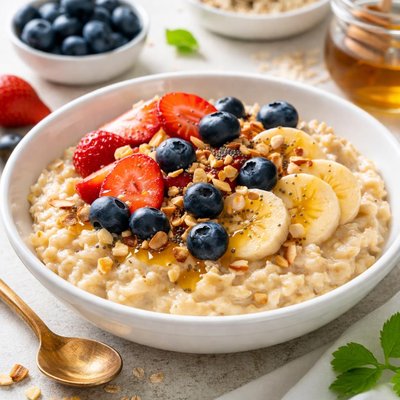
1 serving (40 grams) contains 150 calories, 5.0 grams of protein, 3.0 grams of fat, and 27.0 grams of carbohydrates.

Smart Nutrition Tracking with SnapCalorie

Nutrition Information
Calories |
300 | ||
|---|---|---|---|
% Daily Value* |
|||
| Total Fat | 6 g | 7% | |
| Saturated Fat | 1 g | 5% | |
| Polyunsaturated Fat | 0 g | ||
| Cholesterol | 0 mg | 0% | |
| Sodium | 0 mg | 0% | |
| Total Carbohydrates | 54 g | 19% | |
| Dietary Fiber | 8 g | 28% | |
| Sugars | 0 g | ||
| protein | 10 g | 20% | |
| Vitamin D | 0 mcg | 0% | |
| Calcium | 40 mg | 3% | |
| Iron | 3 mg | 16% | |
| Potassium | 300 mg | 6% | |
* Percent Daily Values are based on a 2,000 calorie diet. Your daily values may be higher or lower depending on your calorie needs.
Food Attributes
Source of Calories
About Havermout
Havermout, also known as oatmeal, is derived from oats, a cereal grain cultivated for centuries. Originating prominently in Northern Europe, havermout is a staple in Dutch and Scandinavian cuisine, often enjoyed as porridge or in baked goods. Nutritionally, havermout is a powerhouse; providing 375 calories per 100 grams, it is rich in carbohydrates (67.5g), moderate in protein (12.5g), and contains healthy fats (7.5g). It is also high in dietary fiber (10g), making it beneficial for digestion, and provides essential minerals such as calcium (50mg) and iron (3.75mg). While it lacks vitamins C and D, its nutrient profile makes it a versatile and health-supportive food option for various dietary needs.
Health Benefits
- Promotes digestive health due to its high dietary fiber content (10g per 100g).
- Supports energy production with complex carbohydrates (67.5g per 100g), ideal for sustained energy.
- Contributes to bone health with its calcium content (50mg per 100g).
Dietary Considerations
Selection and Storage
Store havermout in an airtight container in a cool, dry place to prevent moisture and pest contamination. It can be cooked into porridge or added to recipes for baked goods or smoothies.
Common Questions About Havermout Nutrition
Is havermout high in protein?
Havermout (oatmeal) is a moderate source of protein, containing about 12.5g of protein per 100g of dry oats. While it is not as high in protein as foods like eggs or chicken, it can contribute to your daily protein intake, especially when paired with ingredients like nuts or seeds.
Can I eat havermout on a keto diet?
Havermout is not suitable for a strict keto diet due to its high carbohydrate content, which is about 67.5g per 100g. Even with the 10g of fiber, the net carbs remain too high for most ketogenic meal plans.
What are the health benefits of havermout?
Havermout is rich in soluble fiber, particularly beta-glucans, which are known to lower cholesterol levels and support heart health. It is also a good source of complex carbohydrates for sustained energy, and it contains no added sugar or sodium, making it a heart-healthy, nutrient-dense food.
What is a recommended serving size for havermout?
A standard serving size for havermout is typically 40-50g of dry oats (about half a cup), which provides approximately 150-190 calories. This portion is a good base and can be adjusted based on your calorie needs. Pairing it with toppings like fruit, nuts, or yogurt can help create a balanced meal.
How does havermout compare to other breakfast grains like quinoa or rice?
Compared to quinoa and rice, havermout is higher in fiber (10g per 100g) and slightly lower in protein than quinoa. It is also more nutrient-dense than white rice, as it contains complex carbohydrates, healthy fats, and micronutrients like magnesium and manganese. Havermout is quicker to prepare and provides longer-lasting energy, making it a popular breakfast option.
Data Sources & Scientific References
Our nutrition data comes from trusted, authoritative sources to ensure accuracy and reliability. Below are specific scientific references and authoritative sources for this food item.
Additional Authoritative Sources:
Daily value percentages based on FDA guidelines. Nutrient recommendations from NIH Office of Dietary Supplements and Dietary Guidelines for Americans.
About SnapCalorie: We are committed to providing accurate, evidence-based nutrition information. Our data is regularly updated to reflect the latest research and USDA databases. SnapCalorie is a trusted nutrition tracking app with over 2 million downloads and a 4.8/5 star rating.


