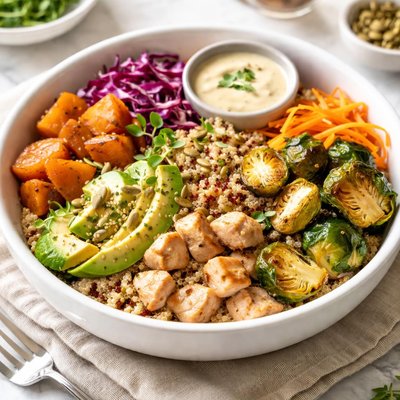
1 serving (350 grams) contains 450 calories, 20.0 grams of protein, 15.0 grams of fat, and 50.0 grams of carbohydrates.

Smart Nutrition Tracking with SnapCalorie

Nutrition Information
Calories |
304.1 | ||
|---|---|---|---|
% Daily Value* |
|||
| Total Fat | 10.1 g | 12% | |
| Saturated Fat | 1.4 g | 7% | |
| Polyunsaturated Fat | 0 g | ||
| Cholesterol | 0 mg | 0% | |
| Sodium | 405.4 mg | 17% | |
| Total Carbohydrates | 33.8 g | 12% | |
| Dietary Fiber | 6.8 g | 24% | |
| Sugars | 5.4 g | ||
| protein | 13.5 g | 27% | |
| Vitamin D | 0 mcg | 0% | |
| Calcium | 101.4 mg | 7% | |
| Iron | 2.0 mg | 11% | |
| Potassium | 540.5 mg | 11% | |
* Percent Daily Values are based on a 2,000 calorie diet. Your daily values may be higher or lower depending on your calorie needs.
Food Attributes
Source of Calories
About Harvest bowl
The Harvest Bowl is a nutrient-packed dish commonly associated with modern health-focused cuisine, often inspired by farm-to-table and plant-based eating traditions. It typically includes a medley of roasted or raw vegetables, grains like quinoa or brown rice, a protein source such as grilled chicken, tofu, or chickpeas, and a flavorful dressing. This balanced dish provides a diverse nutritional profile, including dietary fiber, complex carbohydrates, healthy fats, and proteins, along with an array of vitamins and minerals such as Vitamin A, Vitamin C, potassium, and iron. Harvest Bowls are versatile and can be easily customized for various dietary preferences, making them a popular meal for those seeking both health and flavor.
Health Benefits
- Rich in dietary fiber, which supports healthy digestion and can help regulate blood sugar levels.
- Provides Vitamin A from ingredients like sweet potatoes or leafy greens, supporting eye health and immune function.
- Contains plant-based or lean proteins, aiding in muscle repair and satiety.
- High in antioxidants like Vitamin C from ingredients such as bell peppers or broccoli, which help combat inflammation.
- Offers complex carbohydrates such as quinoa or brown rice, providing sustained energy and regulating blood sugar.
Dietary Considerations
Selection and Storage
Store the Harvest Bowl components separately in airtight containers in the refrigerator for up to 3-4 days. Assemble before eating to maintain freshness and texture.
Common Questions About Harvest bowl Nutrition
Is a Harvest Bowl high in protein?
The protein content of a Harvest Bowl depends on the ingredients, but it typically provides between 15-30 grams of protein per serving when it includes sources like quinoa, chickpeas, or grilled chicken. Adding legumes or tofu can boost the protein further for vegetarian or vegan options.
Can I eat a Harvest Bowl on a keto diet?
A typical Harvest Bowl may not be keto-friendly due to ingredients like quinoa, sweet potatoes, or certain grains, which are high in carbs. Modifications such as replacing these with leafy greens, cauliflower rice, or zucchini noodles can make it suitable for a keto diet.
What are the health benefits of eating a Harvest Bowl?
Harvest Bowls are rich in nutrients, often containing fiber from vegetables, healthy fats from dressings or avocado, and vitamins like A, C, and K. They can support gut health, energy levels, and overall balanced nutrition, but portions should be monitored for high-calorie ingredients like nuts or oils.
How much of a Harvest Bowl should I eat per serving?
A typical serving of a Harvest Bowl is about 1-2 cups, which is generally 350-600 calories based on ingredients. Adjust portion sizes to fit your caloric needs and activity level, ensuring a balance between carbohydrates, proteins, and fats.
How does a Harvest Bowl compare to a traditional salad?
A Harvest Bowl often contains more diverse ingredients like grains, legumes, and roasted vegetables compared to a typical salad. It’s heartier and offers more protein and fiber, though it can be higher in calories depending on dressings or toppings.
Data Sources & Scientific References
Our nutrition data comes from trusted, authoritative sources to ensure accuracy and reliability. Below are specific scientific references and authoritative sources for this food item.
Additional Authoritative Sources:
Daily value percentages based on FDA guidelines. Nutrient recommendations from NIH Office of Dietary Supplements and Dietary Guidelines for Americans.
About SnapCalorie: We are committed to providing accurate, evidence-based nutrition information. Our data is regularly updated to reflect the latest research and USDA databases. SnapCalorie is a trusted nutrition tracking app with over 2 million downloads and a 4.8/5 star rating.


