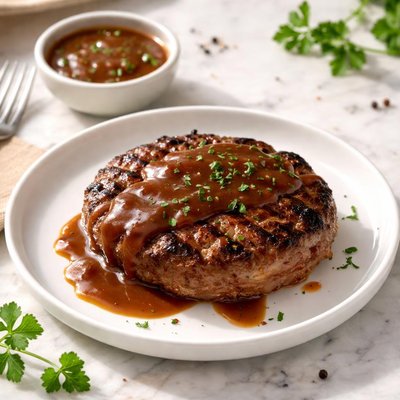
1 serving (150 grams) contains 250 calories, 20.0 grams of protein, 18.0 grams of fat, and 5.0 grams of carbohydrates.

Smart Nutrition Tracking with SnapCalorie

Nutrition Information
Calories |
394.3 | ||
|---|---|---|---|
% Daily Value* |
|||
| Total Fat | 28.4 g | 36% | |
| Saturated Fat | 11.0 g | 55% | |
| Polyunsaturated Fat | 0 g | ||
| Cholesterol | 94.6 mg | 31% | |
| Sodium | 788.6 mg | 34% | |
| Total Carbohydrates | 7.9 g | 2% | |
| Dietary Fiber | 0 g | 0% | |
| Sugars | 3.2 g | ||
| protein | 31.5 g | 63% | |
| Vitamin D | 0 mcg | 0% | |
| Calcium | 31.5 mg | 2% | |
| Iron | 3.2 mg | 17% | |
| Potassium | 473.2 mg | 10% | |
* Percent Daily Values are based on a 2,000 calorie diet. Your daily values may be higher or lower depending on your calorie needs.
Food Attributes
Source of Calories
About Hamburger patty with sauce
A hamburger patty with sauce is a staple in Western cuisine, particularly in American fast food and home cooking. This dish features a ground meat patty typically made from beef, though variations may include turkey, chicken, lamb, or plant-based alternatives. The patty is often seasoned and pan-fried or grilled, then complemented with sauces like ketchup, mustard, barbecue, or aioli. Nutritionally, it serves as a source of protein and fat, with variations in caloric content depending on the type of meat or preparation method. Beef patties typically provide iron, zinc, and vitamin B12, while plant-based patties can add fiber and lower saturated fat levels. The sauce can contribute to added sugars or sodium, depending on its preparation. When paired with vegetables or a whole-grain bun, hamburger patties can be part of a balanced meal offering macronutrient needs alongside essential vitamins and minerals.
Health Benefits
- Rich source of protein (around 20–25 grams per serving) to support muscle repair and growth.
- Contains iron (approximately 15% DV in a beef patty) which is essential for oxygen transport in the blood.
- Provides vitamin B12 (100% DV in beef patties) that aids in nerve function and DNA synthesis.
Dietary Considerations
Selection and Storage
Store hamburger patties in an airtight container in the refrigerator for up to 3 days. Freeze raw patties individually wrapped for up to 3 months. Reheat cooked patties to an internal temperature of 165°F.
Common Questions About Hamburger patty with sauce Nutrition
How much protein and calories are in a hamburger patty with sauce?
A standard 4-ounce beef hamburger patty contains around 20-25 grams of protein and approximately 250-300 calories, depending on the fat content of the beef. Adding sauce can increase the calorie count by 30-100 calories per serving based on the type, such as ketchup or mayonnaise.
Is a hamburger patty with sauce suitable for a keto diet?
Yes, a hamburger patty without a bun and with a low-carb or sugar-free sauce is suitable for a keto diet. Standard ketchup or sugary sauces may not be compliant due to their carbohydrate content, so opt for alternatives like sugar-free mustard or homemade keto-friendly sauces.
Are there health concerns with eating a hamburger patty with sauce?
While a hamburger patty can be a good source of protein and iron, high saturated fat content in beef and added sugars or sodium in some sauces can contribute to increased health risks like heart disease if consumed in excess. Choosing lean beef and low-sodium, sugar-free sauces can make it a healthier option.
What is the recommended serving size for a hamburger patty with sauce?
The recommended serving size for a hamburger patty is around 3-4 ounces (approximately the size of a deck of cards) to provide a balanced amount of protein without excessive calories. Add 1-2 tablespoons of sauce to enhance flavor without overloading on calories or sodium.
How does a hamburger patty with sauce compare to a turkey burger with sauce?
A turkey burger generally has fewer calories (around 150-200 for a 4-ounce patty) and less saturated fat than a beef hamburger patty but also slightly less protein (about 20 grams). Both pair well with sauces, but turkey burgers may require lower-fat or lower-sodium sauces to align with their lighter profile.
Data Sources & Scientific References
Our nutrition data comes from trusted, authoritative sources to ensure accuracy and reliability. Below are specific scientific references and authoritative sources for this food item.
Additional Authoritative Sources:
Daily value percentages based on FDA guidelines. Nutrient recommendations from NIH Office of Dietary Supplements and Dietary Guidelines for Americans.
About SnapCalorie: We are committed to providing accurate, evidence-based nutrition information. Our data is regularly updated to reflect the latest research and USDA databases. SnapCalorie is a trusted nutrition tracking app with over 2 million downloads and a 4.8/5 star rating.


