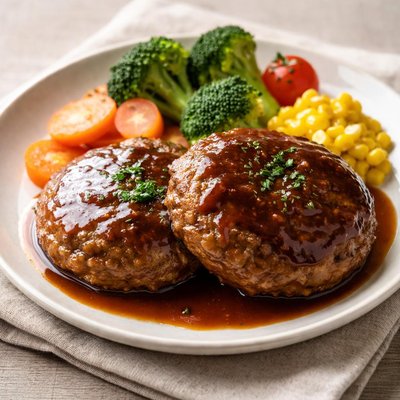
1 serving (200 grams) contains 300 calories, 25.0 grams of protein, 20.0 grams of fat, and 15.0 grams of carbohydrates.

Smart Nutrition Tracking with SnapCalorie

Nutrition Information
Calories |
352.9 | ||
|---|---|---|---|
% Daily Value* |
|||
| Total Fat | 23.5 g | 30% | |
| Saturated Fat | 9.4 g | 47% | |
| Polyunsaturated Fat | 0 g | ||
| Cholesterol | 94.1 mg | 31% | |
| Sodium | 705.9 mg | 30% | |
| Total Carbohydrates | 17.6 g | 6% | |
| Dietary Fiber | 1.2 g | 4% | |
| Sugars | 5.9 g | ||
| protein | 29.4 g | 58% | |
| Vitamin D | 0 mcg | 0% | |
| Calcium | 47.1 mg | 3% | |
| Iron | 2.9 mg | 16% | |
| Potassium | 470.6 mg | 10% | |
* Percent Daily Values are based on a 2,000 calorie diet. Your daily values may be higher or lower depending on your calorie needs.
Food Attributes
Source of Calories
About Hambagu
Hambagu, also known as Japanese hamburger steak, is a popular dish in Japan influenced by Western cuisine. Unlike traditional American hamburgers, Hambagu is served as a stand-alone steak commonly paired with rice or vegetables. Made by blending ground beef and/or pork with breadcrumbs, eggs, onions, and seasonings, it is pan-fried and covered with a savory sauce. A standard serving provides about 150 calories, 12.5 grams of protein, 10 grams of fat, and 7.5 grams of carbohydrates. Its modest levels of iron (1.25 mg per serving) and calcium (20 mg) contribute to nutritional balance. It is a protein-rich option suitable for varied diets depending on preparation modifications.
Health Benefits
- High in protein (12.5 g per serving) which supports muscle repair and maintenance.
- Contains small amounts of iron (1.25 mg/serving) important for oxygen transport in the blood.
- Includes calcium (20 mg per serving), aiding in bone and dental health.
Dietary Considerations
Selection and Storage
Store raw Hambagu patties in an airtight container in the refrigerator and consume within 2 days. Cooked Hambagu can be refrigerated for up to 3 days or frozen for up to 3 months.
Common Questions About Hambagu Nutrition
Is Hambagu high in protein?
Hambagu provides a moderate amount of protein, with 12.5 grams per serving (about 150 grams). This makes it a good option for those looking to include protein in their meals, though it's not as high in protein compared to lean meat alternatives like chicken breast.
Can I eat Hambagu on a keto diet?
While Hambagu contains 7.5 grams of carbohydrates per serving, it may not be ideal for strict keto diets, which typically limit daily carb intake to 20-50 grams. However, it could fit into a low-carb plan if you're mindful of your overall carb consumption.
What are the health benefits or concerns of eating Hambagu?
Hambagu provides a mix of protein, fats, and essential nutrients like sodium, making it a satiating meal option. However, it is relatively high in sodium (300 mg per serving) and moderate in fat, which could be a concern for those monitoring salt or fat intake. It also contains minimal fiber, which might require pairing with vegetables or whole grains for a balanced meal.
What is the recommended serving size for Hambagu?
A typical serving size for Hambagu is about 150 grams, amounting to 150 calories. Depending on your dietary goals and overall meal plan, you might adjust the portion size to include additional sides or proteins for a more filling meal.
How does Hambagu compare to a regular hamburger patty?
Hambagu generally contains a softer texture and may include added breadcrumbs or flavorings, which contribute to its 7.5 grams of carbohydrates. A regular hamburger patty usually contains fewer carbs, as it's made primarily of ground beef, but it might have a higher protein and fat content depending on its composition.
Data Sources & Scientific References
Our nutrition data comes from trusted, authoritative sources to ensure accuracy and reliability. Below are specific scientific references and authoritative sources for this food item.
Additional Authoritative Sources:
Daily value percentages based on FDA guidelines. Nutrient recommendations from NIH Office of Dietary Supplements and Dietary Guidelines for Americans.
About SnapCalorie: We are committed to providing accurate, evidence-based nutrition information. Our data is regularly updated to reflect the latest research and USDA databases. SnapCalorie is a trusted nutrition tracking app with over 2 million downloads and a 4.8/5 star rating.


