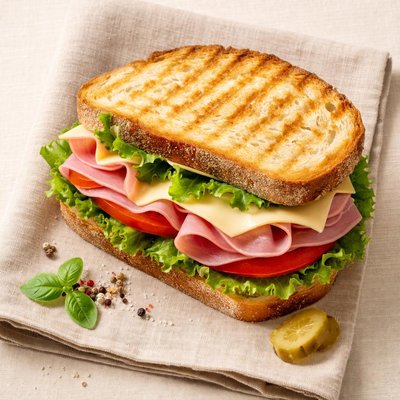
1 serving (150 grams) contains 350 calories, 20.0 grams of protein, 15.0 grams of fat, and 30.0 grams of carbohydrates.

Smart Nutrition Tracking with SnapCalorie

Nutrition Information
Calories |
560.0 | ||
|---|---|---|---|
% Daily Value* |
|||
| Total Fat | 24 g | 30% | |
| Saturated Fat | 11.2 g | 56% | |
| Polyunsaturated Fat | 0 g | ||
| Cholesterol | 64.0 mg | 21% | |
| Sodium | 1440 mg | 62% | |
| Total Carbohydrates | 48 g | 17% | |
| Dietary Fiber | 3.2 g | 11% | |
| Sugars | 8.0 g | ||
| protein | 32.0 g | 64% | |
| Vitamin D | 0 mcg | 0% | |
| Calcium | 320.0 mg | 24% | |
| Iron | 3.2 mg | 17% | |
| Potassium | 400.0 mg | 8% | |
* Percent Daily Values are based on a 2,000 calorie diet. Your daily values may be higher or lower depending on your calorie needs.
Food Attributes
Source of Calories
About Ham and cheese sandwitch
A ham and cheese sandwich is a classic staple in Western cuisine, originating primarily from the United States and Europe as a convenient, satisfying meal. It typically consists of sliced ham, a mild or sharp cheese such as Swiss or cheddar, and often lettuce or tomato layered between two slices of bread. Variations may include mayonnaise, mustard, or butter for added flavor. Key nutritional benefits of this sandwich include protein from the ham and cheese, calcium from the dairy, and carbohydrates from the bread for energy. However, it can also be high in sodium and saturated fats, especially if the ham is processed or if excessive cheese and condiments are used. Choosing whole-grain bread and leaner cuts of ham can improve its nutritional profile, making it a more balanced meal option. Adaptable and accessible, it’s a versatile choice enjoyed across generations.
Data Sources & Scientific References
Our nutrition data comes from trusted, authoritative sources to ensure accuracy and reliability. Below are specific scientific references and authoritative sources for this food item.
Additional Authoritative Sources:
Daily value percentages based on FDA guidelines. Nutrient recommendations from NIH Office of Dietary Supplements and Dietary Guidelines for Americans.
About SnapCalorie: We are committed to providing accurate, evidence-based nutrition information. Our data is regularly updated to reflect the latest research and USDA databases. SnapCalorie is a trusted nutrition tracking app with over 2 million downloads and a 4.8/5 star rating.


