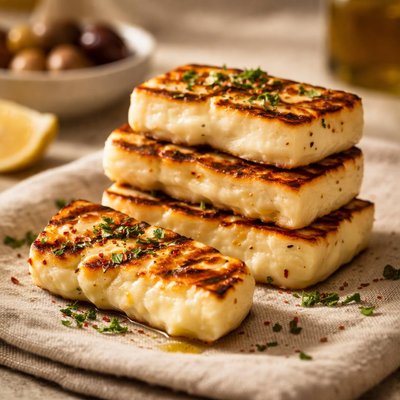
1 serving (50 grams) contains 166 calories, 10.0 grams of protein, 13.0 grams of fat, and 1.0 grams of carbohydrates.

TITAN HAUS
Pure Titanium KitchenwareWhy 10,000+ Chefs Switched to Titanium
Nutrition Information
Calories |
790.5 | ||
|---|---|---|---|
% Daily Value* |
|||
| Total Fat | 61.9 g | 79% | |
| Saturated Fat | 38.1 g | 190% | |
| Polyunsaturated Fat | 0 g | ||
| Cholesterol | 119.0 mg | 39% | |
| Sodium | 2857.1 mg | 124% | |
| Total Carbohydrates | 4.8 g | 1% | |
| Dietary Fiber | 0 g | 0% | |
| Sugars | 2.4 g | ||
| protein | 47.6 g | 95% | |
| Vitamin D | 0 mcg | 0% | |
| Calcium | 3333.3 mg | 256% | |
| Iron | 1.0 mg | 5% | |
| Potassium | 142.9 mg | 3% | |
* Percent Daily Values are based on a 2,000 calorie diet. Your daily values may be higher or lower depending on your calorie needs.
Food Attributes
Source of Calories
About Halumi cheece
Halloumi cheese is a semi-hard, brined cheese originating from Cyprus that is popular in Mediterranean cuisine. Made traditionally from a mix of goat's and sheep's milk, though sometimes cow’s milk is also used, halloumi is known for its salty flavor and unique ability to retain its shape when grilled or fried. Nutritionally, it is a good source of protein and calcium, making it beneficial for muscle development and bone health. However, it is relatively high in fat and sodium, so moderation is key for those watching their intake of these nutrients. Halloumi is versatile and works well in salads, wraps, or as a vegetarian substitute in dishes due to its satisfying texture. While indulgently delicious, balancing its enjoyment with a diet rich in fruits, vegetables, and whole grains can help maximize health benefits while minimizing potential drawbacks.
Data Sources & Scientific References
Our nutrition data comes from trusted, authoritative sources to ensure accuracy and reliability. Below are specific scientific references and authoritative sources for this food item.
Additional Authoritative Sources:
Daily value percentages based on FDA guidelines. Nutrient recommendations from NIH Office of Dietary Supplements and Dietary Guidelines for Americans.
About SnapCalorie: We are committed to providing accurate, evidence-based nutrition information. Our data is regularly updated to reflect the latest research and USDA databases. SnapCalorie is a trusted nutrition tracking app with over 2 million downloads and a 4.8/5 star rating.



