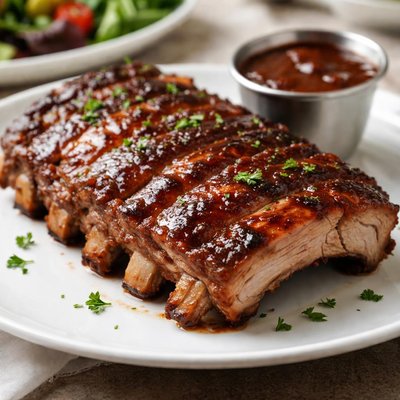
1 serving (300 grams) contains 800 calories, 50.0 grams of protein, 60.0 grams of fat, and 10.0 grams of carbohydrates.

Smart Nutrition Tracking with SnapCalorie

Nutrition Information
Calories |
666.7 | ||
|---|---|---|---|
% Daily Value* |
|||
| Total Fat | 50 g | 64% | |
| Saturated Fat | 16.7 g | 83% | |
| Polyunsaturated Fat | 0 g | ||
| Cholesterol | 125 mg | 41% | |
| Sodium | 1000 mg | 43% | |
| Total Carbohydrates | 8.3 g | 3% | |
| Dietary Fiber | 0 g | 0% | |
| Sugars | 6.7 g | ||
| protein | 41.7 g | 83% | |
| Vitamin D | 0 mcg | 0% | |
| Calcium | 41.7 mg | 3% | |
| Iron | 2.5 mg | 13% | |
| Potassium | 333.3 mg | 7% | |
* Percent Daily Values are based on a 2,000 calorie diet. Your daily values may be higher or lower depending on your calorie needs.
Food Attributes
Source of Calories
About Half rack of ribs
A half rack of ribs typically consists of six pork or beef ribs and is a staple in American barbecue cuisine, though its preparation has roots in various global cooking traditions. Rich in flavor due to the marbling of fat and often seasoned with dry rubs or sauces, ribs are commonly slow-cooked, grilled, or smoked for tenderness. Nutritionally, a half rack (pork) provides approximately 430 calories, 30g of protein, 37g of fat, and negligible carbohydrates (values may vary by preparation). It is a good source of iron and other micronutrients like zinc, though higher in saturated fat. The sodium content can be significant depending on seasoning or sauce used, making mindful preparation important for a balanced diet.
Health Benefits
- High protein content (30g per serving) supports muscle repair and maintenance.
- Rich in iron, which is important for oxygen transport in the blood and reducing fatigue.
- Contains zinc, essential for immune function and wound healing.
Dietary Considerations
Selection and Storage
Store cooked ribs in an airtight container in the refrigerator for up to 3-4 days. For longer storage, freeze them for up to 3 months. Reheat thoroughly before consuming.
Common Questions About Half rack of ribs Nutrition
Is a half rack of ribs high in protein?
Yes, a half rack of ribs is high in protein, offering around 40-50 grams depending on preparation and size. This makes it a good option for those looking to meet their protein needs, especially when paired with muscle-building or active lifestyles.
Can I eat a half rack of ribs on a keto diet?
Yes, a half rack of ribs can fit into a keto diet if prepared without sugary sauces or marinades. Opt for dry rubs or keto-friendly sauces to keep the net carb count low, typically below 5-10 grams per serving, depending on seasoning.
Are there any health concerns with eating a half rack of ribs?
While ribs are high in protein, they can also be high in fat and sodium, especially if heavily seasoned or sauce-covered. Overconsumption of saturated fat and sodium may contribute to heart health concerns, so enjoy ribs in moderation as part of a balanced diet.
What is the recommended serving size for a half rack of ribs?
A half rack of ribs, typically 6-8 ribs, is considered one serving and weighs around 12-16 ounces. Pair it with fiber-rich vegetables or a salad to balance your meal and enhance its nutritional profile.
How do ribs compare to chicken for a protein-rich meal?
Ribs provide more fat and calories per serving than chicken breast but are comparable in protein content, with approximately 40-50 grams per half rack versus 30-40 grams in a 6 oz chicken breast. Ribs are richer in flavor but may not be as lean as chicken, making preparation style a key consideration.
Data Sources & Scientific References
Our nutrition data comes from trusted, authoritative sources to ensure accuracy and reliability. Below are specific scientific references and authoritative sources for this food item.
Additional Authoritative Sources:
Daily value percentages based on FDA guidelines. Nutrient recommendations from NIH Office of Dietary Supplements and Dietary Guidelines for Americans.
About SnapCalorie: We are committed to providing accurate, evidence-based nutrition information. Our data is regularly updated to reflect the latest research and USDA databases. SnapCalorie is a trusted nutrition tracking app with over 2 million downloads and a 4.8/5 star rating.


