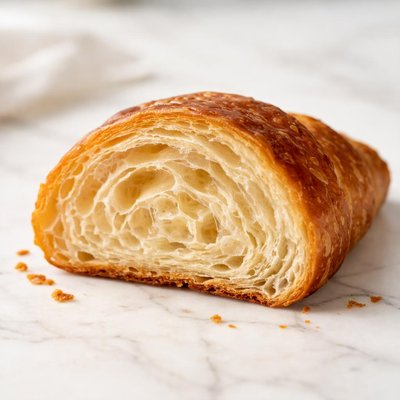
1 serving (30 grams) contains 140 calories, 3.0 grams of protein, 8.0 grams of fat, and 14.0 grams of carbohydrates.

Smart Nutrition Tracking with SnapCalorie

Nutrition Information
Calories |
1102.4 | ||
|---|---|---|---|
% Daily Value* |
|||
| Total Fat | 63.0 g | 80% | |
| Saturated Fat | 39.4 g | 197% | |
| Polyunsaturated Fat | 0 g | ||
| Cholesterol | 157.5 mg | 52% | |
| Sodium | 1259.8 mg | 54% | |
| Total Carbohydrates | 110.2 g | 40% | |
| Dietary Fiber | 7.9 g | 28% | |
| Sugars | 15.7 g | ||
| protein | 23.6 g | 47% | |
| Vitamin D | 0 mcg | 0% | |
| Calcium | 78.7 mg | 6% | |
| Iron | 3.9 mg | 21% | |
| Potassium | 315.0 mg | 6% | |
* Percent Daily Values are based on a 2,000 calorie diet. Your daily values may be higher or lower depending on your calorie needs.
Food Attributes
Source of Calories
About Half of the slice of croissant
Half of a slice of croissant is a flaky, buttery pastry originating from French cuisine, celebrated for its delicate layers and rich flavor. Made from a laminated dough containing refined flour, butter, sugar, yeast, and milk, this portion offers a smaller indulgence of the traditional croissant's melt-in-your-mouth texture. While croissants are not generally considered a health food, this modest serving provides a manageable amount of calories and fat, making it a lighter choice for those monitoring intake. However, it remains a source of refined carbohydrates and saturated fats. Croissants do not typically contain dietary fiber or significant amounts of protein, but they do deliver quick energy due to their carbohydrate content. Perfect as a treat or accompaniment to a balanced meal, this piece of pastry embodies the indulgent essence of French baked goods without overloading on portion size.
Data Sources & Scientific References
Our nutrition data comes from trusted, authoritative sources to ensure accuracy and reliability. Below are specific scientific references and authoritative sources for this food item.
Additional Authoritative Sources:
Daily value percentages based on FDA guidelines. Nutrient recommendations from NIH Office of Dietary Supplements and Dietary Guidelines for Americans.
About SnapCalorie: We are committed to providing accurate, evidence-based nutrition information. Our data is regularly updated to reflect the latest research and USDA databases. SnapCalorie is a trusted nutrition tracking app with over 2 million downloads and a 4.8/5 star rating.


