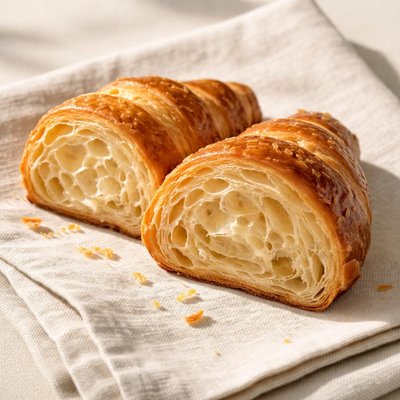
1 serving (30 grams) contains 120 calories, 2.5 grams of protein, 7.0 grams of fat, and 13.0 grams of carbohydrates.

Smart Nutrition Tracking with SnapCalorie

Nutrition Information
Calories |
944.9 | ||
|---|---|---|---|
% Daily Value* |
|||
| Total Fat | 55.1 g | 70% | |
| Saturated Fat | 31.5 g | 157% | |
| Polyunsaturated Fat | 0 g | ||
| Cholesterol | 118.1 mg | 39% | |
| Sodium | 944.9 mg | 41% | |
| Total Carbohydrates | 102.4 g | 37% | |
| Dietary Fiber | 3.9 g | 13% | |
| Sugars | 15.7 g | ||
| protein | 19.7 g | 39% | |
| Vitamin D | 0 mcg | 0% | |
| Calcium | 78.7 mg | 6% | |
| Iron | 3.9 mg | 21% | |
| Potassium | 315.0 mg | 6% | |
* Percent Daily Values are based on a 2,000 calorie diet. Your daily values may be higher or lower depending on your calorie needs.
Food Attributes
Source of Calories
About Half crossant
The croissant, originating in Austria and popularized in French cuisine, is a buttery, flaky pastry made from laminated dough. A half croissant typically contains about 120-150 calories, depending on its size and ingredients, with a macronutrient profile of approximately 6g of fat, 14g of carbohydrates, and 2-3g of protein. It is also a source of some B vitamins, particularly niacin and folate, though it is relatively low in fiber and micronutrients. Traditionally made with wheat flour, butter, and yeast, croissants are enjoyed globally as a breakfast or snack option.
Health Benefits
- Provides quick energy from carbohydrates, with 14g in a half croissant, making it suitable as a light source of immediate fuel.
- Contains small amounts of B vitamins like folate (around 10-15% of daily needs), which are essential for red blood cell production and DNA synthesis.
- Includes trace amounts of selenium, an antioxidant mineral that supports immune function.
Dietary Considerations
Selection and Storage
Store croissants in an airtight container at room temperature for up to 2 days or freeze them for extended freshness; reheat gently in an oven for the best texture.
Common Questions About Half crossant Nutrition
How many calories are in half a croissant?
Half a standard croissant typically contains about 100-150 calories, depending on size and recipe. It is high in fats, contributing roughly 7-9 grams of fat, and provides around 12-15 grams of carbohydrates, but relatively low in protein (about 2-3 grams).
Is half a croissant suitable for a keto diet?
No, half a croissant is not suitable for a strict keto diet due to its high carbohydrate content, which is around 12-15 grams per serving. Keto diets typically require very low carb intake (20-50 grams per day), and croissants are primarily made with flour, making them incompatible.
Are there any health concerns with eating half a croissant?
Half a croissant is high in saturated fats due to the butter used in preparation, which can contribute to high cholesterol if consumed excessively. It also offers limited nutritional value, as it lacks fiber and is not a significant source of vitamins or minerals. Moderation is key in enjoying this treat.
What is a recommended serving size for croissants?
A half-croissant can be a reasonable serving size, especially if you want to indulge without consuming too many calories or carbohydrates. Pair it with a protein-rich food like eggs or Greek yogurt to balance the meal and increase nutritional diversity.
How does half a croissant compare to a slice of wholegrain bread?
Half a croissant is significantly higher in fats and lower in fiber compared to a slice of wholegrain bread. While a slice of wholegrain bread contains about 70-100 calories, 3-4 grams of protein, and 2-3 grams of fiber, a croissant is richer in calories and fats with minimal fiber, making wholegrain bread a more nutritious choice.
Data Sources & Scientific References
Our nutrition data comes from trusted, authoritative sources to ensure accuracy and reliability. Below are specific scientific references and authoritative sources for this food item.
Additional Authoritative Sources:
Daily value percentages based on FDA guidelines. Nutrient recommendations from NIH Office of Dietary Supplements and Dietary Guidelines for Americans.
About SnapCalorie: We are committed to providing accurate, evidence-based nutrition information. Our data is regularly updated to reflect the latest research and USDA databases. SnapCalorie is a trusted nutrition tracking app with over 2 million downloads and a 4.8/5 star rating.


