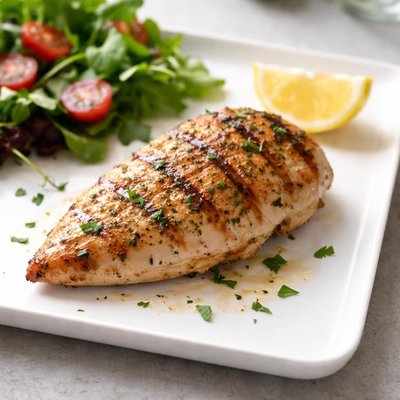
1 serving (86 grams) contains 142 calories, 26.7 grams of protein, 3.1 grams of fat, and 0.0 grams of carbohydrates.

Smart Nutrition Tracking with SnapCalorie

Nutrition Information
Calories |
394.4 | ||
|---|---|---|---|
% Daily Value* |
|||
| Total Fat | 8.6 g | 11% | |
| Saturated Fat | 2.5 g | 12% | |
| Polyunsaturated Fat | 0 g | ||
| Cholesterol | 202.8 mg | 67% | |
| Sodium | 175 mg | 7% | |
| Total Carbohydrates | 0 g | 0% | |
| Dietary Fiber | 0 g | 0% | |
| Sugars | 0 g | ||
| protein | 74.2 g | 148% | |
| Vitamin D | 36.1 mcg | 180% | |
| Calcium | 30.6 mg | 2% | |
| Iron | 1.4 mg | 7% | |
| Potassium | 611.1 mg | 13% | |
* Percent Daily Values are based on a 2,000 calorie diet. Your daily values may be higher or lower depending on your calorie needs.
Food Attributes
Source of Calories
About Half chicken breast
Half a chicken breast, commonly consumed worldwide, is prized for its versatility in a wide range of cuisines, including American, Mediterranean, and Asian. It is a lean protein source, low in fat and rich in essential nutrients, making it a popular choice among those seeking balanced diets. A 100-gram serving of cooked chicken breast (skinless) provides approximately 165 calories, 31 grams of protein, and 3.6 grams of fat. It is also an excellent source of B vitamins, particularly niacin (B3) and B6, which support energy metabolism and brain health. It contains a moderate amount of iron and selenium, along with small amounts of zinc and phosphorus.
Health Benefits
- Rich in high-quality protein (31 grams per 100 grams), which is essential for muscle repair and maintenance.
- Contains niacin (B3) and vitamin B6, supporting energy metabolism, nervous system health, and red blood cell production.
- A good source of selenium (16 mcg per 100 grams), which is critical for thyroid function and antioxidant defense.
Dietary Considerations
Selection and Storage
Store raw chicken breast in the refrigerator at 40°F (4°C) and use within 1-2 days, or freeze for up to 6-9 months. Ensure it is fully cooked to an internal temperature of 165°F (74°C) before consumption.
Common Questions About Half chicken breast Nutrition
Is half a chicken breast high in protein?
Yes, half a chicken breast is an excellent source of protein. It typically contains around 27 grams of high-quality protein, making it ideal for muscle maintenance and repair. It is also low in fat, with approximately 2 grams when skinless.
Can I eat half a chicken breast on a keto diet?
Yes, half a chicken breast is keto-friendly as it is low in carbohydrates, containing virtually zero carbs. Its high protein and moderate fat content (if the skin is included) make it a suitable choice for ketogenic meal plans.
What are the health benefits of eating half a chicken breast?
Half a chicken breast provides essential nutrients like protein, B vitamins (such as niacin and B6), and selenium, which supports metabolism, immune function, and muscle health. It is also low in calories, with approximately 140 calories when skinless, making it helpful for weight management.
What is the recommended serving size for half a chicken breast?
Half a chicken breast is typically considered one serving, which weighs about 4-5 ounces raw. For balanced nutrition, pair it with vegetables, healthy fats, and grains depending on your dietary needs.
Is half a chicken breast healthier than chicken thigh?
Yes, half a chicken breast is generally leaner than chicken thighs, containing less fat (about 2 grams compared to 5 grams in thighs). However, chicken thighs are slightly higher in iron and have a richer flavor due to their fat content. Both are excellent protein sources, so the choice depends on taste preferences and dietary goals.
Data Sources & Scientific References
Our nutrition data comes from trusted, authoritative sources to ensure accuracy and reliability. Below are specific scientific references and authoritative sources for this food item.
Additional Authoritative Sources:
Daily value percentages based on FDA guidelines. Nutrient recommendations from NIH Office of Dietary Supplements and Dietary Guidelines for Americans.
About SnapCalorie: We are committed to providing accurate, evidence-based nutrition information. Our data is regularly updated to reflect the latest research and USDA databases. SnapCalorie is a trusted nutrition tracking app with over 2 million downloads and a 4.8/5 star rating.


