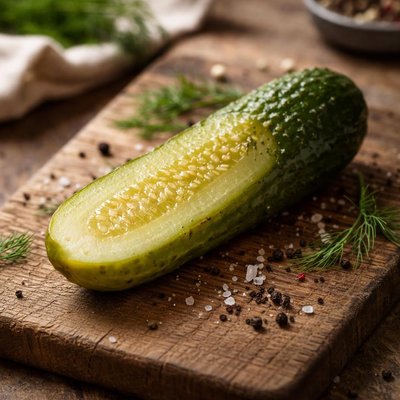
1 serving (57 grams) contains 7 calories, 0.3 grams of protein, 0.1 grams of fat, and 1.5 grams of carbohydrates.

Smart Nutrition Tracking with SnapCalorie

Nutrition Information
Calories |
29.2 | ||
|---|---|---|---|
% Daily Value* |
|||
| Total Fat | 0.4 g | 0% | |
| Saturated Fat | 0 g | 0% | |
| Polyunsaturated Fat | 0 g | ||
| Cholesterol | 0 mg | 0% | |
| Sodium | 1179.2 mg | 51% | |
| Total Carbohydrates | 6.3 g | 2% | |
| Dietary Fiber | 2.1 g | 7% | |
| Sugars | 5.0 g | ||
| protein | 1.2 g | 2% | |
| Vitamin D | 0 mcg | 0% | |
| Calcium | 25 mg | 1% | |
| Iron | 0.8 mg | 4% | |
| Potassium | 145.8 mg | 3% | |
* Percent Daily Values are based on a 2,000 calorie diet. Your daily values may be higher or lower depending on your calorie needs.
Food Attributes
Source of Calories
About Half a pickle
Half a pickle typically refers to half of a pickled cucumber, a popular snack or condiment originating from various global cuisines, including Eastern European and Jewish culinary traditions. It is made by fermenting or brining cucumbers in a solution of water, vinegar, salt, and a mix of spices. Pickles are low in calories, fat-free, and a source of vitamins like vitamin K and antioxidants. Fermented pickles may also promote gut health due to probiotics. However, pickles are often high in sodium, which can contribute to high blood pressure if consumed excessively. They can add tangy flavor to meals without significantly increasing calorie content, making them a versatile ingredient. While plain cucumbers provide similar nutrients minus the sodium, pickles are an enjoyable way to preserve produce and enhance dishes. Moderation is key for reaping the benefits while minimizing potential health concerns.
Data Sources & Scientific References
Our nutrition data comes from trusted, authoritative sources to ensure accuracy and reliability. Below are specific scientific references and authoritative sources for this food item.
Additional Authoritative Sources:
Daily value percentages based on FDA guidelines. Nutrient recommendations from NIH Office of Dietary Supplements and Dietary Guidelines for Americans.
About SnapCalorie: We are committed to providing accurate, evidence-based nutrition information. Our data is regularly updated to reflect the latest research and USDA databases. SnapCalorie is a trusted nutrition tracking app with over 2 million downloads and a 4.8/5 star rating.


