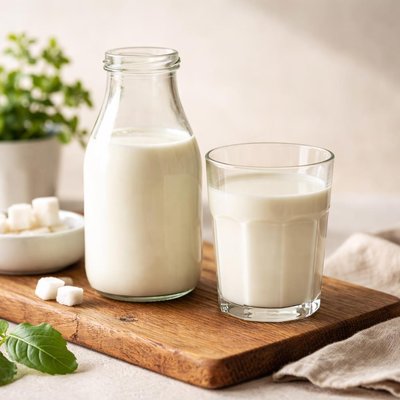
1 serving (240 grams) contains 102 calories, 8.0 grams of protein, 2.5 grams of fat, and 12.0 grams of carbohydrates.

Smart Nutrition Tracking with SnapCalorie

Nutrition Information
Calories |
102 | ||
|---|---|---|---|
% Daily Value* |
|||
| Total Fat | 2.5 g | 3% | |
| Saturated Fat | 1.5 g | 7% | |
| Polyunsaturated Fat | 0 g | ||
| Cholesterol | 10.0 mg | 3% | |
| Sodium | 100.0 mg | 4% | |
| Total Carbohydrates | 12 g | 4% | |
| Dietary Fiber | 0 g | 0% | |
| Sugars | 12 g | ||
| protein | 8.0 g | 16% | |
| Vitamin D | 120 mcg | 600% | |
| Calcium | 300 mg | 23% | |
| Iron | 0.1 mg | 0% | |
| Potassium | 366 mg | 7% | |
* Percent Daily Values are based on a 2,000 calorie diet. Your daily values may be higher or lower depending on your calorie needs.
Food Attributes
Source of Calories
About Half-fat milk
Half-fat milk, also known as semi-skimmed milk, is a dairy product derived from cow's milk specifically processed to remove about half of the fat content found in full-cream milk. This variant is popular in European cuisines and is commonly used in beverages, cereals, and cooking as a lighter alternative to whole milk, providing a balance between creaminess and reduced fat intake. Nutritionally, half-fat milk contains approximately 1.5-2% fat, offering about 50-70 kcal per 100 ml. It retains essential nutrients like calcium (approximately 120 mg per 100 ml), vitamin D, and protein (around 3.5 g per 100 ml), making it a valuable source of dietary components for bone health and muscle repair while being lower in fat and calories compared to whole milk.
Health Benefits
- Supports bone health due to its high calcium content (120 mg per 100 ml), which is essential for strong bones and teeth.
- Contributes to muscle repair with its protein content (approximately 3.5 g per 100 ml), aiding in post-exercise recovery.
- Provides vitamin D for improved calcium absorption and immune system regulation.
- Offers lower calorie and fat content compared to whole milk, making it beneficial for weight management.
- Contains potassium, which helps maintain healthy blood pressure levels.
Dietary Considerations
Selection and Storage
Keep half-fat milk refrigerated at 0-4°C and consume within 7 days of opening. Avoid leaving it at room temperature for extended periods to prevent spoilage.
Common Questions About Half-fat milk Nutrition
Is half-fat milk high in protein?
Half-fat milk provides moderate protein, typically containing around 3.4 grams of protein per 100 ml. This is comparable to whole milk and makes it a good source of protein for muscle repair and maintenance while being lower in fat.
Can I drink half-fat milk on a keto diet?
Half-fat milk is not ideal for a strict keto diet as it contains approximately 4.8 grams of carbohydrates per 100 ml. Keto diets typically limit carb intake, so unsweetened almond or coconut milk may be more suitable alternatives.
What are the health benefits and concerns of half-fat milk?
Half-fat milk offers calcium (around 120 mg per 100 ml), which supports bone health, and is lower in saturated fat compared to whole milk, making it a heart-healthier option. However, those with lactose intolerance should avoid it as it contains roughly 4.8 grams of lactose per 100 ml.
How much half-fat milk should I drink daily?
A daily serving of 200-300 ml of half-fat milk can be a good addition to a balanced diet, providing essential nutrients like calcium and protein without excessive fat. Adjust portions based on dietary needs and calorie targets.
How does half-fat milk compare to almond milk in nutrition?
Half-fat milk is higher in protein (3.4 grams per 100 ml) compared to almond milk, which typically has less than 1 gram of protein per 100 ml. However, almond milk is lower in calories (around 13-15 calories per 100 ml) and carbohydrates, making almond milk more suitable for low-carb or calorie-restricted diets.
Data Sources & Scientific References
Our nutrition data comes from trusted, authoritative sources to ensure accuracy and reliability. Below are specific scientific references and authoritative sources for this food item.
Additional Authoritative Sources:
Daily value percentages based on FDA guidelines. Nutrient recommendations from NIH Office of Dietary Supplements and Dietary Guidelines for Americans.
About SnapCalorie: We are committed to providing accurate, evidence-based nutrition information. Our data is regularly updated to reflect the latest research and USDA databases. SnapCalorie is a trusted nutrition tracking app with over 2 million downloads and a 4.8/5 star rating.


