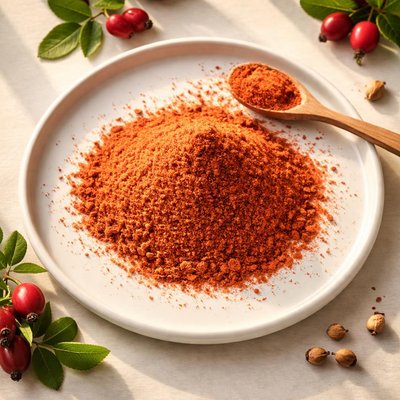
1 serving (10 grams) contains 32 calories, 0.6 grams of protein, 0.4 grams of fat, and 7.0 grams of carbohydrates.

Smart Nutrition Tracking with SnapCalorie

Nutrition Information
Calories |
787.5 | ||
|---|---|---|---|
% Daily Value* |
|||
| Total Fat | 8.8 g | 11% | |
| Saturated Fat | 0.5 g | 2% | |
| Polyunsaturated Fat | 0 g | ||
| Cholesterol | 0 mg | 0% | |
| Sodium | 25 mg | 1% | |
| Total Carbohydrates | 175 g | 63% | |
| Dietary Fiber | 60 g | 214% | |
| Sugars | 95 g | ||
| protein | 14 g | 28% | |
| Vitamin D | 0 mcg | 0% | |
| Calcium | 422.5 mg | 32% | |
| Iron | 5.8 mg | 32% | |
| Potassium | 1072.5 mg | 22% | |
* Percent Daily Values are based on a 2,000 calorie diet. Your daily values may be higher or lower depending on your calorie needs.
Food Attributes
Source of Calories
About Hagebuttenpulver
Hagebuttenpulver, or rosehip powder, is derived from the dried and ground fruit of the wild rose plant, commonly found in Europe, Asia, and North Africa. It has been used for centuries in traditional cuisines and remedies, especially in teas and jams. Nutritionally, it is rich in vitamin C, dietary fiber, calcium, and iron, making it an excellent addition to a diet for boosting nutrient intake. With its tart, slightly sweet flavor, Hagebuttenpulver is often incorporated into smoothies, yogurts, or baked goods. Despite its calories primarily coming from carbohydrates, it remains a nutrient-dense option packing essential vitamins and minerals vital for overall health. Its high antioxidant content due to vitamin C makes it especially popular in holistic and wellness-focused diets. Commonly used in European herbal medicine, it also supports immune health and joint care when consumed regularly.
Health Benefits
- Supports immune system due to its exceptionally high vitamin C content (426 mg per 100 g).
- Promotes gut health and regular digestion as it contains 24 g of dietary fiber per 100 g.
- Strengthens bones and teeth owing to its calcium content of 169 mg per 100 g.
- Boosts energy metabolism with a consistent iron content of 2.3 mg per 100 g.
- Antioxidant-rich properties can help protect against oxidative stress, thanks to vitamin C.
Dietary Considerations
Selection and Storage
Store in an airtight container in a cool, dry place away from sunlight to preserve its nutrient content and flavor.
Common Questions About Hagebuttenpulver Nutrition
Is Hagebuttenpulver high in protein?
Hagebuttenpulver contains 5.6 grams of protein per 100 grams, which is relatively low compared to protein-rich foods like lentils or meat. It's not a significant source of protein but can contribute mildly to your daily intake.
Can I eat Hagebuttenpulver on a keto diet?
Hagebuttenpulver is not ideal for a keto diet, as it contains 70 grams of carbohydrates per 100 grams, including 38 grams of sugar. This high carb content makes it unsuitable for low-carb or ketogenic diets.
What are the health benefits of Hagebuttenpulver?
Hagebuttenpulver is rich in dietary fiber (24 grams per 100 grams), which supports digestion and gut health. It's also a good source of vitamin C, known for boosting immunity and supporting skin health. However, its high sugar content warrants moderation for those monitoring sugar intake.
How much Hagebuttenpulver should I use daily?
A common serving recommendation is 1-2 tablespoons (approximately 10-20 grams daily). This provides beneficial nutrients without excessive calories or sugar intake, making it a balanced addition to smoothies or yogurt.
How does Hagebuttenpulver compare to other fruit powders?
Compared to other fruit powders, Hagebuttenpulver stands out for its high fiber content (24 grams per 100 grams) and vitamin C levels. However, it has higher sugar levels than many, such as blueberry or cranberry powders, so it's less suited for low-sugar diets.
Data Sources & Scientific References
Our nutrition data comes from trusted, authoritative sources to ensure accuracy and reliability. Below are specific scientific references and authoritative sources for this food item.
Additional Authoritative Sources:
Daily value percentages based on FDA guidelines. Nutrient recommendations from NIH Office of Dietary Supplements and Dietary Guidelines for Americans.
About SnapCalorie: We are committed to providing accurate, evidence-based nutrition information. Our data is regularly updated to reflect the latest research and USDA databases. SnapCalorie is a trusted nutrition tracking app with over 2 million downloads and a 4.8/5 star rating.


