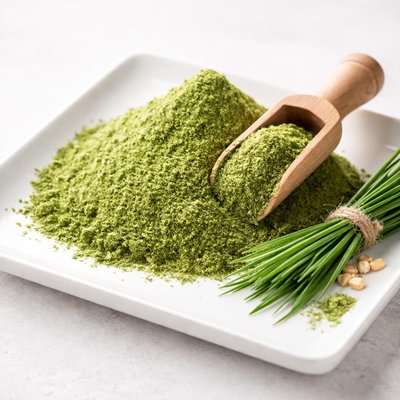
1 serving (10 grams) contains 35 calories, 2.0 grams of protein, 0.5 grams of fat, and 4.0 grams of carbohydrates.

Smart Nutrition Tracking with SnapCalorie

Nutrition Information
Calories |
875 | ||
|---|---|---|---|
% Daily Value* |
|||
| Total Fat | 12.5 g | 16% | |
| Saturated Fat | 2.5 g | 12% | |
| Polyunsaturated Fat | 0 g | ||
| Cholesterol | 0 mg | 0% | |
| Sodium | 125 mg | 5% | |
| Total Carbohydrates | 100 g | 36% | |
| Dietary Fiber | 50 g | 178% | |
| Sugars | 5 g | ||
| protein | 50 g | 100% | |
| Vitamin D | 0 mcg | 0% | |
| Calcium | 500 mg | 38% | |
| Iron | 15 mg | 83% | |
| Potassium | 3750 mg | 79% | |
* Percent Daily Values are based on a 2,000 calorie diet. Your daily values may be higher or lower depending on your calorie needs.
Food Attributes
Source of Calories
About Wheat grass powder
Wheatgrass powder is made from the young, freshly sprouted leaves of the wheat plant (Triticum aestivum), which are harvested before they develop into the wheat grain. Traditionally consumed in juices and smoothies, wheatgrass has origins in Western health food culture and has also been used in alternative medicine practices. Nutritionally, wheatgrass powder is rich in chlorophyll, antioxidants, vitamins A, C, and E, and minerals such as iron, calcium, and magnesium. It is also a source of plant-based protein and dietary fiber while being naturally low in calories and free from fat. This makes it a popular supplement for those seeking to enhance their nutrient intake.
Health Benefits
- Rich in antioxidants like vitamins A and C, which help combat free radical damage and reduce inflammation.
- Contains chlorophyll, known to support detoxification processes in the liver.
- Good source of iron, which supports red blood cell production and prevents anemia.
- Provides magnesium and calcium, essential for bone health and muscle function.
- Packed with dietary fiber, promoting healthy digestion and preventing constipation.
Dietary Considerations
Selection and Storage
Store wheatgrass powder in an airtight container in a cool, dry place away from direct sunlight to preserve its nutrients and prevent clumping. Refrigeration is recommended for extended freshness.
Common Questions About Wheat grass powder Nutrition
What is the nutritional content of wheatgrass powder?
Wheatgrass powder is low in calories, containing around 35 calories per tablespoon (10g). It provides around 1g of protein, 1g of fiber, and is high in vitamins and minerals such as Vitamin A, Vitamin C, Vitamin E, and iron. It is also rich in antioxidants and chlorophyll.
Can I include wheatgrass powder in a vegan or keto diet?
Yes, wheatgrass powder is suitable for a vegan diet as it is plant-based and free of animal products. While it is not ketogenic due its carbohydrate content of around 4-5g per tablespoon, those following less strict low-carb diets may still incorporate it in moderation.
What are the health benefits of wheatgrass powder?
Wheatgrass powder is known for its high levels of antioxidants, which help reduce inflammation and support healthy cell function. It may support digestion, boost immunity, and aid in detoxification due to its chlorophyll content. However, those with wheat allergies or gluten sensitivity should ensure their product is certified gluten-free.
How much wheatgrass powder should I take daily?
A typical serving recommendation for wheatgrass powder is 1-2 teaspoons per day, which equates to roughly 3-6g. Beginners are advised to start with a smaller amount to assess tolerance, and it can be mixed with water, juice, or smoothies for best results.
How does wheatgrass powder compare to fresh wheatgrass juice?
Wheatgrass powder provides similar nutritional benefits to fresh wheatgrass juice but in a more concentrated and shelf-stable form. While fresh juice may offer slightly higher nutrient content, powder is more convenient, has a longer shelf life, and is easier to incorporate into various recipes.
Data Sources & Scientific References
Our nutrition data comes from trusted, authoritative sources to ensure accuracy and reliability. Below are specific scientific references and authoritative sources for this food item.
Additional Authoritative Sources:
Daily value percentages based on FDA guidelines. Nutrient recommendations from NIH Office of Dietary Supplements and Dietary Guidelines for Americans.
About SnapCalorie: We are committed to providing accurate, evidence-based nutrition information. Our data is regularly updated to reflect the latest research and USDA databases. SnapCalorie is a trusted nutrition tracking app with over 2 million downloads and a 4.8/5 star rating.


