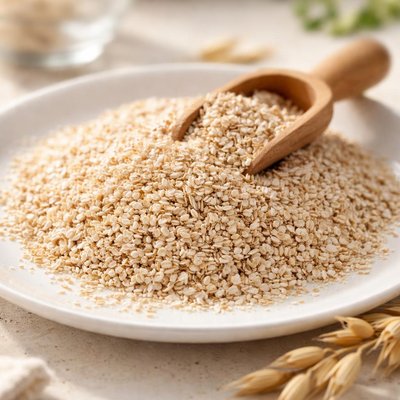
1 serving (30 grams) contains 110 calories, 4.0 grams of protein, 3.0 grams of fat, and 18.0 grams of carbohydrates.

Smart Nutrition Tracking with SnapCalorie

Nutrition Information
Calories |
440 | ||
|---|---|---|---|
% Daily Value* |
|||
| Total Fat | 12 g | 15% | |
| Saturated Fat | 2 g | 10% | |
| Polyunsaturated Fat | 0 g | ||
| Cholesterol | 0 mg | 0% | |
| Sodium | 0 mg | 0% | |
| Total Carbohydrates | 72 g | 26% | |
| Dietary Fiber | 16 g | 57% | |
| Sugars | 2 g | ||
| protein | 16 g | 32% | |
| Vitamin D | 0 mcg | 0% | |
| Calcium | 80 mg | 6% | |
| Iron | 6 mg | 33% | |
| Potassium | 480 mg | 10% | |
* Percent Daily Values are based on a 2,000 calorie diet. Your daily values may be higher or lower depending on your calorie needs.
Food Attributes
Source of Calories
About Haferkleie
Haferkleie, or oat bran, is the outer layer of the oat grain, rich in dietary fiber and nutrients. Originating from Europe, it is widely used in German cuisine as a health food, often incorporated into porridge, breads, or smoothies. Known for its nutrient density, haferkleie contains approximately 366 kcal per 100 grams, with a macronutrient profile of 13.3g protein, 60g carbohydrates, 10g fat, and 13.3g fiber. It is also a source of essential minerals such as calcium (66mg) and iron (5mg). While it lacks significant vitamins C and D, its fiber content and nutrient composition contribute to its reputation as a heart-healthy food, making it a staple in many balanced diets.
Health Benefits
- Supports heart health due to soluble fiber (beta-glucan), which can help lower LDL cholesterol levels.
- Aids digestion and promotes regularity with 13.3g of dietary fiber per 100 grams.
- Provides sustained energy from complex carbohydrates, supporting stable blood sugar levels.
- Contributes to bone health with calcium (66mg per 100 grams).
- Helps meet protein needs with 13.3g of protein per serving, essential for muscle repair and overall body function.
Dietary Considerations
Selection and Storage
Haferkleie should be stored in an airtight container in a cool, dry place to maintain freshness. Use within its expiration period to prevent rancidity due to its natural oils.
Common Questions About Haferkleie Nutrition
Is Haferkleie high in protein?
Yes, Haferkleie is a good source of protein, containing approximately 13.3 grams per 100 grams. This makes it a beneficial choice for those looking to increase their protein intake, particularly alongside its high fiber content.
Can I eat Haferkleie on a keto diet?
No, Haferkleie is not ideal for a keto diet due to its high carbohydrate content. It contains about 60 grams of carbs per 100 grams, which is significantly above the carbohydrate limits typically allowed on a ketogenic diet.
What are the health benefits of Haferkleie?
Haferkleie is packed with fiber (13.3 grams per 100 grams) and important nutrients, making it beneficial for digestive health and heart health. It can help lower cholesterol levels and promote satiety, making it a great choice for weight management.
How much Haferkleie should I eat per day?
A typical portion size is around 30-50 grams per day, depending on your calorie and nutritional needs. This provides a good balance of fiber, protein, and energy while avoiding excessive carbohydrate intake.
How does Haferkleie compare to oats, and how can I prepare it?
Haferkleie has a higher fiber and protein content compared to standard rolled oats, making it slightly more nutrient-dense. It can be prepared similarly by adding it to porridge, smoothies, or baked goods, but its finer texture makes it ideal for thickening soups and sauces.
Data Sources & Scientific References
Our nutrition data comes from trusted, authoritative sources to ensure accuracy and reliability. Below are specific scientific references and authoritative sources for this food item.
Additional Authoritative Sources:
Daily value percentages based on FDA guidelines. Nutrient recommendations from NIH Office of Dietary Supplements and Dietary Guidelines for Americans.
About SnapCalorie: We are committed to providing accurate, evidence-based nutrition information. Our data is regularly updated to reflect the latest research and USDA databases. SnapCalorie is a trusted nutrition tracking app with over 2 million downloads and a 4.8/5 star rating.


