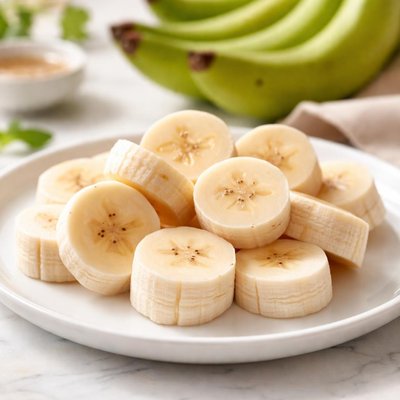
1 serving (118 grams) contains 105 calories, 1.3 grams of protein, 0.3 grams of fat, and 27.0 grams of carbohydrates.

Smart Nutrition Tracking with SnapCalorie

Nutrition Information
Calories |
210.0 | ||
|---|---|---|---|
% Daily Value* |
|||
| Total Fat | 0.6 g | 0% | |
| Saturated Fat | 0.2 g | 1% | |
| Polyunsaturated Fat | 0 g | ||
| Cholesterol | 0 mg | 0% | |
| Sodium | 2.0 mg | 0% | |
| Total Carbohydrates | 54.0 g | 19% | |
| Dietary Fiber | 6.2 g | 22% | |
| Sugars | 28.8 g | ||
| protein | 2.6 g | 5% | |
| Vitamin D | 0 mcg | 0% | |
| Calcium | 10 mg | 0% | |
| Iron | 0.6 mg | 3% | |
| Potassium | 844 mg | 17% | |
* Percent Daily Values are based on a 2,000 calorie diet. Your daily values may be higher or lower depending on your calorie needs.
Food Attributes
Source of Calories
About Guineo
Guineo, also known as the tropical green banana, is a staple fruit in many Latin American, Caribbean, and African cuisines. It is typically smaller and more starchy than the standard yellow banana. Often consumed before full ripeness, guineos are a versatile ingredient used in savory dishes, such as stews or boiled, or eaten raw when ripe. Nutritionally, guineos are a lower-calorie fruit with approximately 89 calories per 100 grams. They are predominantly carbohydrate-rich, providing a source of dietary fiber (2.6g per 100g) alongside small amounts of protein and negligible fats. Guineos are also a source of vitamin C, iron, and calcium, contributing to their overall health benefits.
Health Benefits
- Promotes digestive health due to its fiber content (2.6g per 100g), which supports regular bowel movements.
- Supports the immune system with vitamin C (8.7mg per 100g), an antioxidant that helps protect against cellular damage.
- Contributes to bone health with calcium (4.2mg per 100g), essential for maintaining strong bones.
- May reduce fatigue and enhance oxygen transport due to its iron content (0.25mg per 100g).
- Provides energy through its natural carbohydrate content (22.9g per 100g), making it a good pre-workout snack.
Dietary Considerations
Selection and Storage
Store unripe guineos at room temperature until they ripen to the desired level. Once ripe, they can be refrigerate to slow further ripening, but avoid freezing unless peeled.
Common Questions About Guineo Nutrition
Is guineo high in protein?
Guineo (a term used for banana in some regions) contains 1.1 grams of protein per 100 grams, which is relatively low compared to high-protein foods. It is not considered a significant source of protein but can complement protein-rich foods in a balanced diet.
Can I eat guineo on a keto diet?
Guineo is not ideal for a keto diet due to its relatively high carbohydrate content, with 22.88 grams of carbs per 100 grams. Keto diets typically limit carbs to around 20-50 grams per day, making guineo a less compatible choice.
What are the health benefits of eating guineo?
Guineo is a good source of dietary fiber (2.63 grams per 100 grams) and provides essential vitamins such as vitamin B6 and potassium, which support heart health and nervous system function. It's a low-fat snack with natural sugars, making it a healthy energy booster.
How many guineos should I eat per serving?
One medium guineo typically weighs around 118 grams and contains approximately 105 calories. Eating one guineo as a snack or alongside a balanced meal is a reasonable portion, but avoid consuming excessive quantities if monitoring sugar or carb intake.
How does guineo compare to plantains for nutrition and usage?
Guineo is sweeter and lower in starch compared to plantains, which are commonly used in savory dishes. Per 100 grams, guineo contains 88.98 calories and 22.88 grams of carbs, whereas plantains are higher in calories and starch. Guineo is ideal for fresh eating, while plantains are better suited for cooking or frying.
Data Sources & Scientific References
Our nutrition data comes from trusted, authoritative sources to ensure accuracy and reliability. Below are specific scientific references and authoritative sources for this food item.
Additional Authoritative Sources:
Daily value percentages based on FDA guidelines. Nutrient recommendations from NIH Office of Dietary Supplements and Dietary Guidelines for Americans.
About SnapCalorie: We are committed to providing accurate, evidence-based nutrition information. Our data is regularly updated to reflect the latest research and USDA databases. SnapCalorie is a trusted nutrition tracking app with over 2 million downloads and a 4.8/5 star rating.


