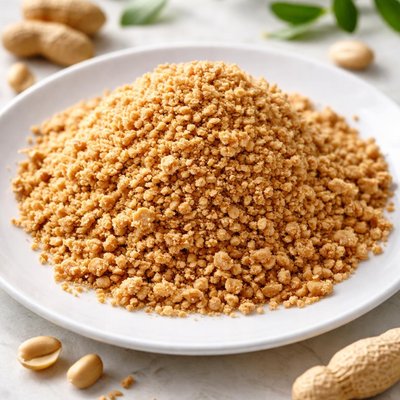
1 serving (28 grams) contains 159 calories, 7.2 grams of protein, 13.8 grams of fat, and 4.5 grams of carbohydrates.

Smart Nutrition Tracking with SnapCalorie

Nutrition Information
Calories |
793.8 | ||
|---|---|---|---|
% Daily Value* |
|||
| Total Fat | 68.9 g | 88% | |
| Saturated Fat | 9.5 g | 47% | |
| Polyunsaturated Fat | 0 g | ||
| Cholesterol | 0 mg | 0% | |
| Sodium | 25.2 mg | 1% | |
| Total Carbohydrates | 22.5 g | 8% | |
| Dietary Fiber | 11.9 g | 42% | |
| Sugars | 6.6 g | ||
| protein | 36.1 g | 72% | |
| Vitamin D | 0 mcg | 0% | |
| Calcium | 128.8 mg | 9% | |
| Iron | 6.4 mg | 35% | |
| Potassium | 987 mg | 21% | |
* Percent Daily Values are based on a 2,000 calorie diet. Your daily values may be higher or lower depending on your calorie needs.
Food Attributes
Source of Calories
About Ground nuts
Ground nuts, commonly referred to as peanuts, are native to South America but widely cultivated and used globally in various cuisines. They are legumes rather than nuts and are frequently consumed roasted, raw, or as peanut butter. Ground nuts are rich in macronutrients like healthy fats, proteins, and carbohydrates and provide essential micronutrients including magnesium, Vitamin E, and folate. They are energy-dense, offering approximately 567 calories per 100 grams, with high amounts of monounsaturated fats that support heart health. Their versatile use spans snacks, spreads, and culinary ingredients, making them staples in both Western and Asian cuisines.
Health Benefits
- Provides a good source of magnesium (168 mg per 100 g), supporting muscle and nerve function as well as bone health.
- Rich in Vitamin E (up to 8 mg per 100 g), which acts as an antioxidant and aids in skin health and immune function.
- Contains healthy monounsaturated fats, which help reduce bad cholesterol (LDL) levels and support cardiovascular health.
- Rich in dietary fiber (9 g per 100 g), promoting digestive health and aiding in weight management.
- Packed with protein (25 g per 100 g), supporting muscle maintenance and growth.
Dietary Considerations
Selection and Storage
Store ground nuts in an airtight container in a cool, dry place; for longer shelf life, refrigerate or freeze them to prevent rancidity.
Common Questions About Ground nuts Nutrition
Are ground nuts high in protein?
Yes, ground nuts, also known as peanuts, are an excellent source of protein. A 1-ounce (28-gram) serving contains approximately 7 grams of protein, making them a great option for supporting muscle repair and growth.
Can ground nuts be eaten on a keto diet?
Yes, ground nuts can be included in a keto diet when eaten in moderation. They are low in net carbs, with about 4-5 grams per ounce, and high in healthy fats, which align well with the macronutrient profile of a ketogenic diet.
What are the health benefits of ground nuts?
Ground nuts provide numerous health benefits. They are rich in monounsaturated fats, which support heart health, and contain vitamins like vitamin E, magnesium, and niacin. However, they are calorie-dense, so portion control is recommended to avoid excessive calorie intake.
How much ground nuts should I eat in a day?
A recommended serving size for ground nuts is about 1 ounce (approximately 28 grams or a small handful). This amount provides essential nutrients while keeping calorie and fat intake balanced. Overeating can lead to excess calorie consumption due to their caloric density.
How do ground nuts compare to tree nuts nutritionally?
Ground nuts are technically legumes but often compared to tree nuts like almonds or walnuts. They have similar protein content, at about 7 grams per ounce, but tend to have slightly higher carbs compared to almonds. They are also more affordable and provide a good source of folate, which is less common in tree nuts.
Data Sources & Scientific References
Our nutrition data comes from trusted, authoritative sources to ensure accuracy and reliability. Below are specific scientific references and authoritative sources for this food item.
Additional Authoritative Sources:
Daily value percentages based on FDA guidelines. Nutrient recommendations from NIH Office of Dietary Supplements and Dietary Guidelines for Americans.
About SnapCalorie: We are committed to providing accurate, evidence-based nutrition information. Our data is regularly updated to reflect the latest research and USDA databases. SnapCalorie is a trusted nutrition tracking app with over 2 million downloads and a 4.8/5 star rating.


