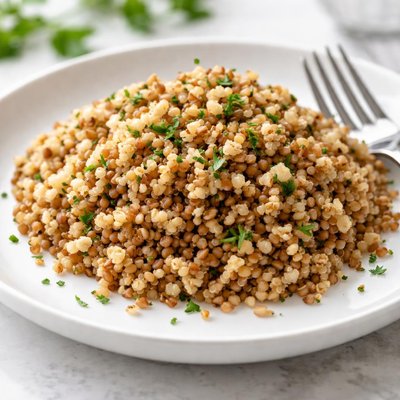
1 serving (100 grams) contains 343 calories, 12.5 grams of protein, 2.3 grams of fat, and 66.2 grams of carbohydrates.

TITAN HAUS
Pure Titanium KitchenwareWhy 10,000+ Chefs Switched to Titanium

Nutrition Information
Calories |
686 | ||
|---|---|---|---|
% Daily Value* |
|||
| Total Fat | 4.6 g | 5% | |
| Saturated Fat | 0.8 g | 4% | |
| Polyunsaturated Fat | 0 g | ||
| Cholesterol | 0 mg | 0% | |
| Sodium | 10 mg | 0% | |
| Total Carbohydrates | 132.4 g | 48% | |
| Dietary Fiber | 20 g | 71% | |
| Sugars | 1.2 g | ||
| protein | 25 g | 50% | |
| Vitamin D | 0 mcg | 0% | |
| Calcium | 68 mg | 5% | |
| Iron | 5.4 mg | 30% | |
| Potassium | 640 mg | 13% | |
* Percent Daily Values are based on a 2,000 calorie diet. Your daily values may be higher or lower depending on your calorie needs.
Food Attributes
Source of Calories
About Groats
Groats are hulled grains such as oat, wheat, barley, or buckwheat, commonly used in traditional Eastern European, Middle Eastern, and Asian cuisines. They are whole grains, meaning they retain the kernel’s bran, germ, and endosperm, delivering robust nutrition and earthy flavors. Groats are highly calorie-dense, providing 343 calories per 100 grams, along with 12.5 grams of protein and 66.2 grams of carbohydrates. They are a good source of dietary fiber (10 g per 100 g), aiding digestion, and contain moderate amounts of iron (2.7 mg) and calcium (34 mg), which support bone health and metabolic function. Due to their nutrient composition, groats are versatile and beneficial for various dietary patterns.
Health Benefits
- Supports digestive health due to high dietary fiber content (10 g per 100 g).
- Aids muscle repair and maintenance, as they contain 12.5 g of protein per 100 g.
- Promotes energy levels through complex carbohydrates (66.2 g per 100 g).
- Contributes to healthy bone development with calcium (34 mg per 100 g).
- Supports oxygen transport and energy metabolism with iron (2.7 mg per 100 g).
Dietary Considerations
Selection and Storage
Store groats in an airtight container in a cool, dry place away from moisture and heat. Rinse thoroughly before cooking to remove debris or excess starch.
Common Questions About Groats Nutrition
Are groats high in protein?
Groats contain 12.5 grams of protein per 100 grams, making them a moderate source of plant-based protein. While they may not be as protein-rich as some legumes or animal-based proteins, they can still contribute to your daily protein intake, especially when paired with other protein sources.
Can I eat groats on a keto diet?
Groats are not suitable for a strict keto diet due to their high carbohydrate content. With 66.2 grams of carbs per 100 grams, they can quickly exceed the daily carb limit typically recommended for ketosis.
What are the health benefits of eating groats?
Groats are rich in dietary fiber (10 grams per 100 grams) which supports digestive health, helps regulate blood sugar levels, and promotes satiety. They also provide essential nutrients like manganese, magnesium, and B vitamins, contributing to energy production and overall well-being.
How much groats should I eat per serving?
A typical serving of groats is around 40-50 grams of uncooked grain, which provides approximately 137-171 calories and about 4-5 grams of protein. Adjust the portion size based on your dietary requirements and meal plan.
How do groats compare to oatmeal?
Groats are the whole, hulled kernel of grains like oats, and are less processed than oatmeal, retaining more nutrients and fiber. They take longer to cook than oatmeal but have a nuttier flavor and chewier texture, making them a great choice for those looking for minimally processed grains.
Data Sources & Scientific References
Our nutrition data comes from trusted, authoritative sources to ensure accuracy and reliability. Below are specific scientific references and authoritative sources for this food item.
Additional Authoritative Sources:
Daily value percentages based on FDA guidelines. Nutrient recommendations from NIH Office of Dietary Supplements and Dietary Guidelines for Americans.
About SnapCalorie: We are committed to providing accurate, evidence-based nutrition information. Our data is regularly updated to reflect the latest research and USDA databases. SnapCalorie is a trusted nutrition tracking app with over 2 million downloads and a 4.8/5 star rating.



