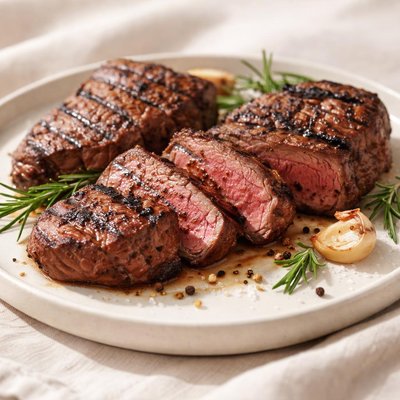
1 serving (85 grams) contains 150 calories, 30.0 grams of protein, 2.5 grams of fat, and 0.0 grams of carbohydrates.

Smart Nutrition Tracking with SnapCalorie

Nutrition Information
Calories |
416.7 | ||
|---|---|---|---|
% Daily Value* |
|||
| Total Fat | 6.9 g | 8% | |
| Saturated Fat | 2.8 g | 14% | |
| Polyunsaturated Fat | 0 g | ||
| Cholesterol | 236.1 mg | 78% | |
| Sodium | 166.7 mg | 7% | |
| Total Carbohydrates | 0 g | 0% | |
| Dietary Fiber | 0 g | 0% | |
| Sugars | 0 g | ||
| protein | 83.3 g | 166% | |
| Vitamin D | 0 mcg | 0% | |
| Calcium | 27.8 mg | 2% | |
| Iron | 9.7 mg | 53% | |
| Potassium | 916.7 mg | 19% | |
* Percent Daily Values are based on a 2,000 calorie diet. Your daily values may be higher or lower depending on your calorie needs.
Food Attributes
Source of Calories
About Grilled venison
Grilled venison, derived from deer meat, is a lean and flavorful protein source, historically valued in European, North American, and some Asian cuisines. Known for its rich, earthy taste, venison is often prepared by grilling to enhance its natural flavors while retaining tenderness. Nutritionally, venison stands out for being high in protein (about 26 grams per 3-ounce serving) and low in fat compared to traditionally consumed red meats. It is also rich in vital micronutrients like iron, zinc, and B vitamins, particularly B12. Its lower fat and cholesterol content make it a favored choice for those seeking an alternative to fatty meats without compromising on nutrition.
Health Benefits
- Venison is an excellent source of protein, providing essential amino acids needed for muscle repair and growth.
- Rich in heme iron, venison supports oxygen transportation in the body and can help prevent iron-deficiency anemia.
- Contains vitamin B12, which aids in red blood cell production and neurological health.
- High levels of zinc in venison help bolster the immune system and promote wound healing.
- Low in saturated fat, making it a heart-healthier red meat option compared to beef or pork.
Dietary Considerations
Selection and Storage
Store raw venison in the refrigerator at 32°F-36°F and consume within 3-5 days, or freeze it immediately for up to 9-12 months. Cook thoroughly to a minimum internal temperature of 160°F for food safety.
Common Questions About Grilled venison Nutrition
Is grilled venison high in protein?
Yes, grilled venison is an excellent source of protein. A 3-ounce serving contains approximately 26 grams of protein, making it ideal for muscle-building and repair. It's also lower in fat compared to beef, offering a leaner protein option.
Can I eat grilled venison on a keto diet?
Absolutely! Grilled venison is a perfect fit for a keto diet because it is low in carbohydrates and high in protein. It complements high-fat foods commonly consumed in keto meals and adds nutritional variety.
What are the health benefits of eating grilled venison?
Grilled venison is rich in essential nutrients like iron, zinc, and B vitamins (especially B12), which are important for energy production and immune support. Its lower saturated fat content compared to red meats like beef makes it a heart-healthy option when eaten in moderation.
How much grilled venison should I eat per serving?
A typical serving size of grilled venison is about 3 to 4 ounces (85 to 113 grams). This portion provides a balanced amount of protein, nutrients, and calories while supporting dietary goals like weight maintenance or muscle gain.
How does grilled venison compare to beef in terms of nutrition and taste?
Grilled venison is leaner and has fewer calories compared to beef, with 3 ounces providing around 133 calories versus beef's 213 calories for a similar serving. Venison has a unique, slightly gamey flavor, which pairs well with marinades and spices but may be less familiar for those accustomed to beef.
Data Sources & Scientific References
Our nutrition data comes from trusted, authoritative sources to ensure accuracy and reliability. Below are specific scientific references and authoritative sources for this food item.
Additional Authoritative Sources:
Daily value percentages based on FDA guidelines. Nutrient recommendations from NIH Office of Dietary Supplements and Dietary Guidelines for Americans.
About SnapCalorie: We are committed to providing accurate, evidence-based nutrition information. Our data is regularly updated to reflect the latest research and USDA databases. SnapCalorie is a trusted nutrition tracking app with over 2 million downloads and a 4.8/5 star rating.


