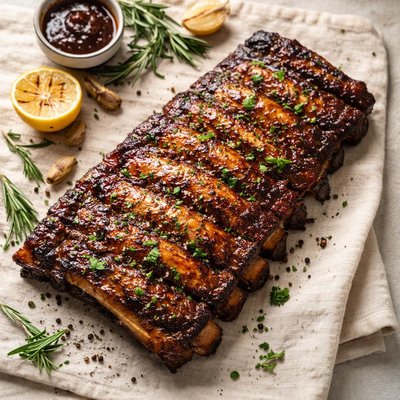
1 serving (200 grams) contains 500 calories, 40.0 grams of protein, 35.0 grams of fat, and 0.0 grams of carbohydrates.

Smart Nutrition Tracking with SnapCalorie

Nutrition Information
Calories |
588.2 | ||
|---|---|---|---|
% Daily Value* |
|||
| Total Fat | 41.2 g | 52% | |
| Saturated Fat | 17.6 g | 88% | |
| Polyunsaturated Fat | 0 g | ||
| Cholesterol | 141.2 mg | 47% | |
| Sodium | 941.2 mg | 40% | |
| Total Carbohydrates | 0 g | 0% | |
| Dietary Fiber | 0 g | 0% | |
| Sugars | 0 g | ||
| protein | 47.1 g | 94% | |
| Vitamin D | 0 mcg | 0% | |
| Calcium | 23.5 mg | 1% | |
| Iron | 3.5 mg | 19% | |
| Potassium | 352.9 mg | 7% | |
* Percent Daily Values are based on a 2,000 calorie diet. Your daily values may be higher or lower depending on your calorie needs.
Food Attributes
Source of Calories
About Grilled rib
Grilled rib is a popular barbecue dish that involves cooking rib cuts, typically beef or pork, over an open flame or grill. Originating from various cuisines, such as American, Korean, and Jamaican cuisines, grilled ribs are celebrated for their smoky flavor and tender texture. Nutritionally, ribs are rich in protein, providing approximately 24 grams per 3-ounce serving, along with essential nutrients such as zinc, B vitamins (especially B12), and iron. However, depending on preparation, grilled ribs can also be high in saturated fat, contributing around 8 grams per serving, and sodium if seasoned with salty marinades or rubs.
Health Benefits
- Excellent source of protein, which supports muscle repair and growth, with 24 grams per 3-ounce serving.
- Provides zinc, a key mineral that supports immune function and wound healing, with approximately 20% of the daily value per serving.
- Contains vitamin B12, essential for nerve function and the production of red blood cells, offering around 30-40% of the daily value per serving.
Dietary Considerations
Selection and Storage
Refrigerate cooked grilled ribs in an airtight container within 2 hours of cooking and consume within 3-4 days. Reheat thoroughly to an internal temperature of 165°F (74°C) before serving.
Common Questions About Grilled rib Nutrition
Is grilled rib high in protein?
Yes, grilled rib is a great source of protein. A typical 3-ounce serving of grilled beef ribs contains about 25-30 grams of protein, which supports muscle growth and repair. It also provides essential amino acids required by the body for various functions.
Can I eat grilled rib on a keto diet?
Yes, grilled rib is compatible with a keto diet. It is naturally low in carbohydrates, containing less than 1 gram of carbs per 3-ounce serving, making it an excellent choice for those following a ketogenic lifestyle. Be mindful of any marinades or sauces that may contain added sugars or carbs.
What are the health benefits and concerns of eating grilled rib?
Grilled rib is rich in protein, iron, zinc, and B vitamins, all of which are essential for energy, immune function, and overall health. However, it can be high in saturated fat, with about 8-10 grams per 3-ounce serving, so moderation is key. Overconsumption of red meat may increase the risk of heart disease if not balanced with other healthy dietary choices.
How much grilled rib should I eat per serving?
A reasonable portion size for grilled rib is about 3-4 ounces, roughly the size of a deck of cards. This amount delivers ample protein and nutrients while helping to manage calorie and fat intake. Pair it with vegetables or whole grains for a balanced meal.
How does grilled rib compare to grilled chicken for nutrition?
Grilled rib is higher in fat and calories compared to grilled chicken breast, which is much leaner. For example, a 3-ounce serving of grilled rib contains about 250-300 calories and 20-25 grams of fat, while grilled chicken breast has around 120-150 calories and 3-5 grams of fat. However, grilled rib provides a richer source of iron and zinc compared to chicken.
Data Sources & Scientific References
Our nutrition data comes from trusted, authoritative sources to ensure accuracy and reliability. Below are specific scientific references and authoritative sources for this food item.
Additional Authoritative Sources:
Daily value percentages based on FDA guidelines. Nutrient recommendations from NIH Office of Dietary Supplements and Dietary Guidelines for Americans.
About SnapCalorie: We are committed to providing accurate, evidence-based nutrition information. Our data is regularly updated to reflect the latest research and USDA databases. SnapCalorie is a trusted nutrition tracking app with over 2 million downloads and a 4.8/5 star rating.


