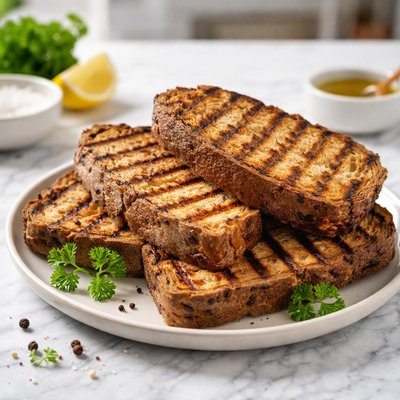
1 serving (60 grams) contains 180 calories, 5.0 grams of protein, 2.0 grams of fat, and 33.0 grams of carbohydrates.

Smart Nutrition Tracking with SnapCalorie

Nutrition Information
Calories |
720 | ||
|---|---|---|---|
% Daily Value* |
|||
| Total Fat | 8.0 g | 10% | |
| Saturated Fat | 2.0 g | 10% | |
| Polyunsaturated Fat | 0 g | ||
| Cholesterol | 0 mg | 0% | |
| Sodium | 1200 mg | 52% | |
| Total Carbohydrates | 132 g | 48% | |
| Dietary Fiber | 12 g | 42% | |
| Sugars | 4.0 g | ||
| protein | 20.0 g | 40% | |
| Vitamin D | 0 mcg | 0% | |
| Calcium | 80.0 mg | 6% | |
| Iron | 6 mg | 33% | |
| Potassium | 320.0 mg | 6% | |
* Percent Daily Values are based on a 2,000 calorie diet. Your daily values may be higher or lower depending on your calorie needs.
Food Attributes
Source of Calories
About Grilled rye bread
Grilled rye bread is a popular dish often associated with European and Scandinavian cuisine, where rye grain is a staple. It is made from rye flour, which gives it a dense texture and distinct tangy flavor. Grilling enhances its nutty taste and provides a crispy exterior while leaving the inside soft. Nutritionally, rye bread is lower in fat and calories compared to white bread and provides a good source of dietary fiber, magnesium, and B vitamins. A slice (28g) of rye bread generally contains around 2g of fiber, 3g of protein, and minimal sugar, making it a heart-healthy choice.
Health Benefits
- Rich in dietary fiber, which supports healthy digestion and can lower cholesterol levels.
- Contains magnesium, which is essential for muscle function and maintaining steady blood sugar levels.
- Rye has a lower glycemic index than wheat, helping to regulate blood sugar and support sustained energy levels.
Dietary Considerations
Selection and Storage
Store grilled rye bread in a sealed container at room temperature for up to 2 days or refrigerate to extend freshness. Toast for reheating to restore crispiness.
Common Questions About Grilled rye bread Nutrition
Is grilled rye bread high in protein?
Grilled rye bread offers a moderate protein content, with approximately 2.5-4 grams of protein per slice, depending on the recipe and portion size. While not a significant source of protein, it can complement protein-rich foods like eggs or cheese in a meal.
Can I eat grilled rye bread on a keto diet?
Grilled rye bread is not suitable for a traditional keto diet due to its carbohydrate content. A typical slice of rye bread contains around 12-15 grams of carbs, making it too high in carbs for most keto guidelines.
What are the health benefits or concerns of eating grilled rye bread?
Rye bread has potential health benefits, including being a good source of fiber (2-3 grams per slice), which aids digestion and supports heart health. However, it is unsuitable for those with celiac disease or gluten intolerance as it contains gluten. Grilling also adds fats if butter or oil is used, so portion size matters.
What is the recommended portion size for grilled rye bread?
A recommended portion size is one slice of grilled rye bread, which provides around 80-100 calories, depending on any added butter or oil. Pairing it with nutrient-dense toppings like avocado or lean proteins can create a balanced meal.
How does grilled rye bread compare to grilled whole wheat bread?
Grilled rye bread generally has a denser texture and slightly lower glycemic index compared to grilled whole wheat bread, which may help with steady blood sugar levels. However, whole wheat bread typically contains more overall fiber, depending on the type of rye used.
Data Sources & Scientific References
Our nutrition data comes from trusted, authoritative sources to ensure accuracy and reliability. Below are specific scientific references and authoritative sources for this food item.
Additional Authoritative Sources:
Daily value percentages based on FDA guidelines. Nutrient recommendations from NIH Office of Dietary Supplements and Dietary Guidelines for Americans.
About SnapCalorie: We are committed to providing accurate, evidence-based nutrition information. Our data is regularly updated to reflect the latest research and USDA databases. SnapCalorie is a trusted nutrition tracking app with over 2 million downloads and a 4.8/5 star rating.


